Long before the great Artemision rose in Ephesus, the ground it occupied was already sacred. This was no sudden invention of Greek settlers, but rather a place layered with memory — like a manuscript written, erased, and written over again. To understand the Artemis of Ephesus is to abandon the idea of a single, fixed deity and instead step into a slow fusion of beliefs that unfolded across centuries.
Greek religion was never static. It behaved more like a living ecosystem than a rigid doctrine, adapting to local needs and political realities. Even Artemis, often imagined as the untamed huntress, existed in multiple narrative forms. In one widely known version, preserved in early Greek poetry, her mother Leto gave birth to her on a place called Ortygia, before journeying to Delos to deliver Apollo. Yet, the location of Ortygia itself was curiously unstable — more a movable idea than a fixed point on a map.
The geographer Strabo placed Ortygia near Ephesus, describing a lush grove and the river Cenchrius where Leto was said to have rested after childbirth. The Roman historian Tacitus recorded that the Ephesians themselves firmly believed this version, confidently rejecting the more famous Delian tradition. Here, mythology behaves almost like political territory — cities competing not just for trade, but for cosmic significance.
Beneath these Greek narratives, however, lies something older. Before the arrival of the Ionians, the site was already home to the worship of a powerful Anatolian mother goddess, often identified as Cybele or a local figure named Ûpis. When Greek settlers established Ephesus, they did not erase this tradition — they absorbed it. The name "Artemis" was applied to a deity who had long existed under different forms. As Pausanias observed, the sanctuary of Ephesian Artemis was older than the Greek presence itself.
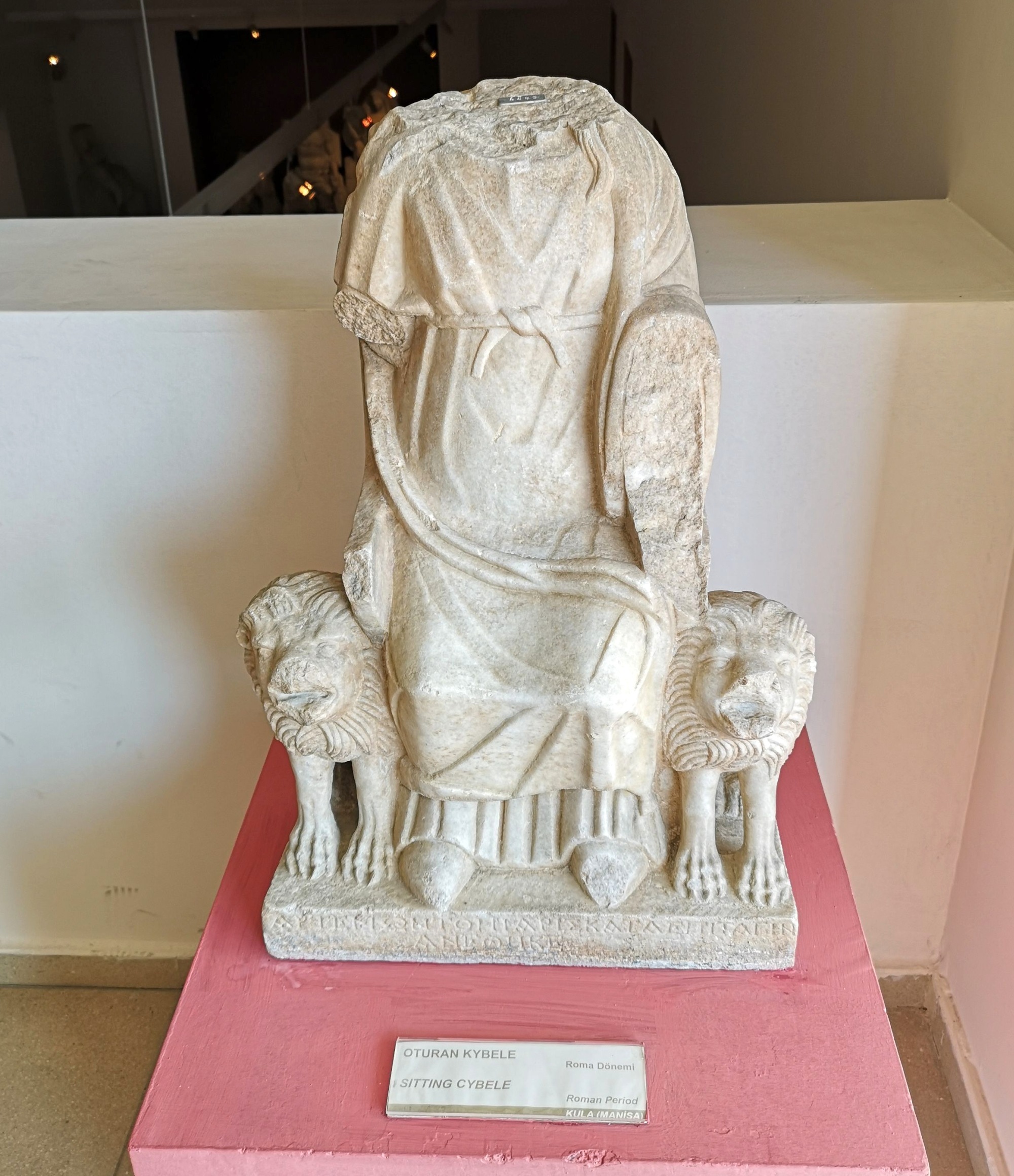
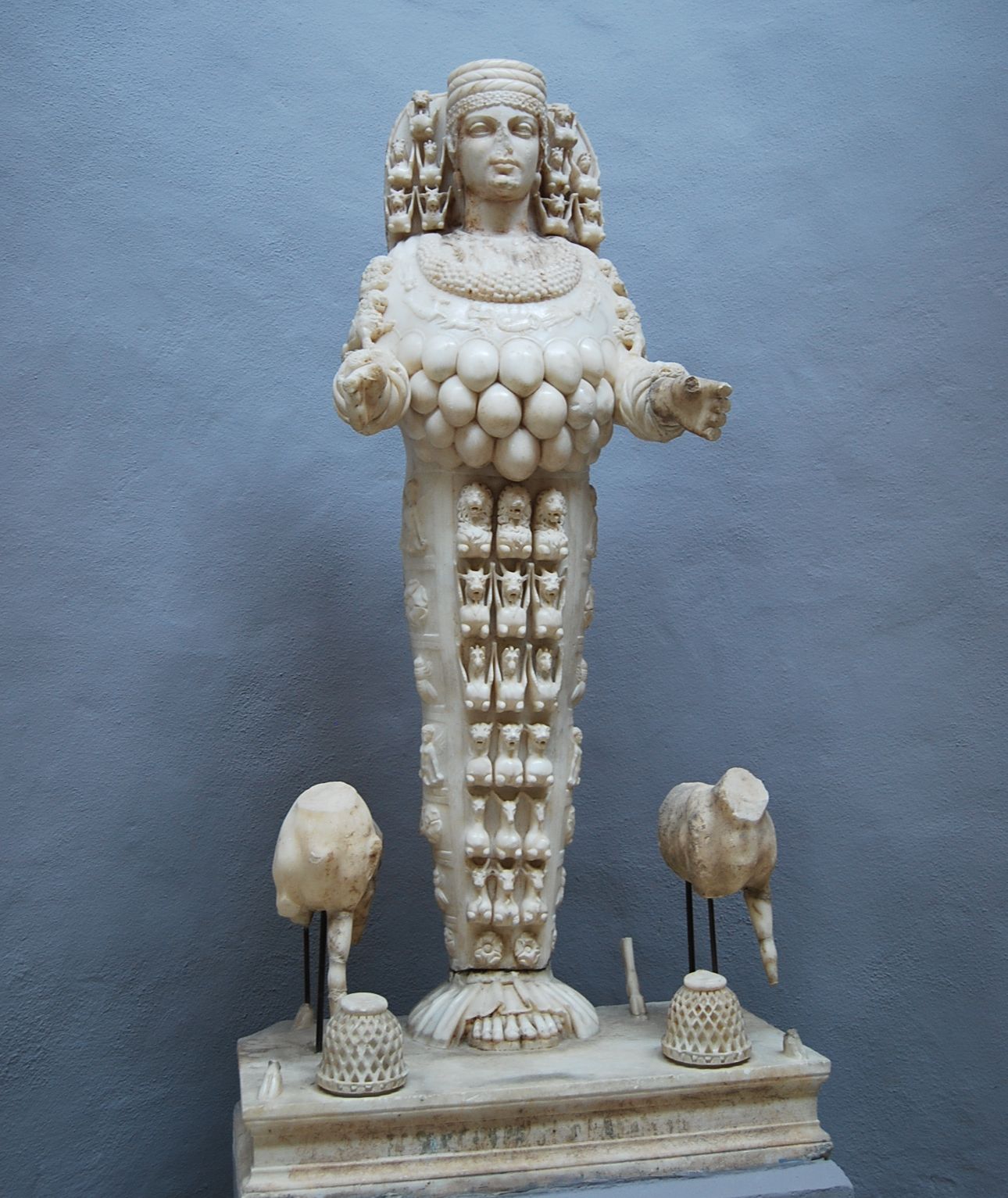
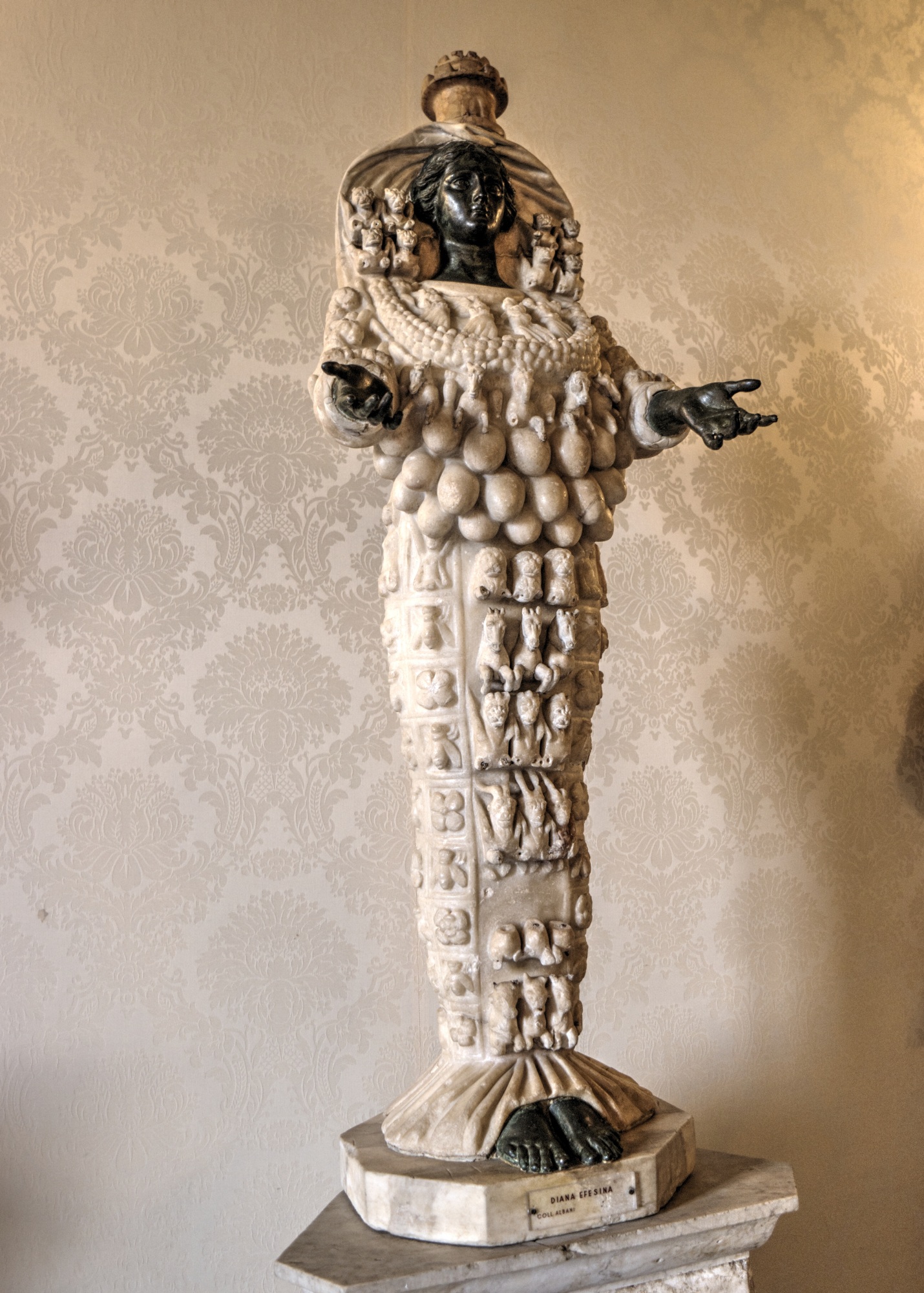
This layered origin explains why the Ephesian Artemis looks so different from her familiar Greek counterpart. She is not the lithe archer of the wilderness, but a rigid, frontal figure, adorned with intricate symbolism and crowned with a high polos — an unmistakable marker of Anatolian divinity. She functioned less as a goddess of the hunt and more as a guardian of the city. Even her priesthood reflects this hybrid identity: the Megabyzi, eunuch priests serving her cult, echo the traditions associated with Cybele.
Another thread weaves through this tapestry: the presence of Hecate, a deity of thresholds, magic, and transformation. Her sanctuary within the Artemision complex suggests more than a casual association. In one later legend, a woman punished and transformed by Artemis is ultimately reborn as Hecate — a symbolic tale of crossing boundaries between life and death, identity and dissolution.
The Ephesian Artemis, then, is best understood not as a single goddess, but as a synthesis — a convergence point of cultures, myths, and sacred traditions. She is at once Greek and Anatolian, virgin and mother, wild and civic. And in a curious twist of historical continuity, the region that once venerated her would later become associated with another powerful female figure: Mary, the mother of Christ. The names changed, the rituals evolved, but the gravitational pull of sacred femininity in this landscape never truly disappeared.
Discover Ephesus with my guidebook "The Secrets of Ephesus": https://www.amazon.com/dp/8395654014/
- Log in to post comments