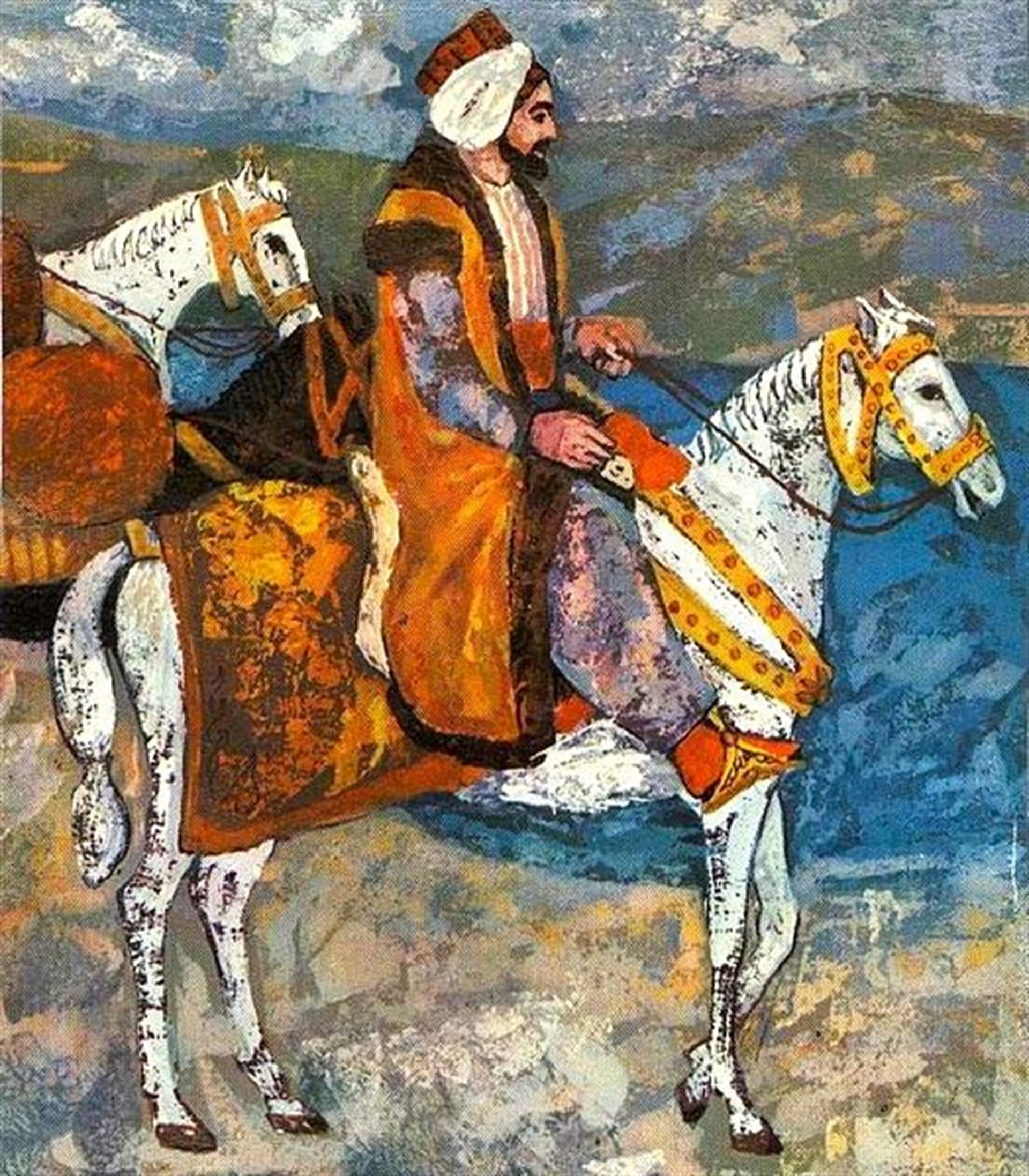
When Halicarnassus entered the Ottoman world, it did not yet resemble a town in the modern sense. It was, above all else, a castle with a harbour — a maritime outpost clinging to the edge of the Aegean. The earliest Ottoman voice to describe it belongs to Piri Reis, the celebrated corsair, navigator, and cartographer whose Kitab-ı Bahriye (Book of the Sea) mapped the Mediterranean with an accuracy astonishing for its age.
Standing before the Castle of Saint Peter, Piri Reis noted its modest scale: a small fortress commanding a broad, sheltered harbour. He carefully recorded the surrounding islands, the winds, and the character of the sea — details meant not for armchair readers but for sailors who would one day trust their lives to his words and charts. In his account, Bodrum appears not as a city of monuments, but as a strategic knot in the web of Ottoman seafaring.
Throughout the sixteenth century, Bodrum retained this role. Administratively, it belonged to the İstanköy (Kos) Sanjak, a secondary district of the Eyalet of the Archipelago — also known as the Kaptanpaşa Eyalet, or, more poetically, the Eyalet of the Islands of the White Sea. This was a province shaped by water rather than land, placed under the direct authority of the Kapudan Pasha, the commander-in-chief of the Ottoman navy. Bodrum's importance lay not in its size, but in its position within this maritime empire.
The Castle of Saint Peter continued to function as an active fortress. Late sixteenth-century records list forty-one guards stationed within its walls, commanded by a dizdar — a castle warden whose responsibilities extended beyond military discipline. The dizdar was not merely a garrison commander; he was charged with safeguarding the surrounding settlement itself, for the fortress existed to protect the entire district, not just its battlements.
A century later, Bodrum entered the pages of another extraordinary Ottoman work. In 1671, the indefatigable traveller Evliya Çelebi reached the town after crossing Kemer and Mihdökenbeli, the centre of the Karaova district. His observations were recorded in the Seyahatnâme (Book of Travel), a sprawling chronicle of lands, peoples, and customs.
Evliya found the familiar silhouette of the castle rising above the harbour, encircled by a deep moat. Within its walls stood a mosque converted from a former chapel and dedicated to Sultan Suleyman the Magnificent, complete with a newly added minaret — a quiet symbol of Ottoman sovereignty layered onto an older Christian structure.
Beyond the fortress, however, Bodrum remained strikingly modest. Evliya described it as a small settlement of poor houses, lacking the urban amenities expected of an Ottoman town: no grand mosque, no inn, no bathhouse, no market. Instead, vineyards and olive groves stretched across the surrounding land, sustaining the inhabitants through agriculture rather than trade. The harbour, by contrast, impressed him: capable of sheltering two hundred ships, it offered safe anchorage in an unpredictable sea.
Security shaped every aspect of life. Threats from bandits and coastal pirates forced the entire population to live within the castle walls. By day, residents ventured out to tend their fields and orchards; by dusk, they retreated behind stone and iron, sealing themselves in for the night. Bodrum was not a town that expanded outward — it folded inward, prioritising survival over growth.
At the time of Evliya Çelebi's visit, the population numbered around one hundred households, all contained within the fortress. Yet change was underway. Over the following decades, both the civilian population and the garrison increased. By the end of the seventeenth century, the number of castle guards had doubled to eighty, signalling Bodrum's slow transformation from a fortified refuge into a more settled Ottoman community.
In the early Ottoman centuries, Bodrum was neither forgotten nor flourishing. It existed in a tense balance between land and sea, vigilance and routine — a place defined not by grandeur, but by endurance.
Much more about the history of Halicarnassus/Bodrum can be found in my guidebook "The Secrets of Bodrum and Ancient Caria": https://www.amazon.com/dp/8366950093
- Log in to post comments