Description:
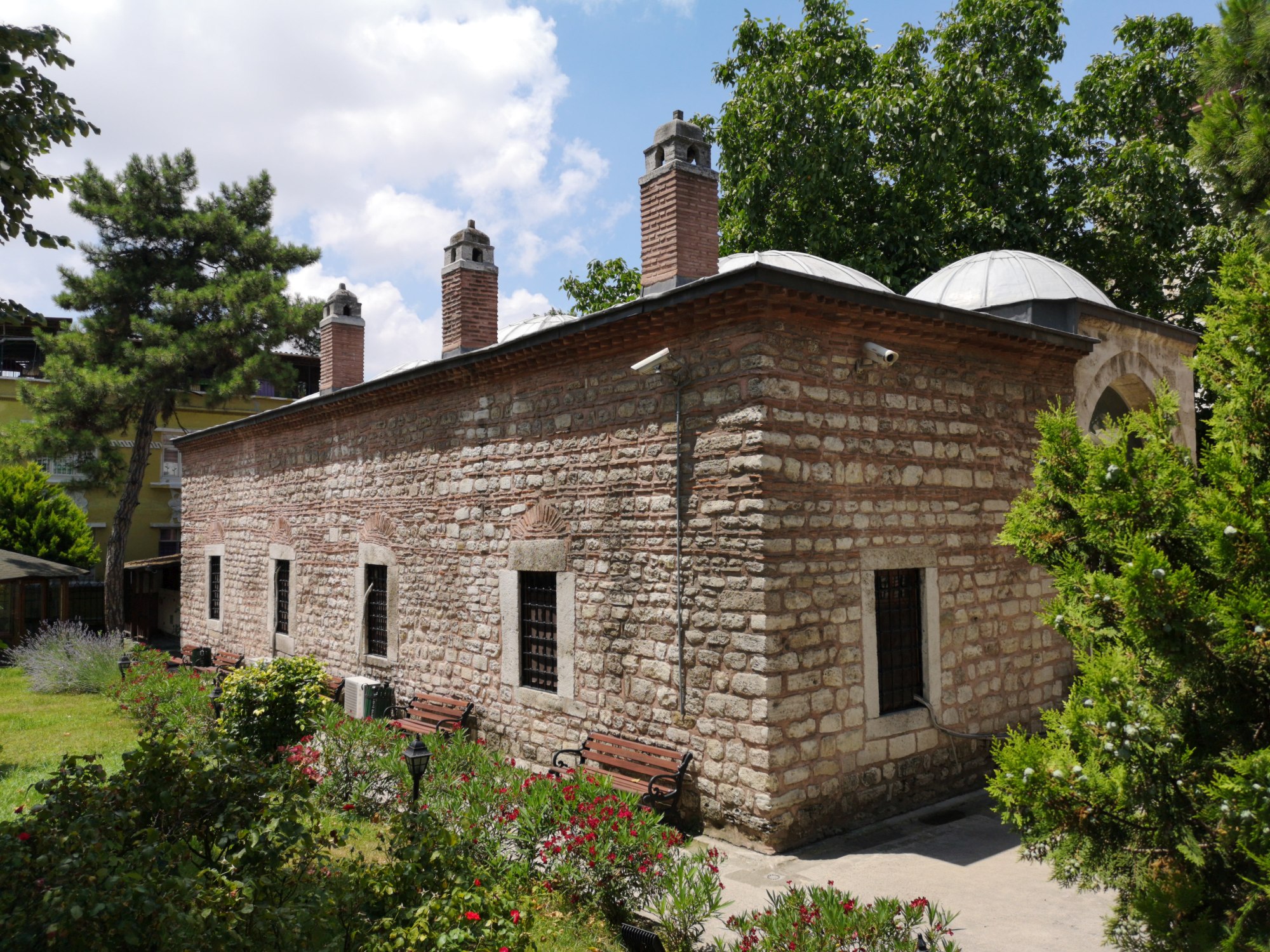
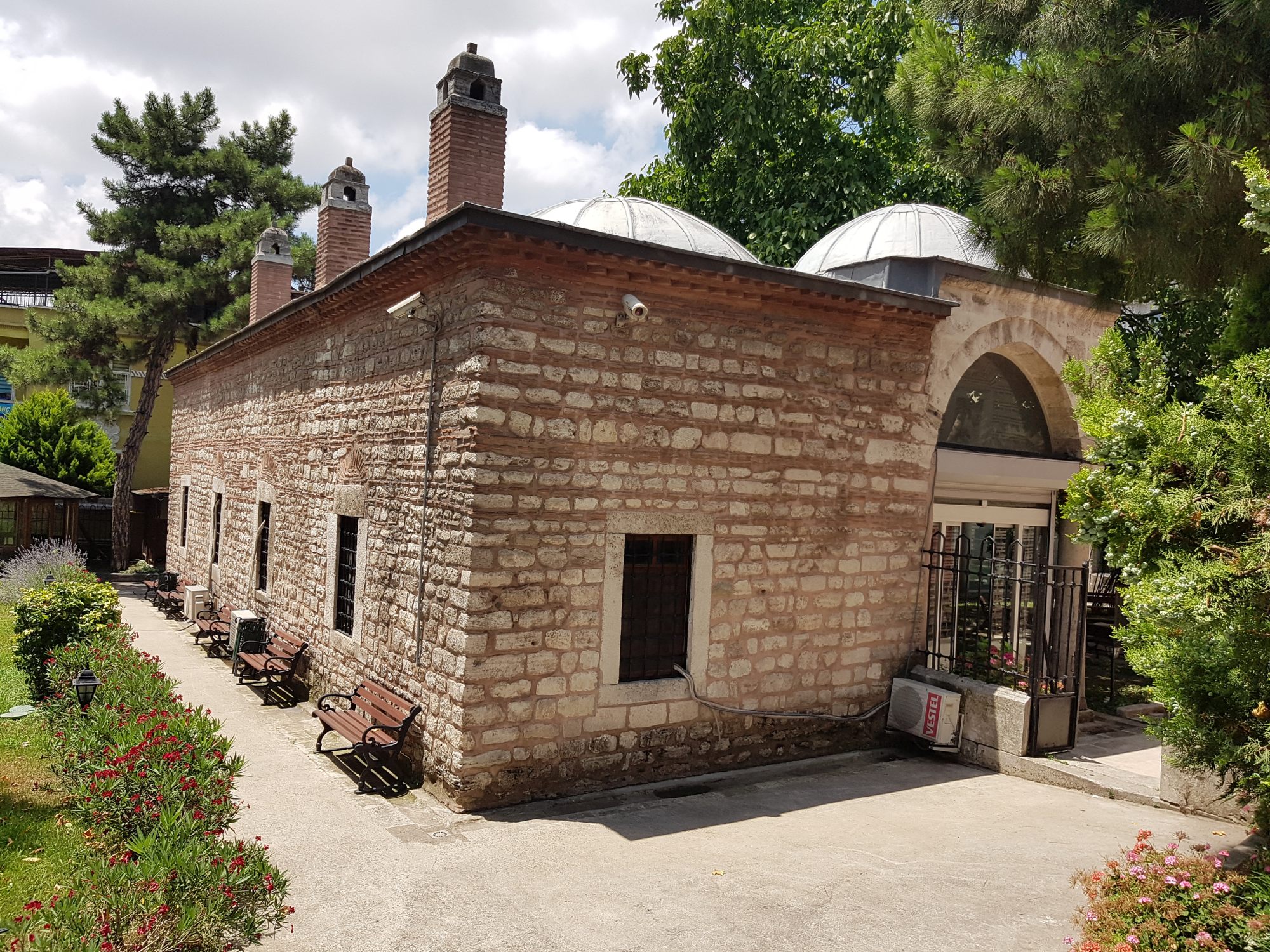
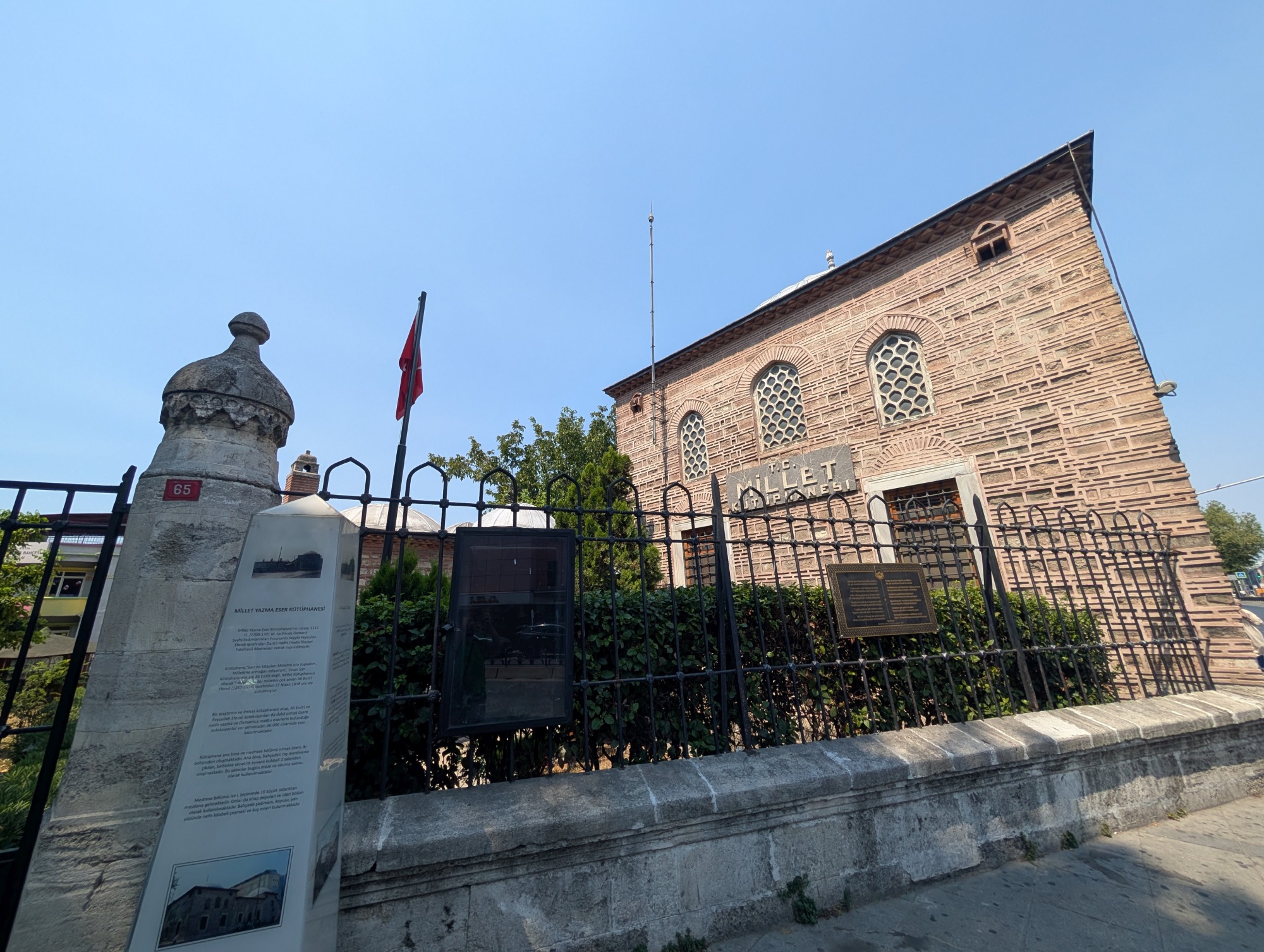
On a busy street in Istanbul's historic Fatih district stands a building that many pass without realizing they are walking beside one of Türkiye's great treasure houses of knowledge. The Millet Yazma Eser Kütüphanesi (Millet Manuscript Library) occupies a former Ottoman madrasa whose walls of alternating stone and brick still display the elegant geometry of classical Ottoman architecture. The information panel visible outside the library tells a remarkable story: this was originally built in 1700-1701 by the Ottoman Shaykh al-Islam Seyyid Feyzullah Efendi as a Darülhadis, a school dedicated to the study of the sayings of the Prophet Muhammad.
The building itself narrowly escaped destruction. By the early 20th century, it had fallen into serious disrepair and was even considered for demolition. Instead, it was restored in 1916 and given a new purpose thanks to the scholar, bibliophile, and collector Ali Emiri Efendi. As the inscription on the information panel recounts, he refused to name the institution after himself, declaring: "I collected these books for my nation and I am gifting them to my nation." For that reason, it became the Millet ("Nation") Library rather than the Ali Emiri Library.
Ali Emiri's gift was extraordinary. After spending decades gathering rare manuscripts and printed works from across the Ottoman Empire, he donated more than 16,000 volumes to the new library. Among its most famous treasures is the only known manuscript of Divanü Lugati't-Türk, the 11th-century dictionary of Turkic languages compiled by Kaşgarlı Mahmud, a work of immense importance for the study of Turkic history and linguistics.
The library's architecture is as fascinating as its collections. According to the historical record, the complex consists of an L-shaped madrasa with small student cells and a main section containing two symmetrical domed halls reached from a courtyard. A garden, fountain, water reservoir, and decorative birdhouses once formed part of the ensemble, creating a space where scholarship and contemplation went hand in hand. Today, the former halls serve as museum and reading spaces, while the old madrasa rooms continue to support the library's scholarly mission.
Modern visitors encounter a specialized research library holding roughly 30,000 manuscripts and Ottoman printed works, including the collections of both Ali Emiri and Feyzullah Efendi. Although its exterior appears modest compared with Istanbul's grand mosques and palaces, the library preserves centuries of intellectual history behind its walls and remains one of the city's most important manuscript repositories.
Visitor tips:
For visitors, the best approach is to combine the library with a walk through the historic Fatih district. Take time to admire the brick-and-stone façade visible from the street before entering, and look closely at the surviving features of the former madrasa. Researchers should check access conditions in advance, as manuscript collections may have special viewing procedures. Even if you are not a specialist, the museum areas and the building itself offer a rare glimpse into the world of Ottoman scholarship — and into the vision of a man who believed that knowledge should belong not to an individual, but to an entire nation.
Image gallery:
- Log in to post comments