Archaeological site:

Description:
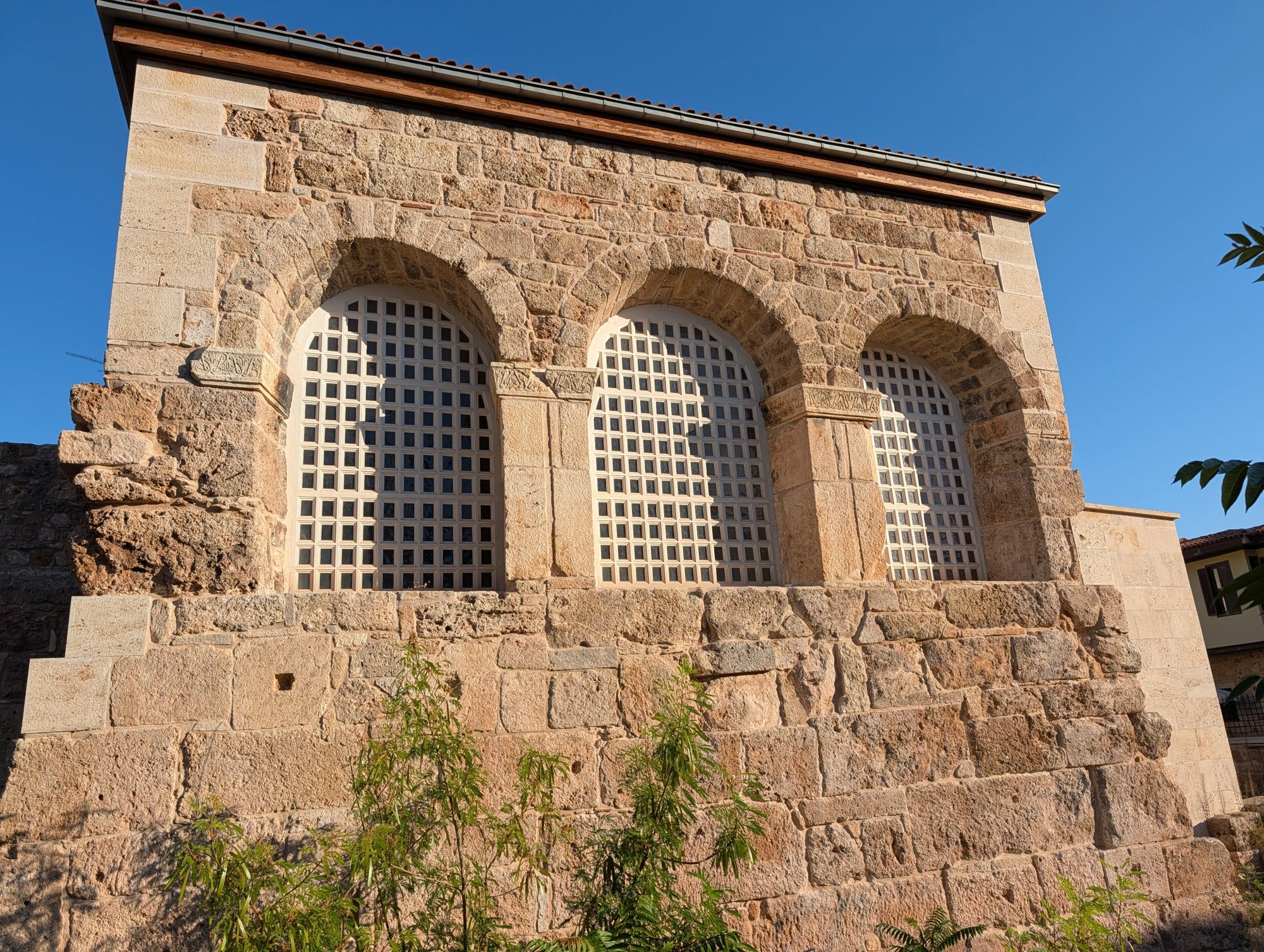
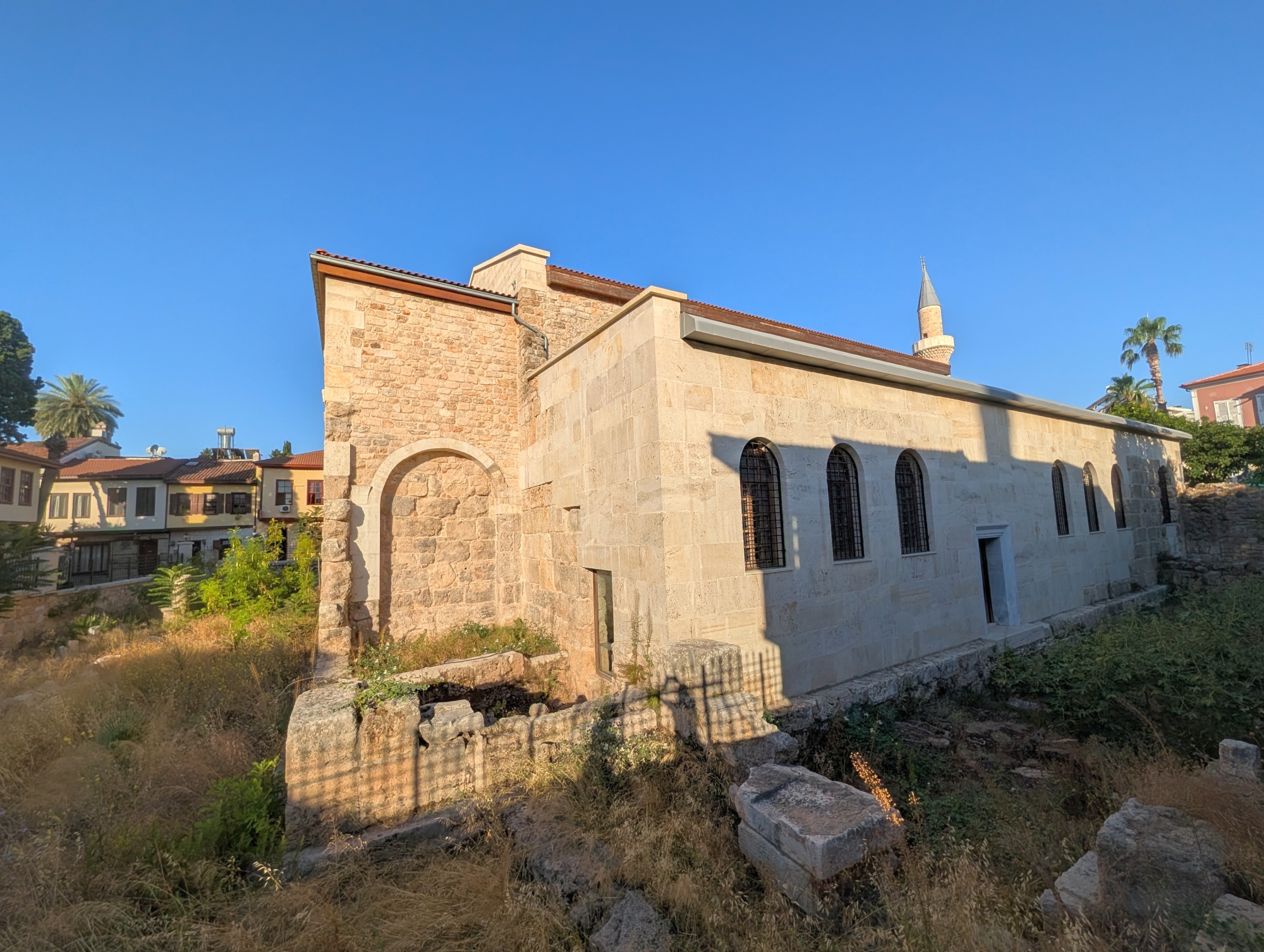
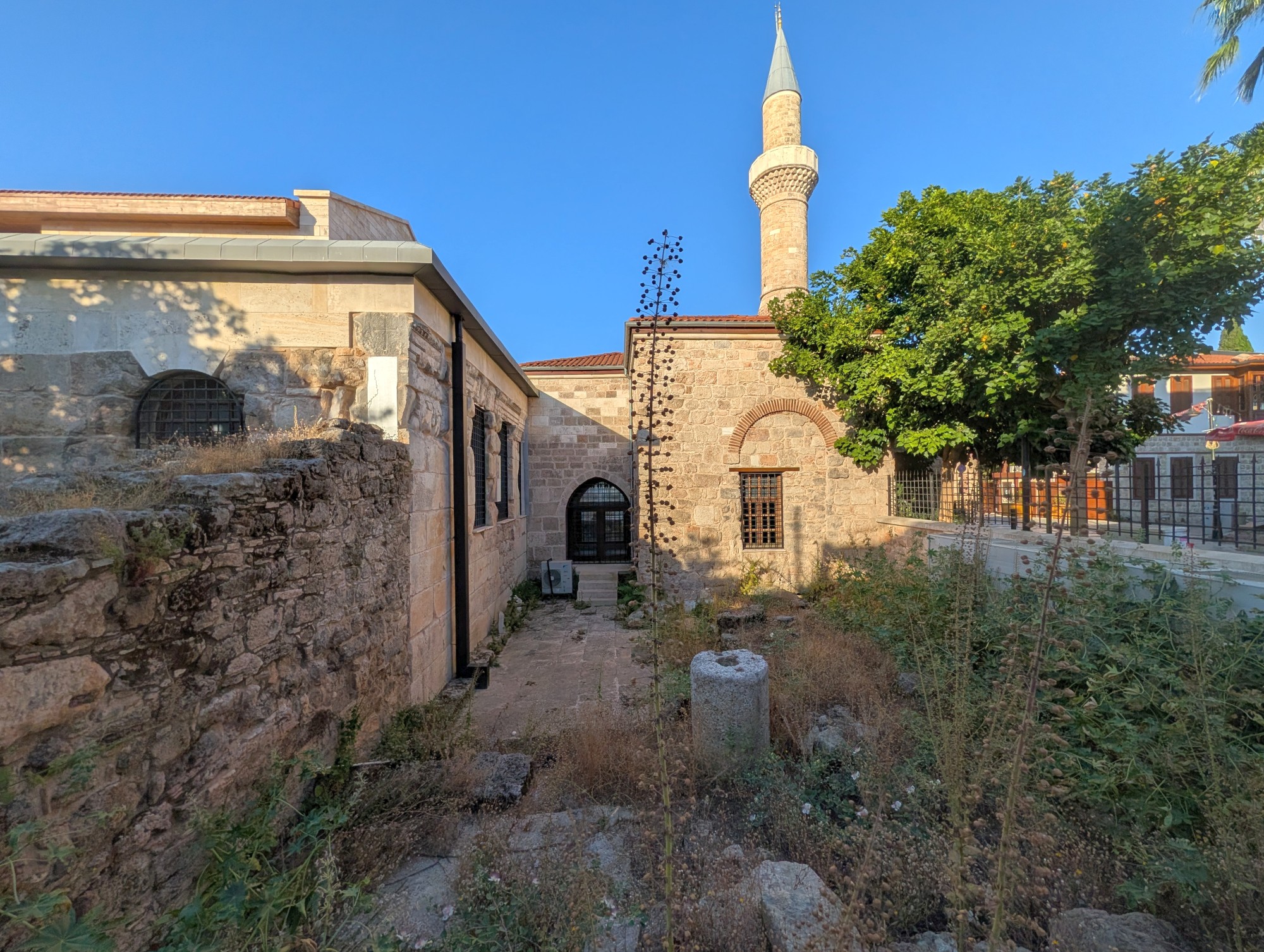
Until quite recently, the historic Kaleiçi quarter of Antalya contained the partially collapsed remains of an ancient building, dominated by the distinctive silhouette of the Broken Minaret (Kesik Minare). Today, the restored structure stands once again as Şehzade Korkut Mosque, open both to worshippers and visitors. Its long and eventful history offers a remarkable window onto Antalya's turbulent past. Few monuments illustrate so vividly the city's successive transformations, for this site has served as a place of religious worship, in different forms and under different traditions, from antiquity to the present day.
Please note that the photographs documenting the condition of the building before the restoration, together with a description of its pre-restoration state, have been published on the Turkish Archaeological News website as the text Broken Minaret in Antalya.
Historical overview
Ancient period
The site of Şehzade Korkut Mosque is generally identified with part of the ancient agora of Attaleia, the city's principal public square, established during the Hellenistic period and continuing in use under Roman rule. Attaleia itself was founded by the Pergamene king Attalos II in the mid-2nd century BCE, although archaeological discoveries in the surrounding area, particularly burials in the Eastern Necropolis dating to the 4th and 3rd centuries BCE, demonstrate that the region was inhabited before the establishment of the Attalid city. Excavations in the area of the mosque have revealed Hellenistic pottery, a coin, an ancient road surface, and substantial architectural blocks, including Doric column fragments and large ashlar blocks that may have belonged to monumental Hellenistic buildings. The remains of a stoa, or covered colonnaded walkway, have also been identified in the archaeological area. Although the original layout and full extent of the agora remain uncertain, these discoveries provide evidence of the monumental character of this part of ancient Attaleia.
The Roman city's principal street, the cardo, is thought to have followed approximately the route of modern Hesapçı Sokak, running from Hadrian's Gate towards Hıdırlık Tower and passing close to the proposed location of the agora. The ancient public square has not survived as an identifiable, open archaeological complex. Its former area became occupied by later buildings, while its architectural elements were reused in subsequent construction. The erection of the Byzantine church in this area represents an important stage in this transformation. The incorporation of earlier architectural material into the church also means that some remains of Hellenistic and Roman public architecture survive in secondary positions rather than in their original architectural arrangement. The continuous occupation of Kaleiçi has made archaeological investigation difficult. Much of the evidence has consequently come from limited excavation trenches, rescue excavations, architectural fragments incorporated into later buildings, and observations made during restoration work.
The existence of a Roman temple preceding the Byzantine church has also been proposed. This interpretation appears in the work of Hansgerd Hellenkemper and Friedrich Hild, Lykien und Pamphylien, and was discussed in greater detail by Gamze Kaymak in her study of the architectural history and Byzantine origins of the current mosque. Evren Dayar also refers to this proposed predecessor in his 2022 study of the Panhagia Church and Câmi-i Cedid mosque in Antalya's Kaleiçi district. Some researchers have dated the supposed temple to the 2nd century CE, although its remains have not been conclusively identified in archaeological investigations. Indeed, Hülya Kökmen-Seyirci and Hakan Alpaslan have pointed out that no identifiable remains of such a pre-Christian temple were found during the investigations.
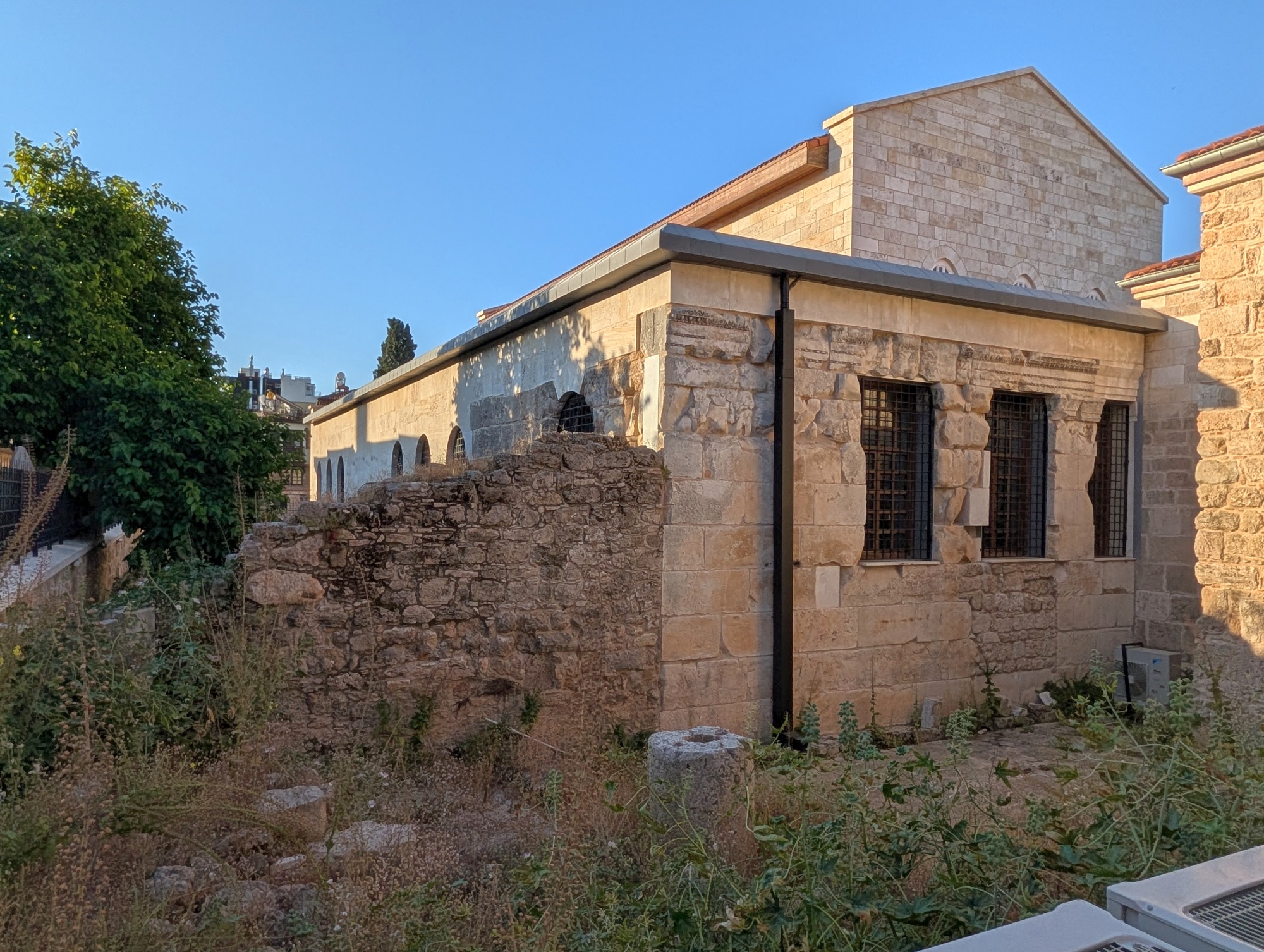
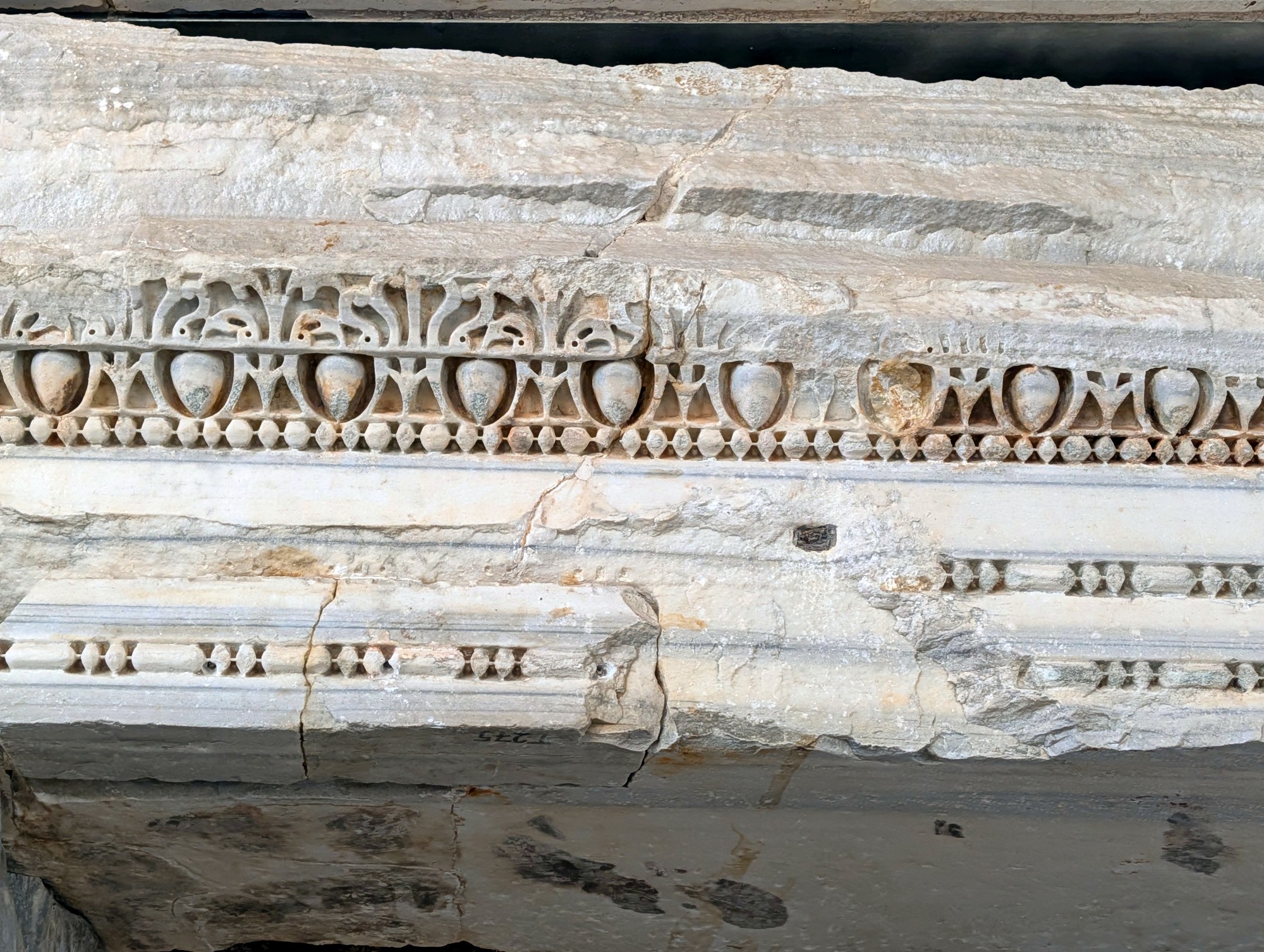
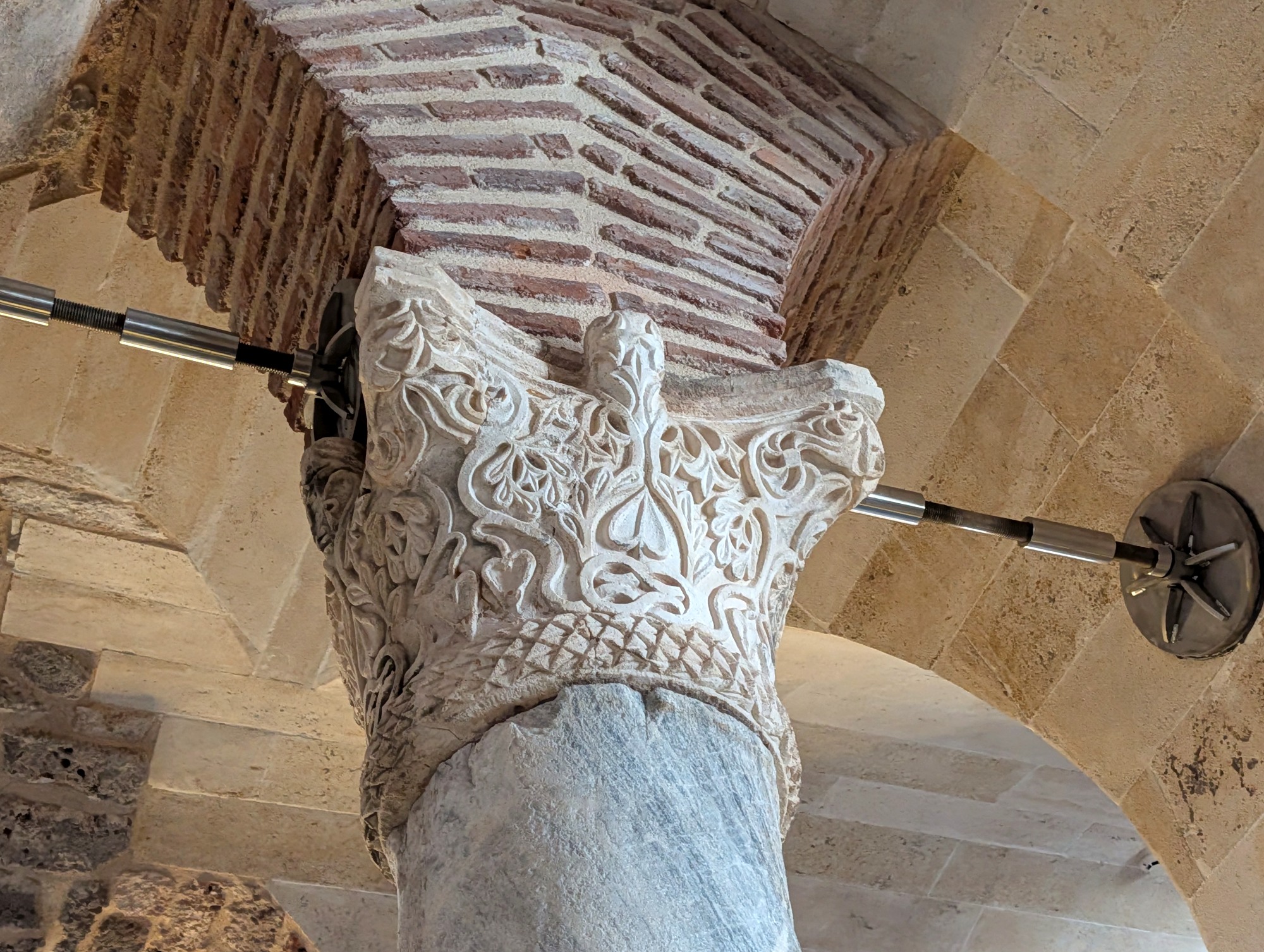
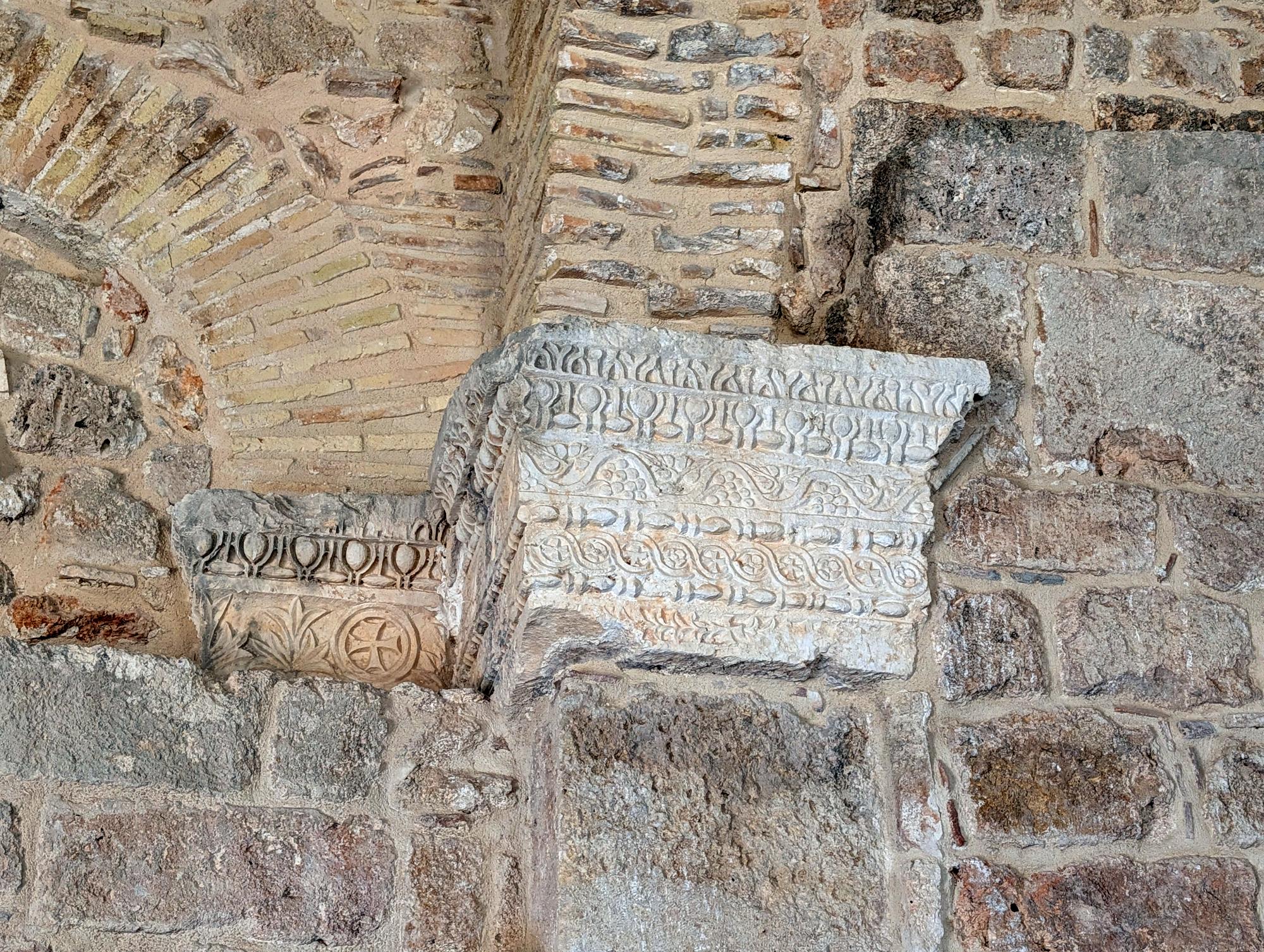
What is firmly established, however, is the extensive reuse of Hellenistic and Roman architectural material in the construction of the Early Byzantine church. Among the most remarkable examples are Roman architrave blocks that were cut down and adapted as capitals for the church's cross-shaped piers. Their original decorated surfaces retain traces of Roman workmanship, while the modified surfaces display alterations made by Byzantine craftsmen. These architectural elements were examined in detail by Burhan Varkıvanç and Hülya Kökmen-Seyirci in their 2021 study of the Early Byzantine pier capitals from Şehzade Korkut Mosque.
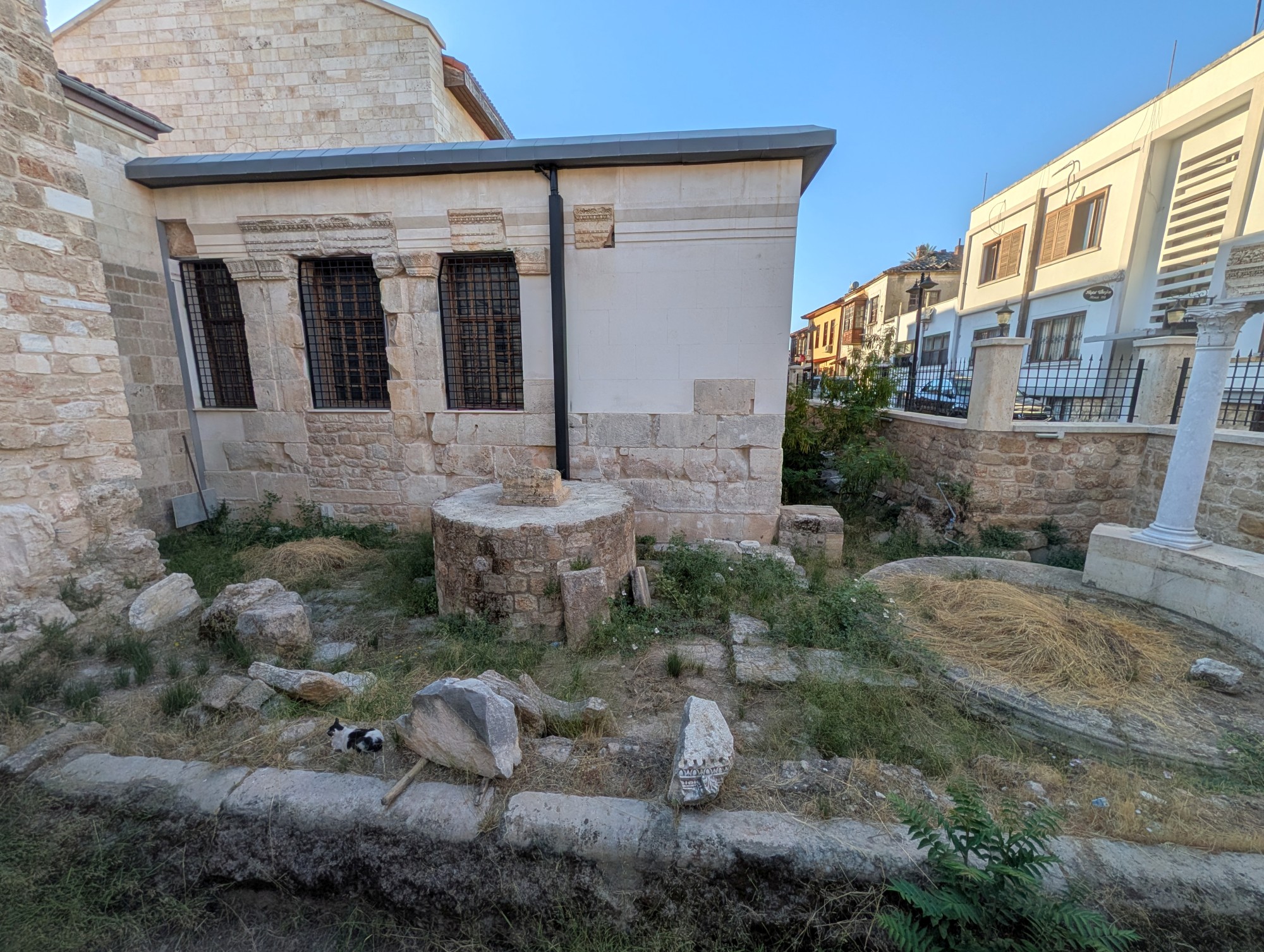
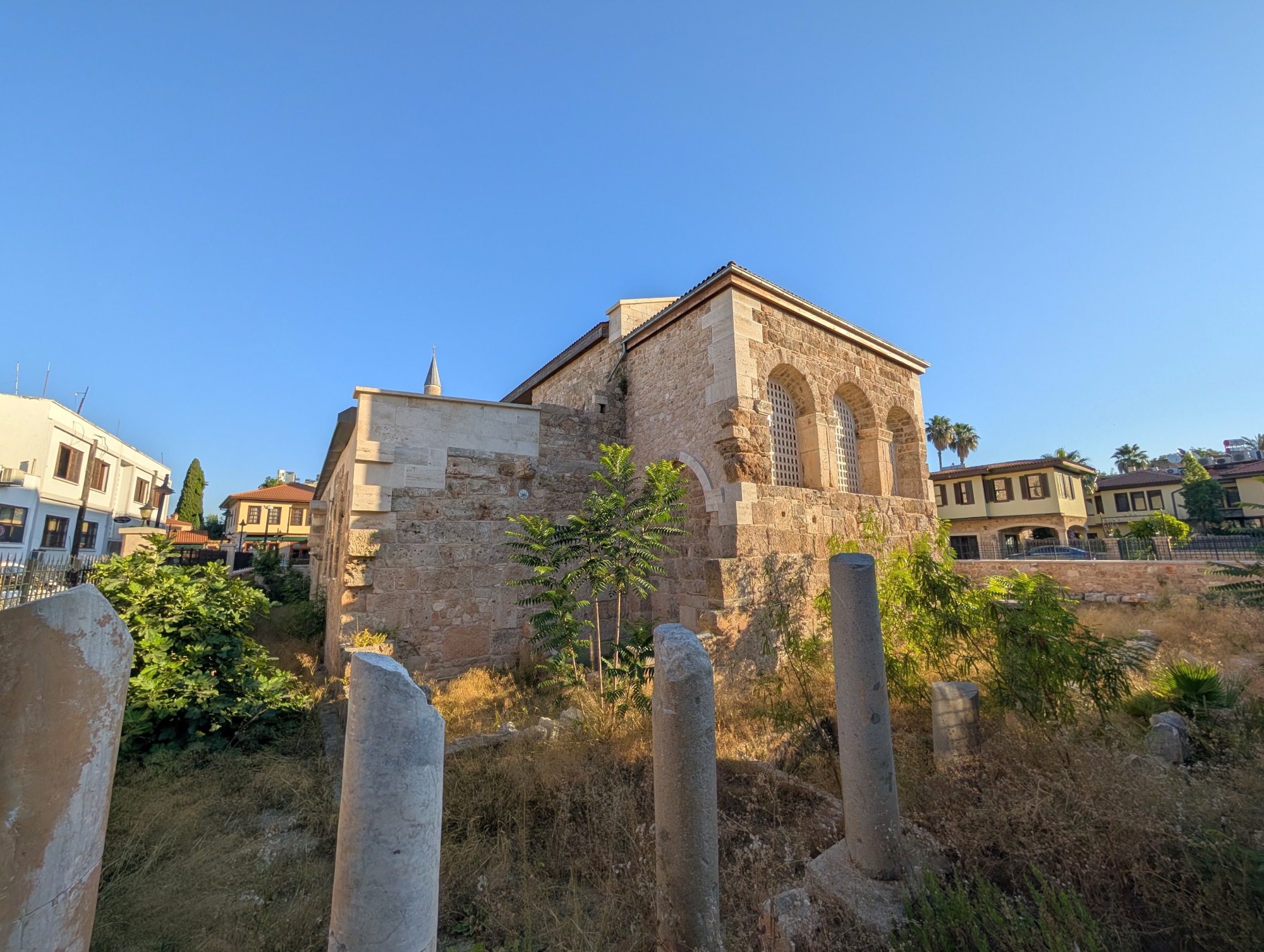
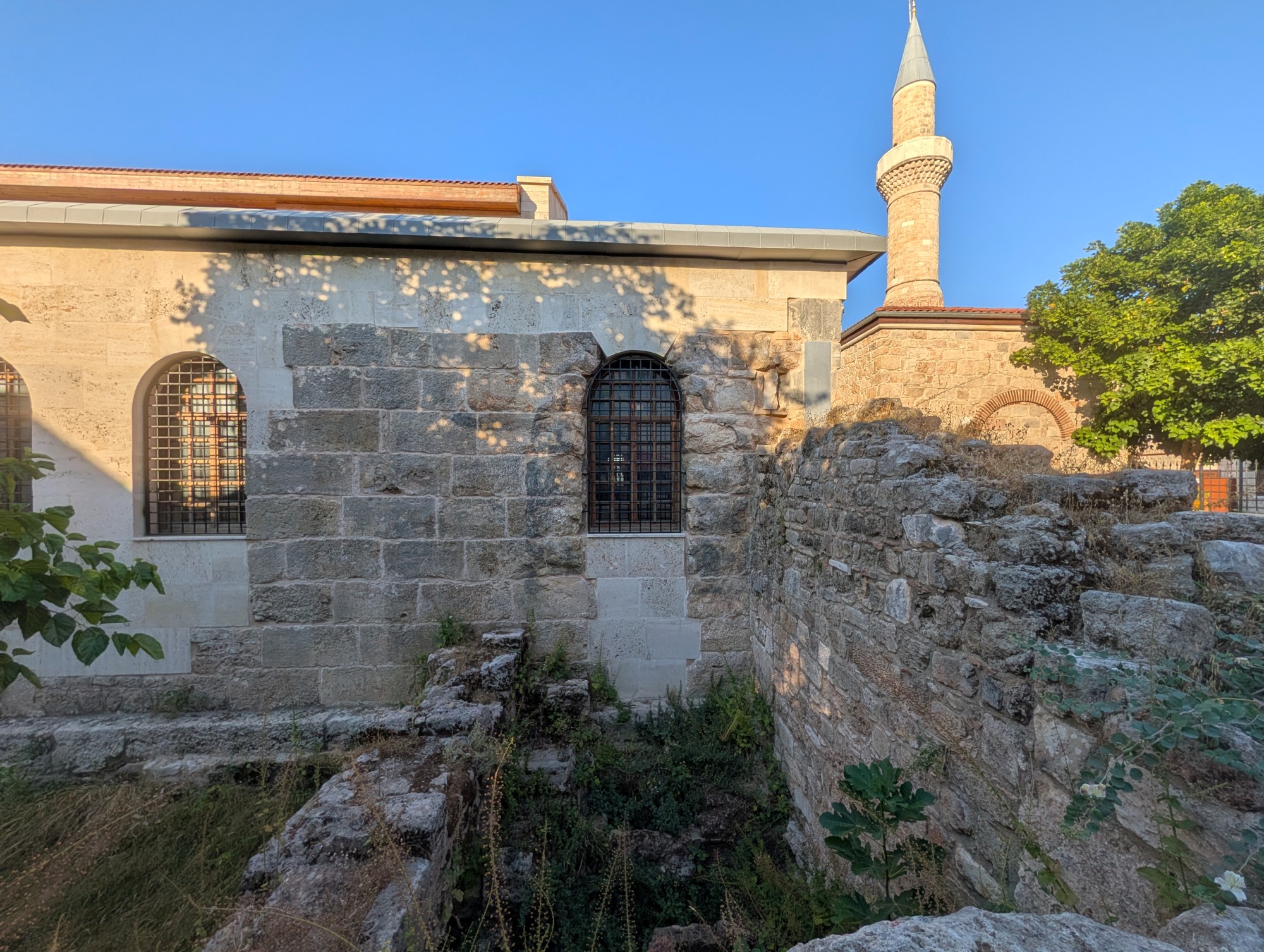
Further evidence of the area's ancient religious architecture emerged during archaeological excavations around the mosque. In 2020, Hüseyin Coşar, then Regional Director of Foundations in Antalya, announced the discovery of a circular, single-colonnade structure identified as a monopteros, or a temple surrounded by a single ring of columns. Approximately half of the monument had initially been visible, while the remainder lay beneath the pavement of an adjoining road. Excavations exposed the complete structure, and tombs and inscriptions were reportedly found within it. Although its precise date, original function, and the chronology of the associated burials have not yet been established in a detailed published excavation report, the discovery adds another important element to the reconstruction of the ancient architectural landscape of Attaleia's agora. The Byzantine church subsequently occupied part of this ancient public area, incorporating architectural elements from earlier buildings, and eventually became the present Şehzade Korkut Mosque.
Another significant discovery in Kaleiçi was made in 2011, when excavations in the Uzun Çarşı area revealed remains of a Roman auditorium, probably belonging to a theatre. A narrow vaulted passage, possibly a hyposkenion, was discovered approximately 11 m below the modern ground level. Remains of rows of seats were found in an adjacent excavation area, approximately 3 m below ground. The surviving curvature of the seating area indicates the presence of a koilon, the auditorium's seating section. An entrance pier was also identified. However, further excavation is required to establish the building's full plan and determine whether it had an earlier Hellenistic phase. These discoveries suggest that the ancient civic landscape extended beyond the area of the agora itself, incorporating monumental buildings associated with public gatherings and possibly entertainment.
Byzantine Church of Panaghia
The ancient agora was subsequently occupied in part by a substantial Byzantine church dedicated to the Virgin Mary and known as Panaghia (Panagia), a Greek title meaning 'All-Holy'. The precise date of its construction remains disputed. Earlier researchers, including M. H. Ballance and Hansgerd Hellenkemper, placed its origins in the 6th century or around the beginning of the 7th century, while Gamze Kaymak-Heinz proposed the second half of the 5th century or beginning of the 6th century. A more recent architectural investigation, published in 2022 by Hasan Fevzi Çügen, Bülent İşler, Zehra Aksoy, and Fatih Mehmet Tanrıveren, instead dates the earliest identifiable construction phase to the second half of the 7th century or the beginning of the 8th century. The church was built directly over the paved surface of the Roman agora, incorporating extensive quantities of earlier Hellenistic and Roman architectural material.
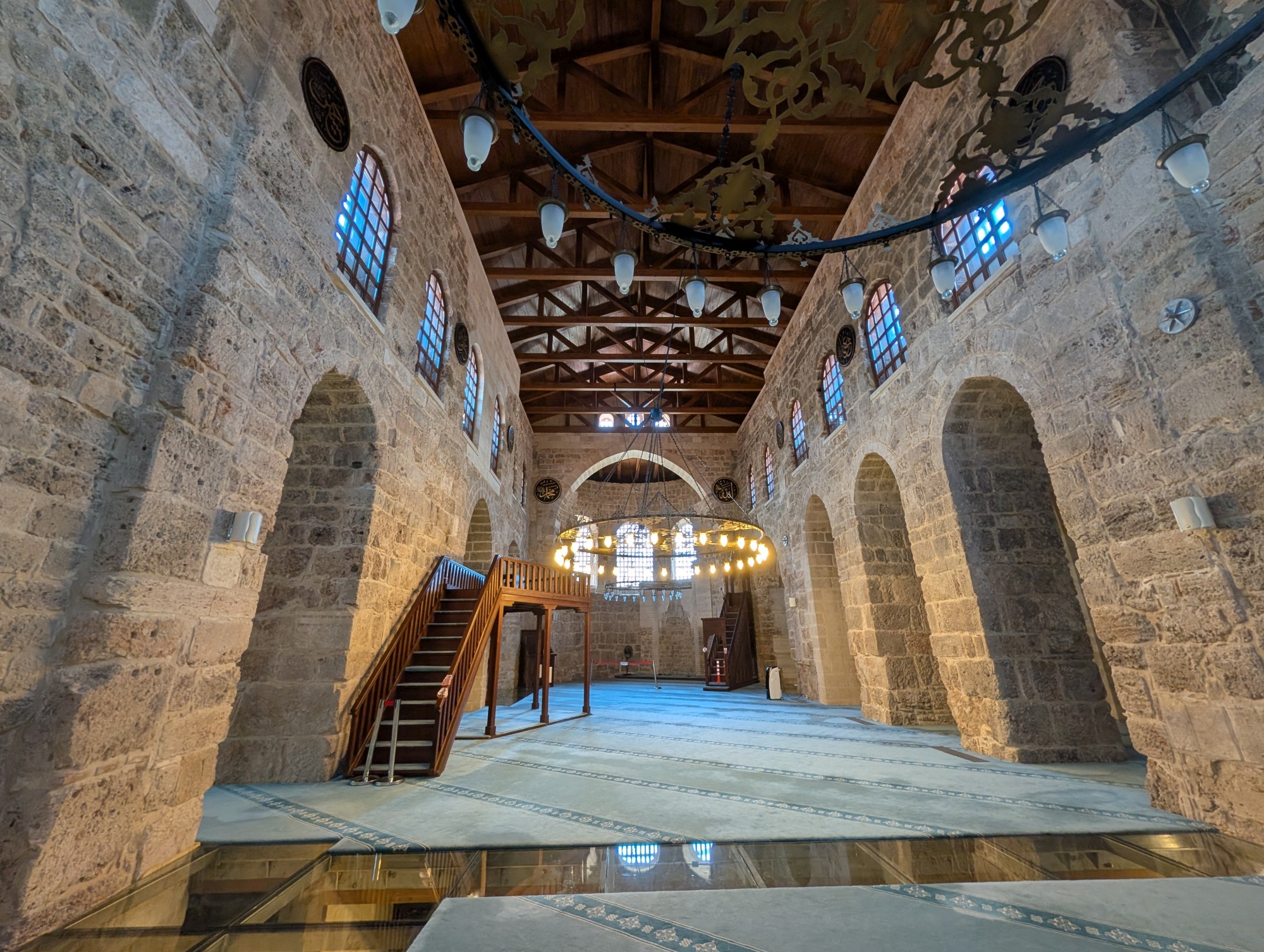
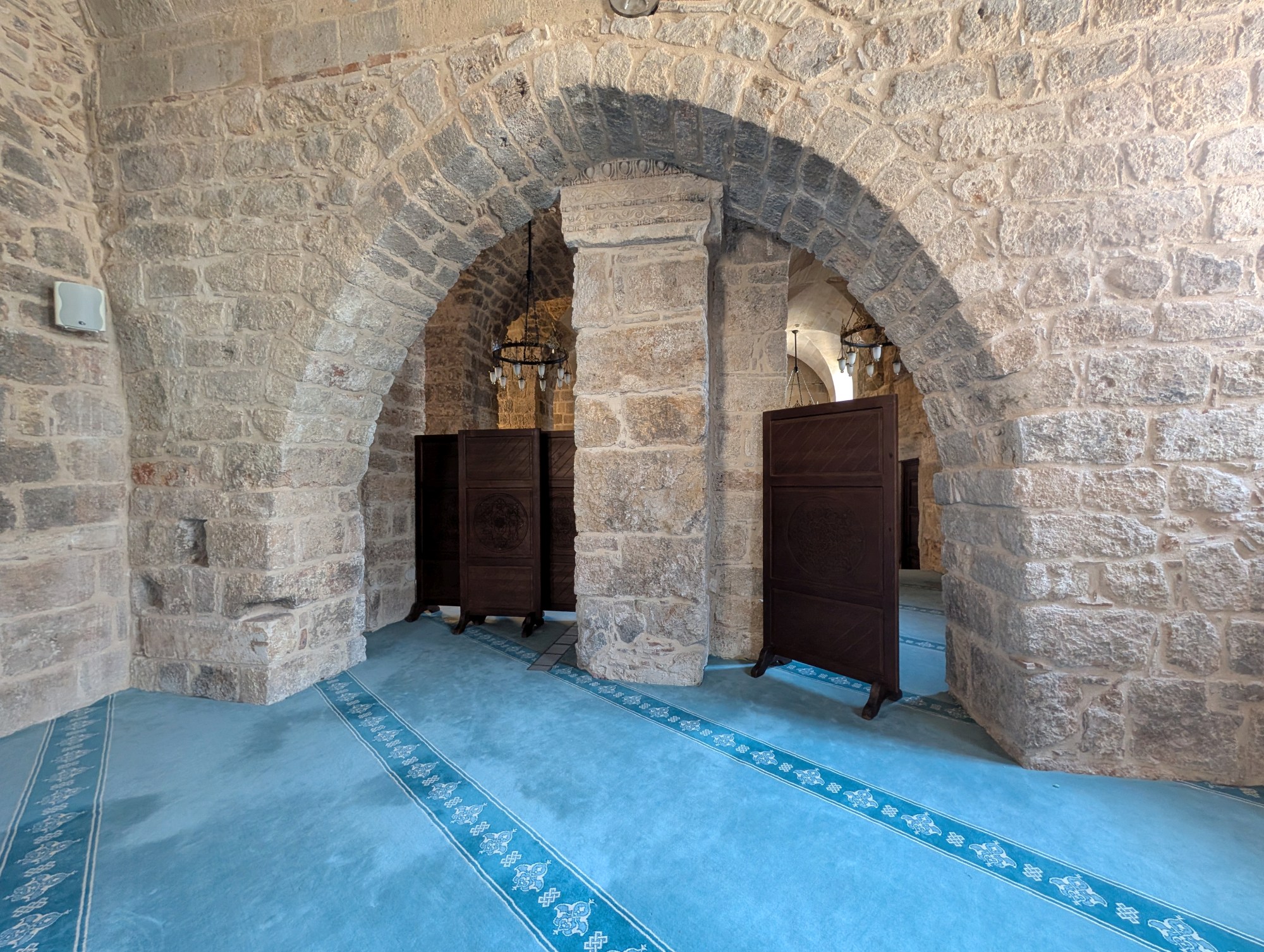
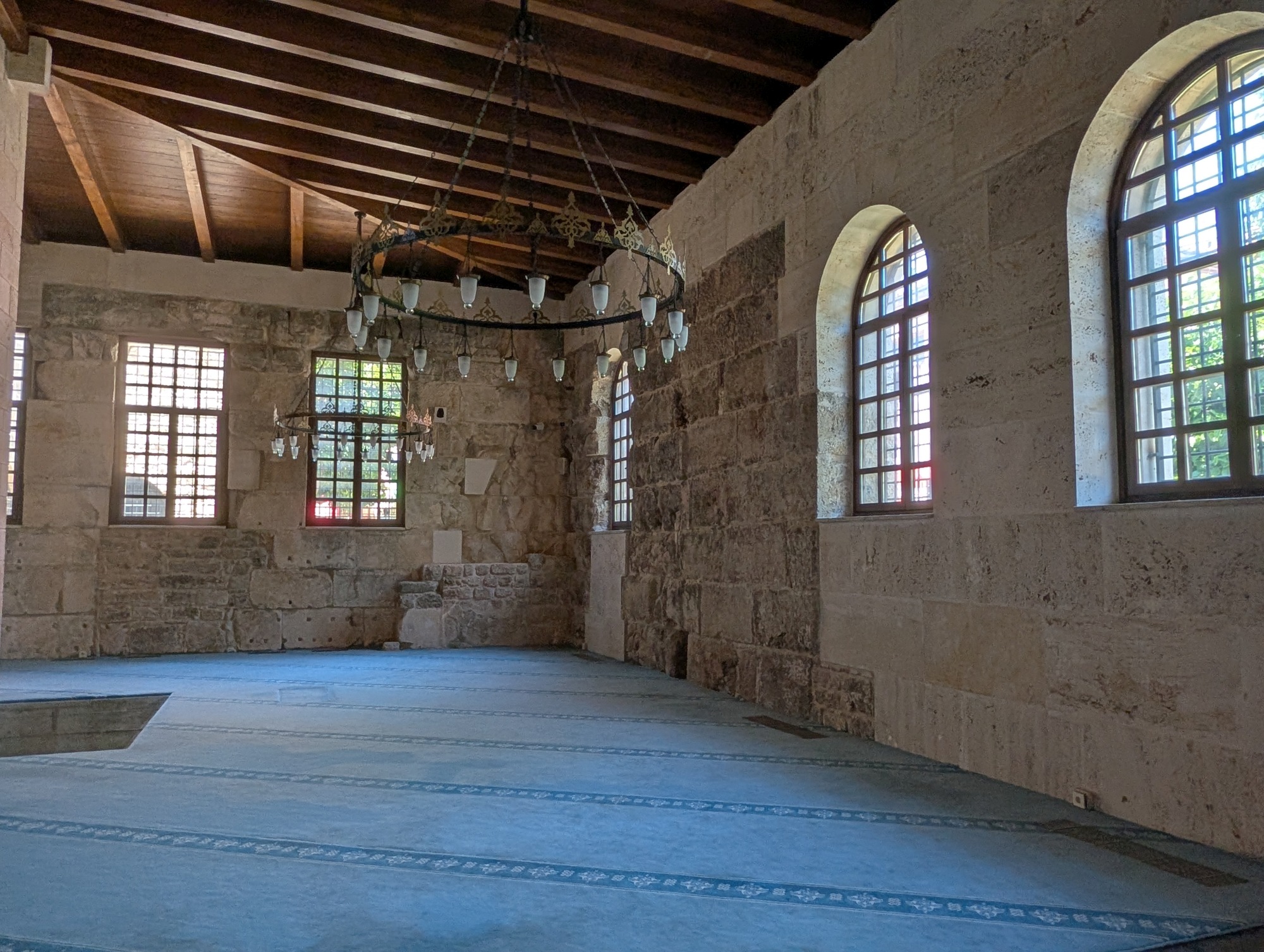
In its earliest reconstructed form, the church combined a basilical arrangement with a central cross-shaped space, measuring approximately 27.3 × 24.5 m. Its interior included a nave, lateral aisles, corner rooms, and a western narthex with a gallery. At the eastern end stood a semicircular apse flanked by two auxiliary rooms known as pastophoria, used for liturgical preparations and the storage of ecclesiastical objects. The central space and the surrounding sections were originally covered by a timber roofing system, while the interior walls were probably decorated with marble slabs. Architectural fragments recovered during excavations, together with fixing holes and traces of marble cladding preserved in the masonry, provide evidence for the church's original decorative arrangement.
Attaleia experienced Arab incursions from the 7th century onwards, reflecting its importance as a Byzantine Mediterranean harbour and naval centre. The city became the administrative centre of the Kibyrrhaiotai naval theme, established in 697. A particularly significant event occurred in 860, when an Abbasid force commanded by Fadl ibn Karin captured Attaleia during the reign of Caliph al-Mutawakkil. The church appears to have undergone substantial damage and subsequent reconstruction during this period, although a direct archaeological connection between its destruction and the Arab attack has not been established.
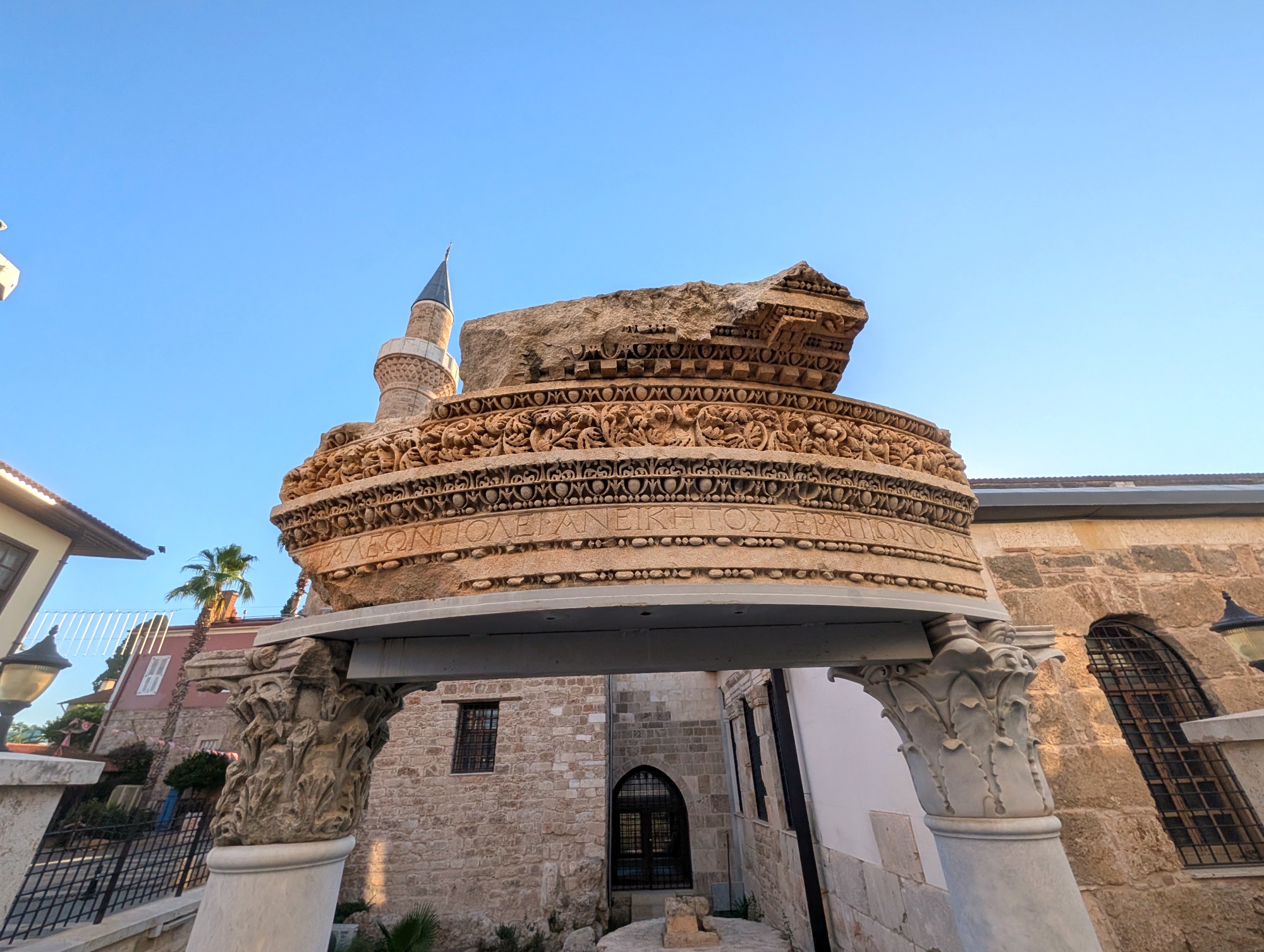
The church's second major construction phase, generally dated to the 9th century, involved considerable structural alterations. The original timber roofing was replaced by a masonry system, with a dome over the central square and barrel vaults covering the arms of the cross. The supporting piers and internal walls were strengthened to carry the heavier stone structure, while additional vaulting was introduced over the lateral aisles and adjoining spaces. Although the original cross-shaped arrangement was retained, the building acquired a substantially different architectural character. The 2022 restoration study considers the second half of the 9th century the most likely date for these alterations, possibly following the events of 860.
Further modifications took place during the following centuries. A separate cross-shaped entrance structure was added in front of the western narthex, while additional rooms and funerary spaces developed around the church. Archaeological excavations revealed numerous graves in the northern adjoining rooms, together with evidence of a cistern and other installations. The dating and original function of some of these additions remain debated, but they demonstrate the continued development of the church as an important religious and funerary complex in Byzantine Attaleia.
The Seljuk and Teke Periods
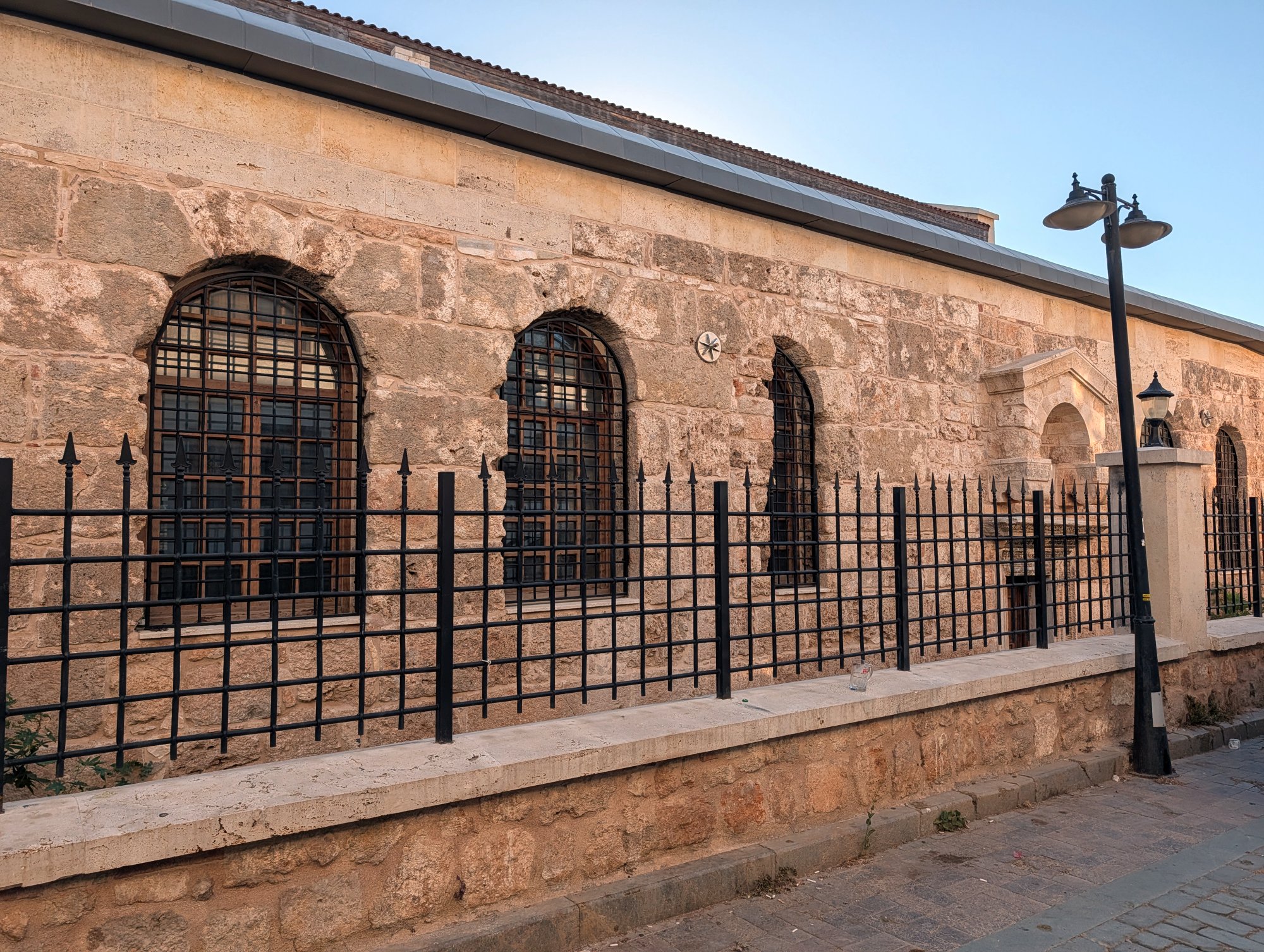
Antalya was conquered by the Seljuk Sultan Kaykhusraw I in March 1207, although Seljuk control was interrupted by an uprising in 1212 and was not re-established until January 1216. The traditional account maintains that the city's principal church, Panaghia, was converted into a mosque following the first conquest. However, this interpretation has been challenged by more recent historical research. Evren Dayar's examination of Ottoman archival documents indicates that Panaghia continued to serve the Christian community for several centuries under Muslim rule. Records from 1455 and 1479–1480 still identify it as a church with its own endowment, while the earliest surviving document explicitly recording its conversion into a mosque dates to 1567 and attributes the initiative to Sultan Bayezid II, in connection with his son Şehzade Korkut.
The building nevertheless underwent substantial architectural changes during the Seljuk period. A major rebuilding phase, dated to the first decade of the 13th century and possibly prompted by earthquake damage, transformed the church into a five-aisled basilica with a pitched roof and gallery, and included the addition of a second, smaller apse. These alterations belong to the period of Seljuk rule, but there is no convincing evidence that they accompanied a conversion into a mosque.
The minaret traditionally associated with the building's Seljuk history should also be attributed to a later phase. Both the Antalya Directorate of Religious Affairs and restoration-period accounts identify Şehzade Korkut as the patron who commissioned the minaret when the church was converted into a mosque in the early 16th century. Its wooden conical crown was subsequently destroyed in the fire of 1895, leaving the surviving structure with the truncated appearance that gave rise to the name Kesik Minare (Broken Minaret).
Following the Seljuk conquest, Antalya became an important port of the Sultanate of Rum, linking the Mediterranean with the inland territories of Anatolia. Seljuk authority weakened considerably after the defeat by the Mongols at the Battle of Köse Dağ in 1243. The sultanate survived for several decades under Mongol overlordship, but its rulers gradually lost effective control to regional Turkmen dynasties. After the death of the last Seljuk sultan, Mesud II, in 1308, the former sultanate fragmented into numerous independent principalities.
Among these was the Hamidid dynasty, which expanded southwards from the region around Isparta and Eğirdir. In the early 14th century, its ruler Dündar Bey gained control of Antalya and entrusted the city to his brother Yunus Bey. This established the coastal branch known as the Teke principality, or Tekeoğulları, which made Antalya its principal centre. The Church of Panaghia appears to have continued serving the city's Christian community under these new rulers.
In 1361, Antalya was captured by the forces of Peter I of Lusignan, King of Cyprus and titular King of Jerusalem. The Cypriot king seized the city from Mübârizüddin Mehmed Bey, the Teke ruler, on 24 August, after a short siege. The occupation lasted twelve years, during which Mehmed Bey and his allies repeatedly attempted to recover the city. In 1373, the Lusignans finally withdrew, and Antalya returned to Teke rule.
The conquest brought about the temporary conversion of the city's principal Friday mosque, the Alaaddin Mosque (Yivli Minare Mosque), into a church. After recovering Antalya, Mehmed Bey restored it to Muslim worship. The Church of Panaghia, however, appears to have remained in Christian use throughout the Lusignan occupation and the subsequent return to Teke rule. Its conversion into a mosque took place considerably later, during the Ottoman period, under Şehzade Korkut.
The Ottoman Mosque of Şehzade Korkut
Antalya first came under Ottoman control during the reign of Sultan Bayezid I (Yıldırım Bayezid), as part of the Ottoman expansion into western and southern Anatolia at the end of the 14th century. The weakening of the Teke principality, which had ruled the city since the early 14th century, enabled the Ottomans to extend their influence towards the Mediterranean coast. In approximately 1390–1391, Bayezid advanced against Antalya, then governed by Mustafa Bey, son of Osman Çelebi, the Teke ruler. Mustafa Bey fled to Egypt, and the city was occupied by the Ottomans. Bayezid entrusted its defence to Firuz Bey, while the surrounding territory was organised as the Teke-ili administrative district.
Ottoman control was nevertheless disrupted by the defeat of Bayezid I at the Battle of Ankara in 1402 and the subsequent invasion of Anatolia by Timur's forces. The Teke region suffered extensive destruction, and members of the former ruling dynasty attempted to recover their territories. Antalya, however, remained in Ottoman hands. The death of Osman Çelebi in 1423 brought the end of the Teke dynasty's rule, and Ottoman authority over Antalya and the surrounding region was firmly established. The city became the administrative centre of the Teke-ili district, later known as the Teke Sanjak.
The Church of Panaghia continued to serve Antalya's Christian community during the first decades of Ottoman rule. Its conversion into a mosque took place only in the early 16th century, during the reign of Sultan Bayezid II (1481–1512), when the Muslim population of Kaleiçi was expanding into the traditionally Christian Upper Fortress. The 1567 Ottoman endowment register records that a church adjoining the Hoca Genç religious foundation had been converted into a mosque by imperial order through the initiative of the late Sultan Korkut. This was Şehzade Korkut, a son of Bayezid II who served as governor of the Teke province, with Antalya as its administrative centre.
The mosque was initially known as Câmi-i Cedid, meaning the New Mosque, a name recorded in the 1530 Ottoman register. Its later association with Şehzade Korkut gradually became established, and by the early 18th century it was commonly known as Korkut Mosque. The name commemorates the prince's role in its conversion, although the surviving historical records reveal some uncertainty over the use of different names for the building.
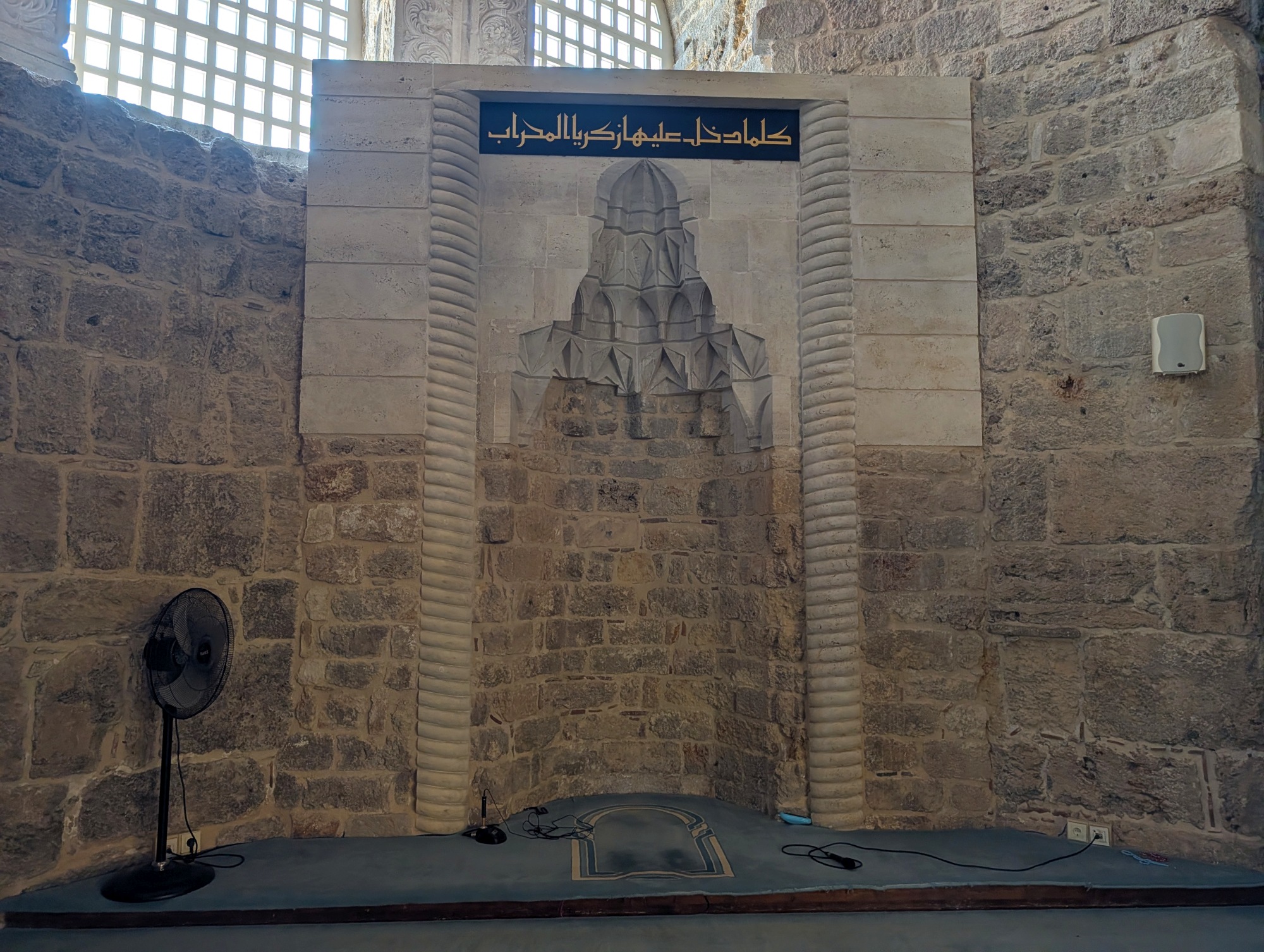
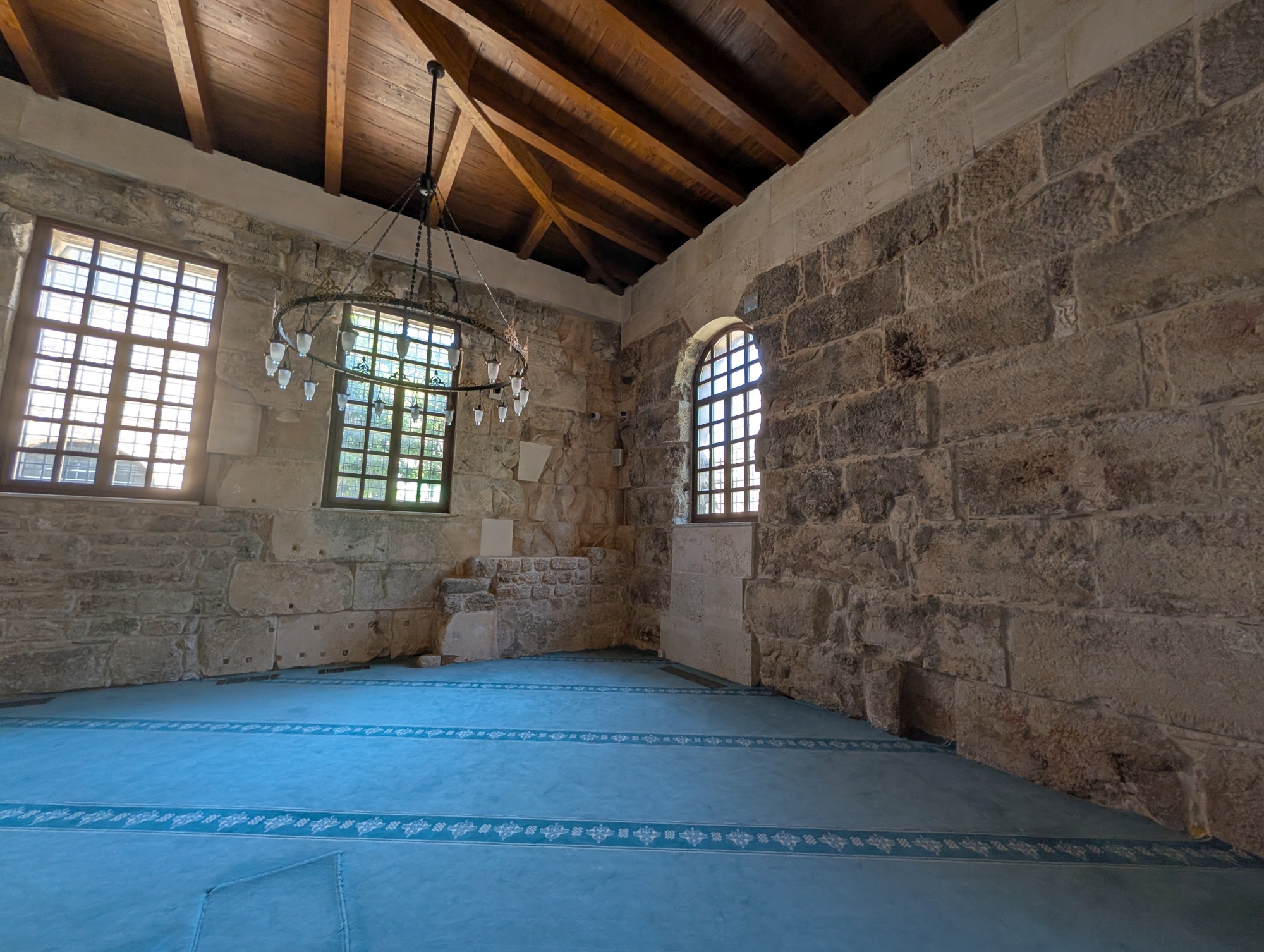
The former church was adapted for Islamic worship while retaining much of its Byzantine architectural structure. A mihrab was installed, and a projecting entrance portal and stone minaret were added to the western façade. The minaret, with its square base, octagonal transition, and cylindrical shaft, became one of the building's most distinctive features. The interior retained the eastern apse and much of the arrangement inherited from the church. During its period as a mosque, a wooden roof covered the building.
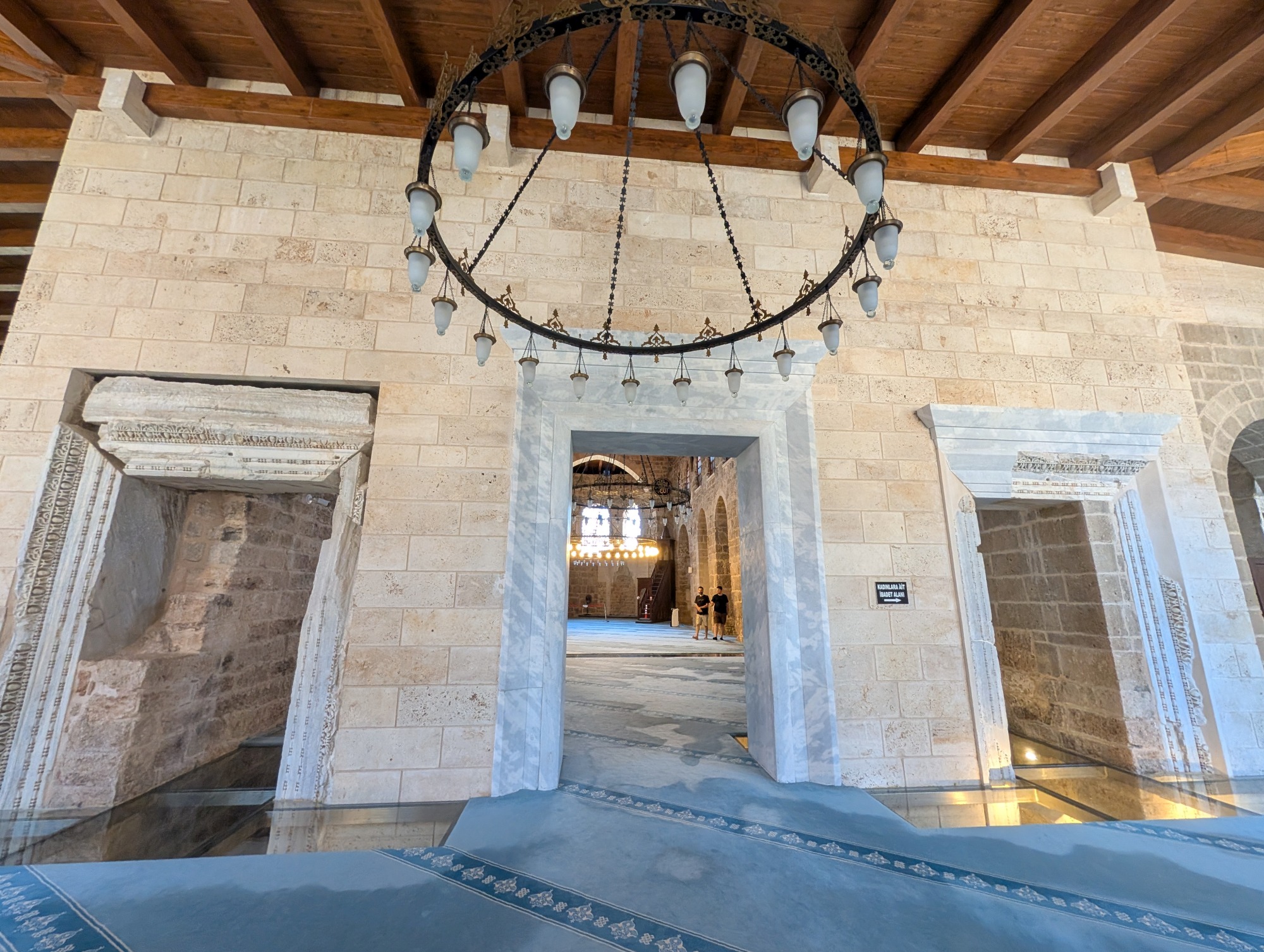
Interestingly, the conversion did not immediately erase all traces of its Christian past. The early 18th-century traveller Paul Lucas described a chapel inside the mosque that remained associated with Christian devotion and was kept closed by the Muslim authorities. Its presence suggests that the former church continued to hold a place in the religious memory of Antalya's Greek Christian community.
The mosque remained in use for approximately four centuries. During the 18th and 19th centuries, however, the population of Kaleiçi changed, and the neighbourhood around the mosque gradually became predominantly Greek Christian again. The building consequently lost much of its Muslim congregation. It was still known as Câmi-i Cedid, or New Mosque, in early 19th-century documents, while the name Korkut Mosque became more common from the second half of that century.
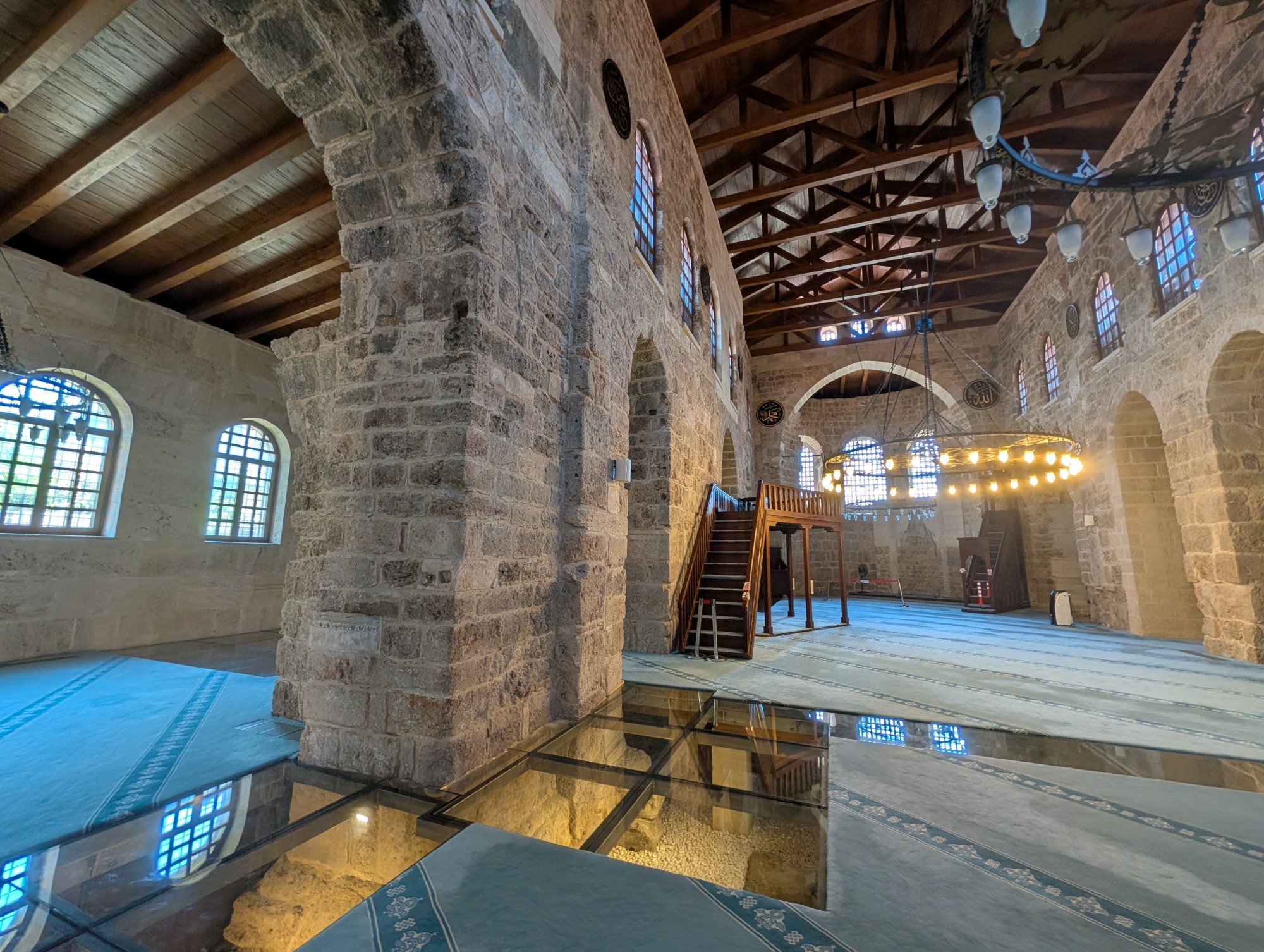
In 1895, a major fire devastated much of Kaleiçi and severely damaged the mosque. Its wooden roof was destroyed, and the upper part of the minaret, including its conical cap, was lost. The building was not repaired and was abandoned. The truncated minaret gave rise to its popular name, Kesik Minare, meaning the Broken Minaret. In 1906, following a plague outbreak, the authorities enclosed the ruins with a high wall, and the former church-mosque remained neglected for much of the following century.
Restoration and Reopening
The restoration of Şehzade Korkut Mosque marked the end of more than a century of abandonment and brought a complex historical monument back into use. The work was particularly significant because the building was not simply repaired as an Ottoman mosque: the project had to address its successive Byzantine, Seljuk, and Ottoman architectural phases, preserve archaeological remains around it, and reconcile its continued religious function with its importance as part of Antalya's historic urban landscape.
An important distinction in the chronology is that preparatory and emergency conservation measures preceded the main restoration campaign. The building had already undergone limited repairs in 1974, when protective railings were installed around the ruins and some unstable sections were secured. These interventions, however, did not halt the deterioration. Further restoration proposals encountered objections and legal proceedings over whether the site should be preserved as an archaeological park or returned to use as a mosque. The eventual decision was that it should retain its religious function.
The project was undertaken by the Antalya Regional Directorate of Foundations, under the supervision of a specialist scientific committee and conservation authorities. Although reports sometimes give 2018 as the beginning of the restoration, the administrative process started earlier: the restoration contract was put out to tender in April 2017 and signed in July. Work was subsequently under way on site, with a major public progress report issued in March 2019.
The restoration was unusually demanding because the building contained masonry and architectural fragments from several historical periods, and its walls had suffered serious structural deterioration. A scientific team was established to supervise the work, while specialists examined old photographs, architectural drawings, travellers' descriptions, and surviving archaeological evidence. The intention was not to create an idealised reconstruction of a single historical phase, but to preserve the different layers of the monument. According to the Antalya Regional Director of Foundations, Hüseyin Coşar, the project was conceived as a museum-mosque, allowing visitors to appreciate the building's long history while it continued to function as a place of worship.
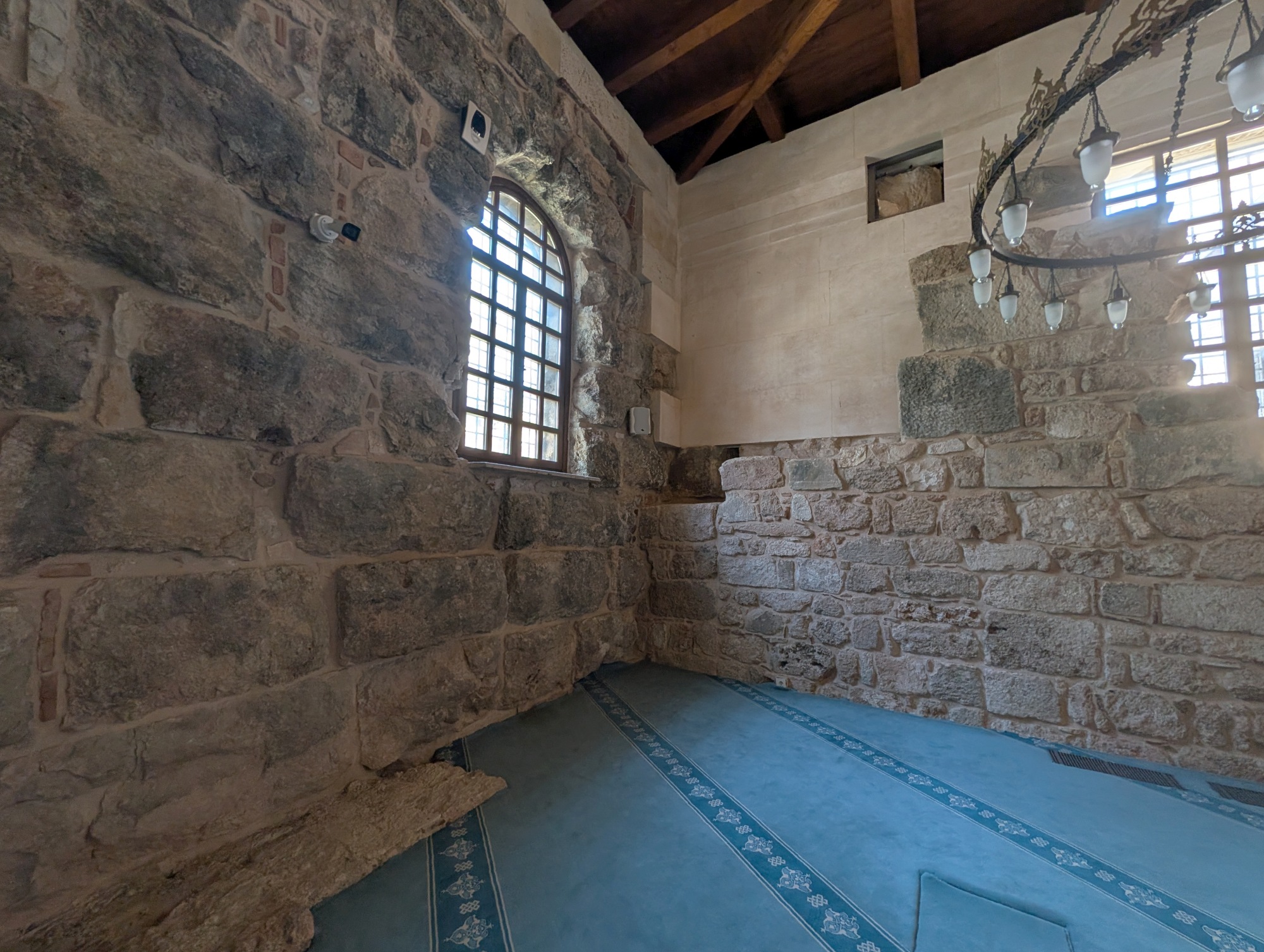
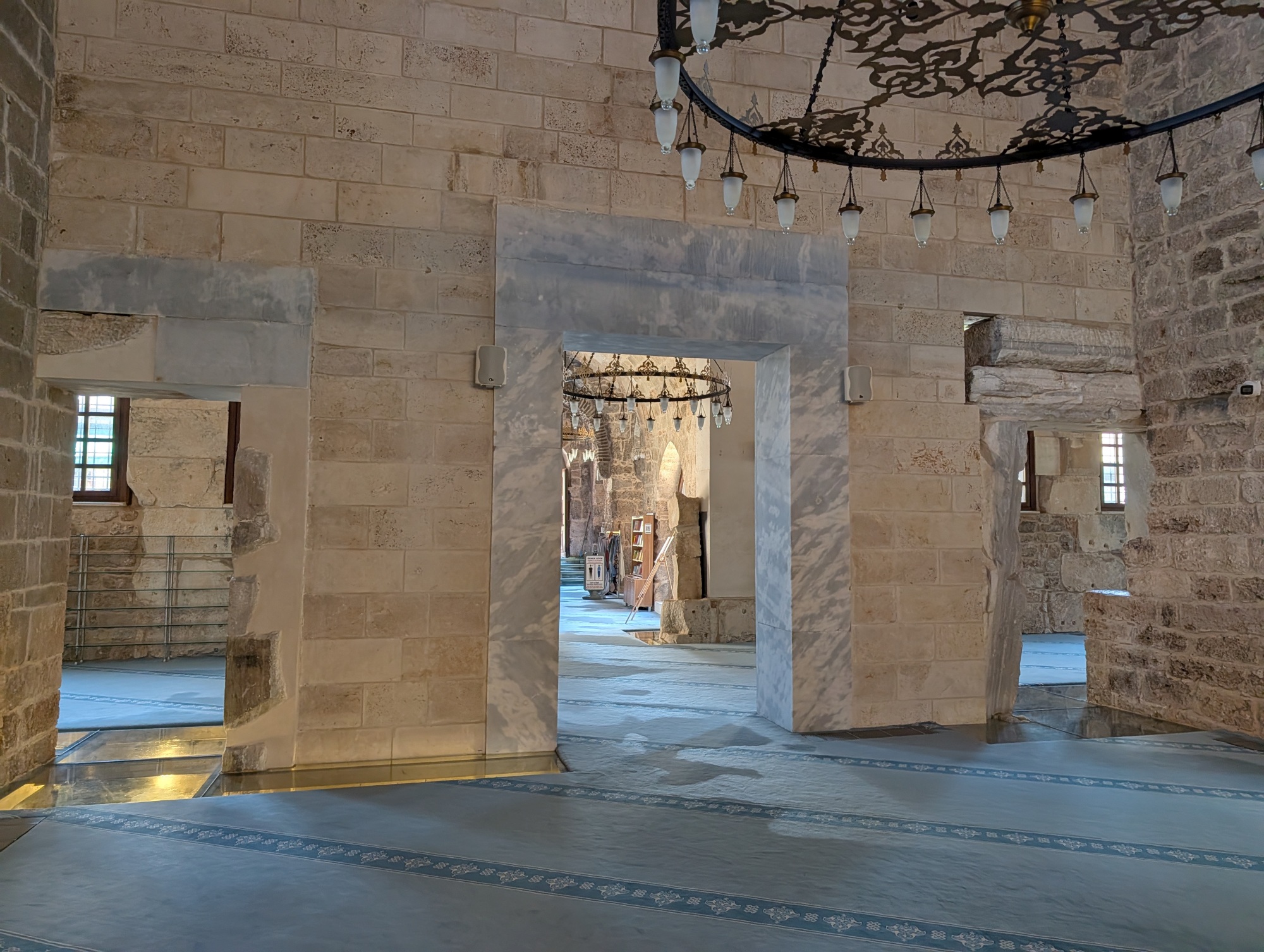
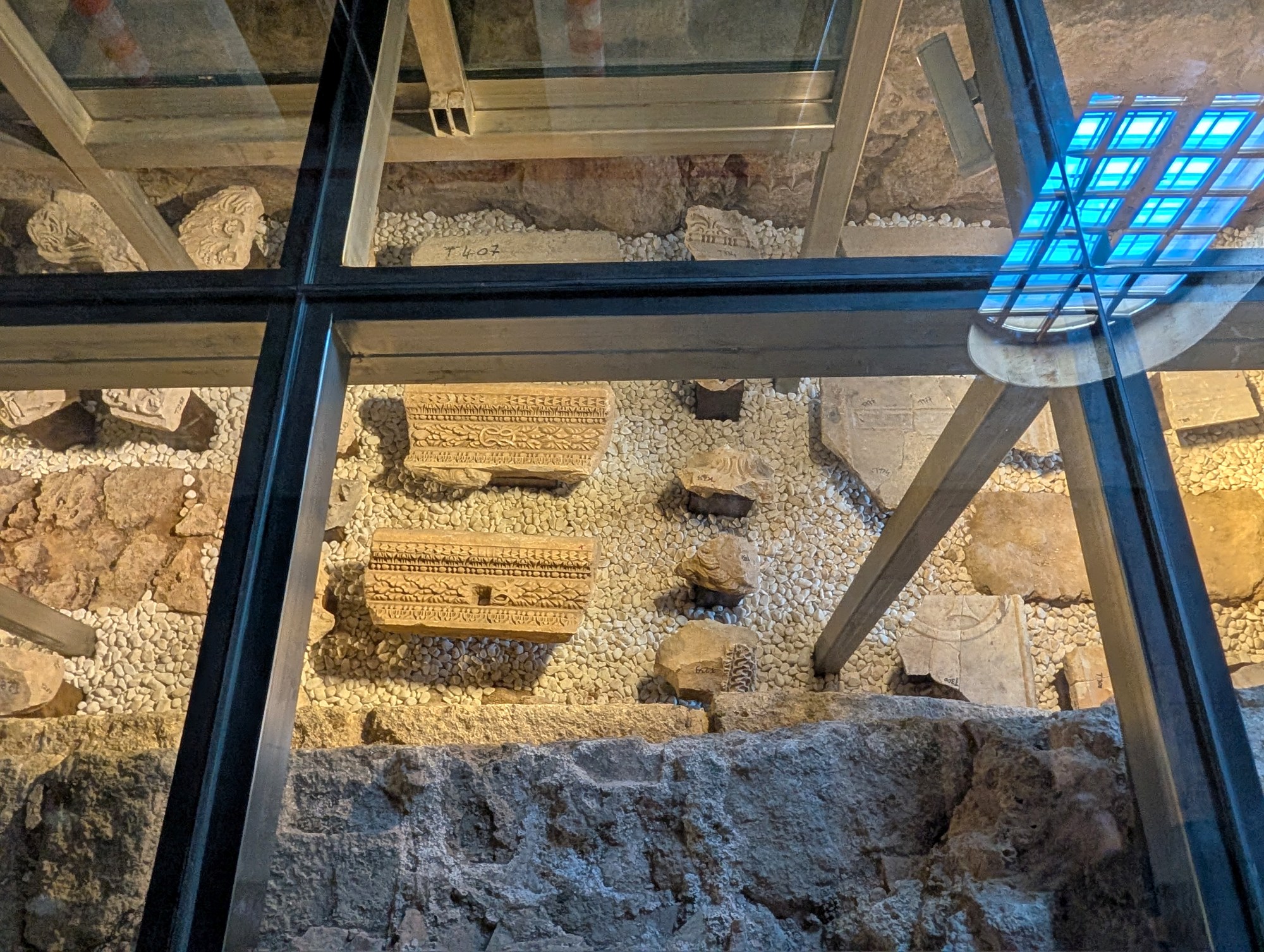
More than 1,300 architectural stones recovered from the building and its courtyard were catalogued and numbered. Their original positions were investigated, and, after examination and approval by the specialists, the surviving pieces were returned to their appropriate locations. Travertine and limestone were used in the masonry repairs, together with traditional lime-based Horasan mortar. The restoration team reported that concrete was not used in the principal conservation work, which relied instead on stone and timber. The project also included improvements to the courtyard, entrance, rainwater drainage, and the presentation of the surrounding archaeological remains.
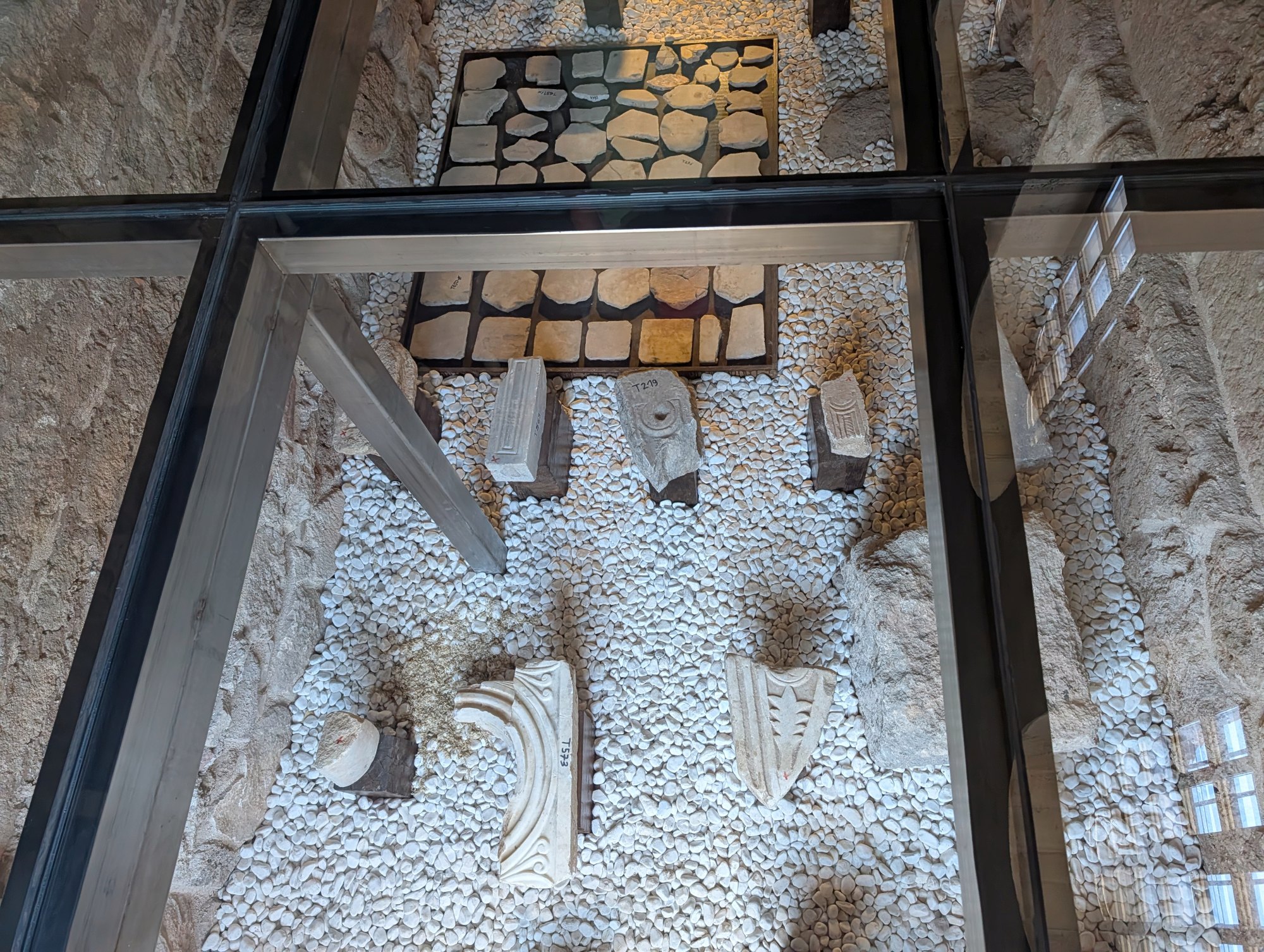
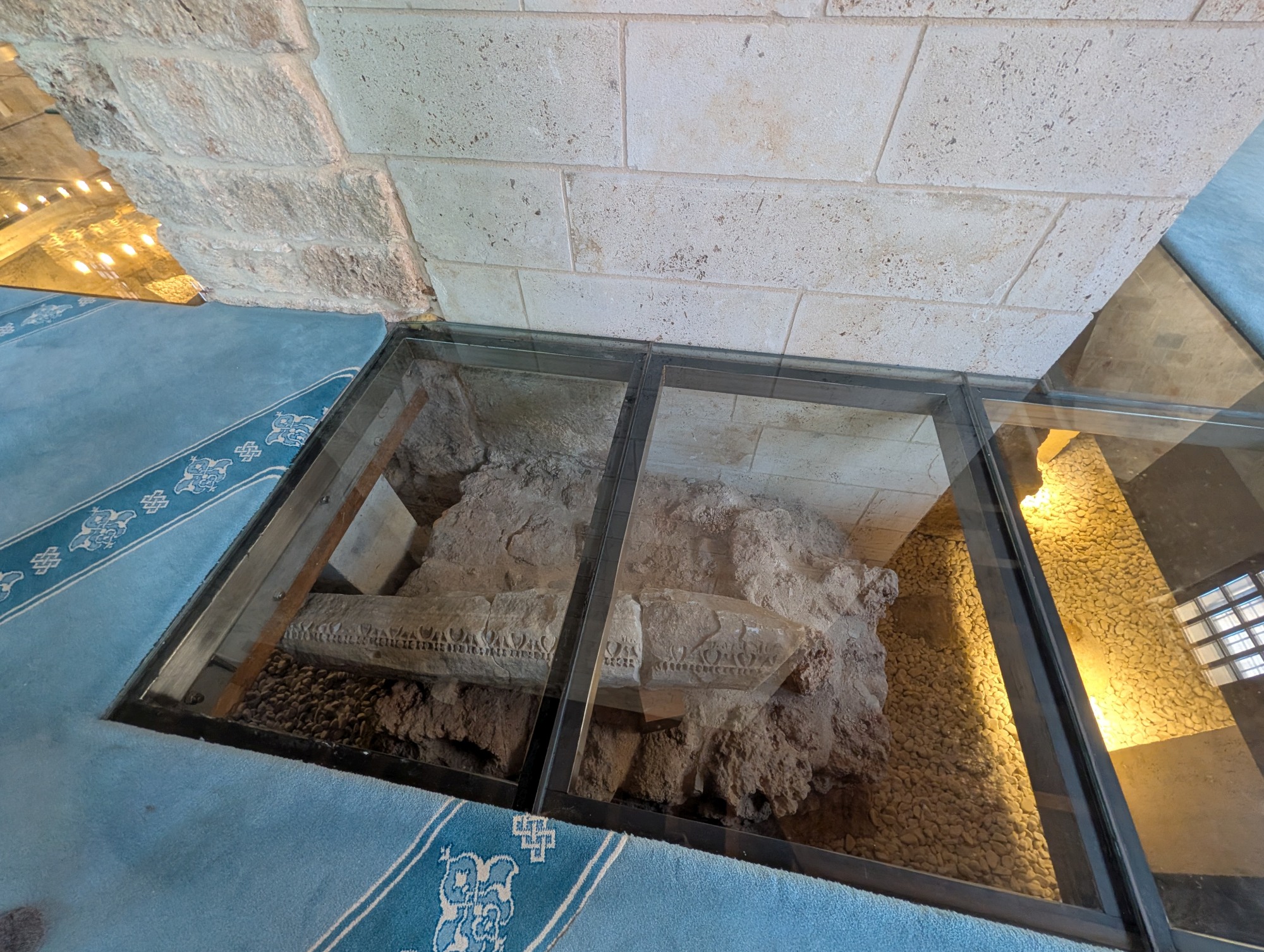
One of the most visible results was the reconstruction of the minaret's wooden conical cap, which had been destroyed in the 1895 fire. It was restored in 2019, using historical visual evidence to recover the minaret's former appearance. The surrounding archaeological area was also arranged for visitors, with historical architectural fragments displayed in designated areas and behind glass. Excavations around the mosque had revealed further remains, including the circular, single-colonnade structure identified as a monopteros, as well as tombs and inscriptions. These discoveries formed part of the site's wider interpretation rather than being treated as isolated finds.
The mosque's reopening was initially planned for 5 March 2021, a date chosen to coincide with the traditional anniversary of the Seljuk conquest of Antalya. However, the work was not completed according to that timetable. The building finally reopened for Muslim worship on 10 January 2022, when the first prayer was held after approximately 126 years of closure. It was also made accessible to visitors, with its courtyard serving as an open-air archaeological display.
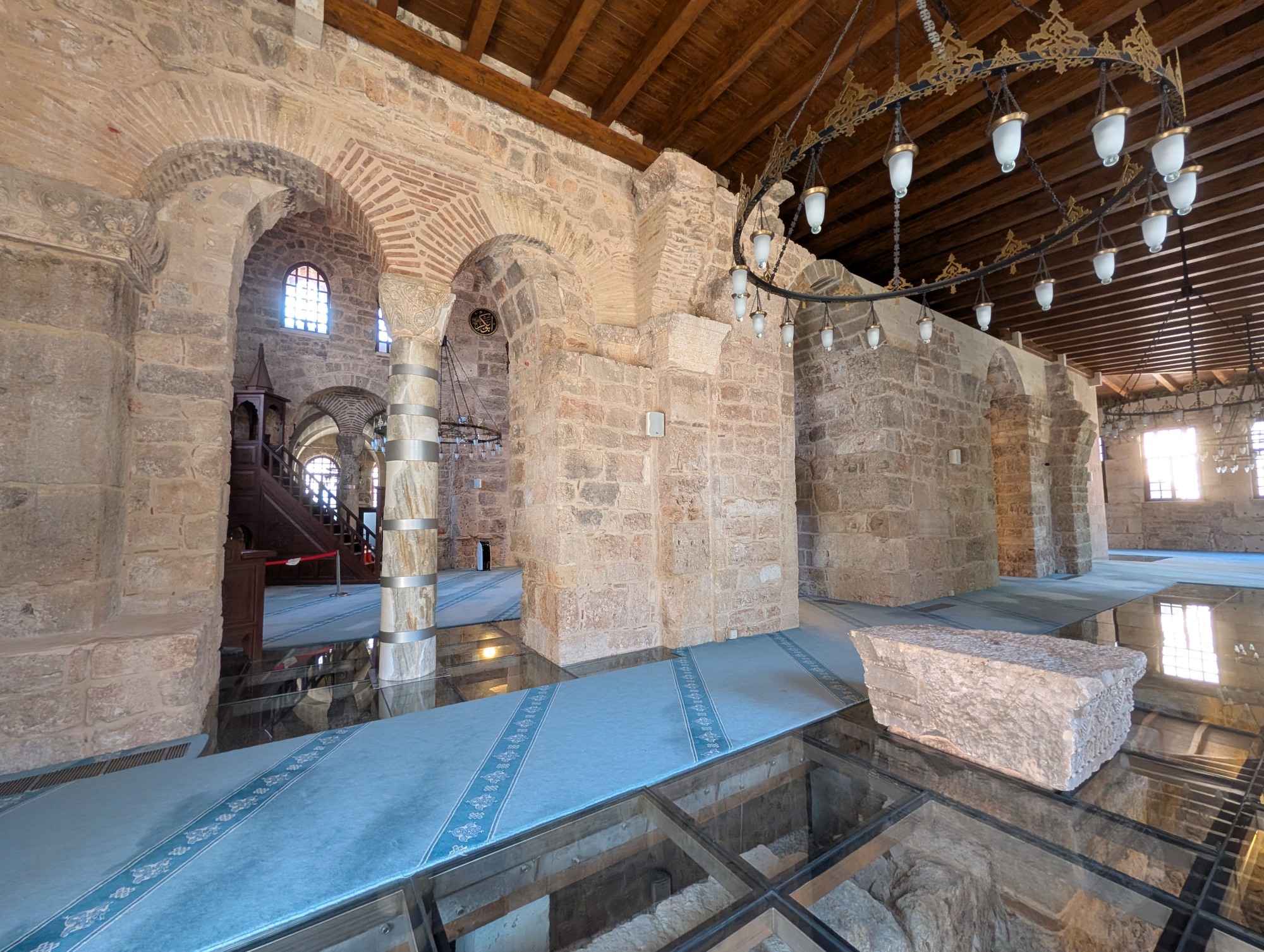
The restoration thus brought Şehzade Korkut Mosque back into religious use while making its unusually complex architectural history more visible. The surviving structure now presents not only the remains of a Byzantine church and its later Seljuk and Ottoman transformations, but also the results of modern conservation work intended to preserve these successive layers for future generations.
Bibliography
- Ballance, M. H. 1955. "Cumanin Cami'i at Antalya: A Byzantine Church." Papers of the British School at Rome. An early architectural survey identifying several construction phases of the building.
- Bozkurtoglu Özcan, Özge. 2017. "The Reasons Behind the Occupation of Adalia in 1361 by the Lusignans." Cedrus 5: 397–409. A detailed study of the Lusignan conquest of Antalya, the military and economic difficulties of the occupation, and the events leading to the withdrawal of Cypriot forces in 1373.
- Çügen, Hasan Fevzi, Bülent İşler, Zehra Aksoy, and Fatih Mehmet Tanrıveren. 2022. "Şehzade Korkut Camii Restitüsyon Önerileri." In Antalya Şehzade Korkut Camii: Bir Vakıf Yapısında Korumacılık 2017–2022, 27–70. A study presenting proposals for the reconstruction of the building's successive architectural phases.
- Dayar, Evren. 2022. "Antalya Kaleiçi Panhagia Kilisesi ve Câmi-i Cedid." Belleten 86 (306). An important study of the church's history and its subsequent conversion into a mosque, particularly valuable for clarifying the Ottoman-period chronology.
- Department of Christian Archaeology, University of Bonn. "Bauplastik Cumanın Camii." Ongoing research project, initiated in 2022, examining the architectural sculpture and successive construction phases of the building.
- Eyice, Semavi. 2002. "Korkut Camii." Türkiye Diyanet Vakfı İslâm Ansiklopedisi. An overview of the mosque's history and architecture.
- Eyice, Semavi. "Antalya." Türkiye Diyanet Vakfı İslâm Ansiklopedisi. An overview of the city's historical development.
- Hellenkemper, Hansgerd, and Friedrich Hild. 2004. Lykien und Pamphylien. Tabula Imperii Byzantini 8. Vienna. See especially p. 325.
- Kaymak, Gamze. 2009. Antalya Cumanın Camii: Mimari Tarihi ve Bizans Kökeni. See especially pp. 133–134.
- Kaymak-Heinz, Gamze. 2020. "O Şimdi Bir Cami; Panhagia, Antalya Kesik Minare." Amisos 5 (9): 324–342. A study of the building's architectural development and Byzantine origins, also discussing the effects of the 1895/1896 fire. Dayar's later research is preferable for the Ottoman-period chronology.
- Varkıvanç, Burhan, and Hülya Kökmen-Seyirci. 2021. "Cumanın Camii'ndeki Erken Bizans Dönemi Paye Başlıkları." OLBA 29: 363–390. A detailed examination of the Early Byzantine pier capitals and their architectural context.
Visitor tips:
Şehzade Korkut Mosque, also widely known as Kesik Minare (Broken Minaret), is located in Antalya's historic Kaleiçi quarter, at Kılınçarslan Mahallesi, Hesapçı Sokak. It is an active mosque and can be visited outside prayer times.
The officially announced opening hours are 10:00–17:30 daily, including weekends. These hours should be treated as indicative rather than guaranteed, since access may be affected by prayer services, religious occasions, or local arrangements. Visitors planning a special or group visit are advised to contact the mosque in advance.

The visit offers an opportunity to examine the building's successive architectural phases, from its Byzantine church structure to its later conversion and adaptation as a mosque. Inside, look for the surviving eastern apse, the arrangement of the central space and aisles, and the architectural details preserved during the recent restoration. Archaeological remains and historical fragments are also displayed within the complex, including under glass floors. Outside, the restored minaret, with its reconstructed conical cap, is the most recognisable feature. The surrounding archaeological area contains further remains associated with ancient Attaleia, including the circular, single-colonnade structure identified as a Roman monopteros, together with tombs and inscriptions.
As the building remains a place of worship, visitors should dress modestly; women should cover their heads, and everyone must remove their shoes before entering the prayer area. During prayer services, sightseeing may be restricted, and visitors should remain quiet and avoid disturbing worshippers.
Allow approximately 20–30 minutes for the mosque and its immediate archaeological surroundings, or longer if you wish to examine the architectural details carefully. The monument is easily incorporated into a walking tour of Kaleiçi, among the historic streets and other surviving remains of ancient and medieval Antalya.
Getting there:
Şehzade Korkut Mosque is situated in the southern part of Kaleiçi, Antalya's historic old town, in Kılınçarslan Mahallesi. Its address is generally given as Hesapçı Sokak, although the narrow and winding streets of the quarter make the minaret itself the easiest landmark to look for.
The mosque can be reached on foot from several of Kaleiçi's principal entrances and landmarks. From Hadrian's Gate (Üçkapılar), walk into the old town and follow Hesapçı Sokak street towards Hıdırlık Tower; the distinctive minaret of the mosque is a useful guide. It is also within walking distance of the old harbour and other major sights in Kaleiçi, making it easy to include in a walking tour of the historic quarter.
Visitors arriving by public transport can take the AntRay tram to İsmetpaşa, the stop serving the northern edge of Kaleiçi, and continue on foot through the old town. City buses also stop around Cumhuriyet Meydanı, from where Kaleiçi can be entered on foot. The historic quarter has narrow streets and restricted vehicle access, so visitors arriving by car should use parking outside the old town and complete the journey on foot.
- Log in to post comments