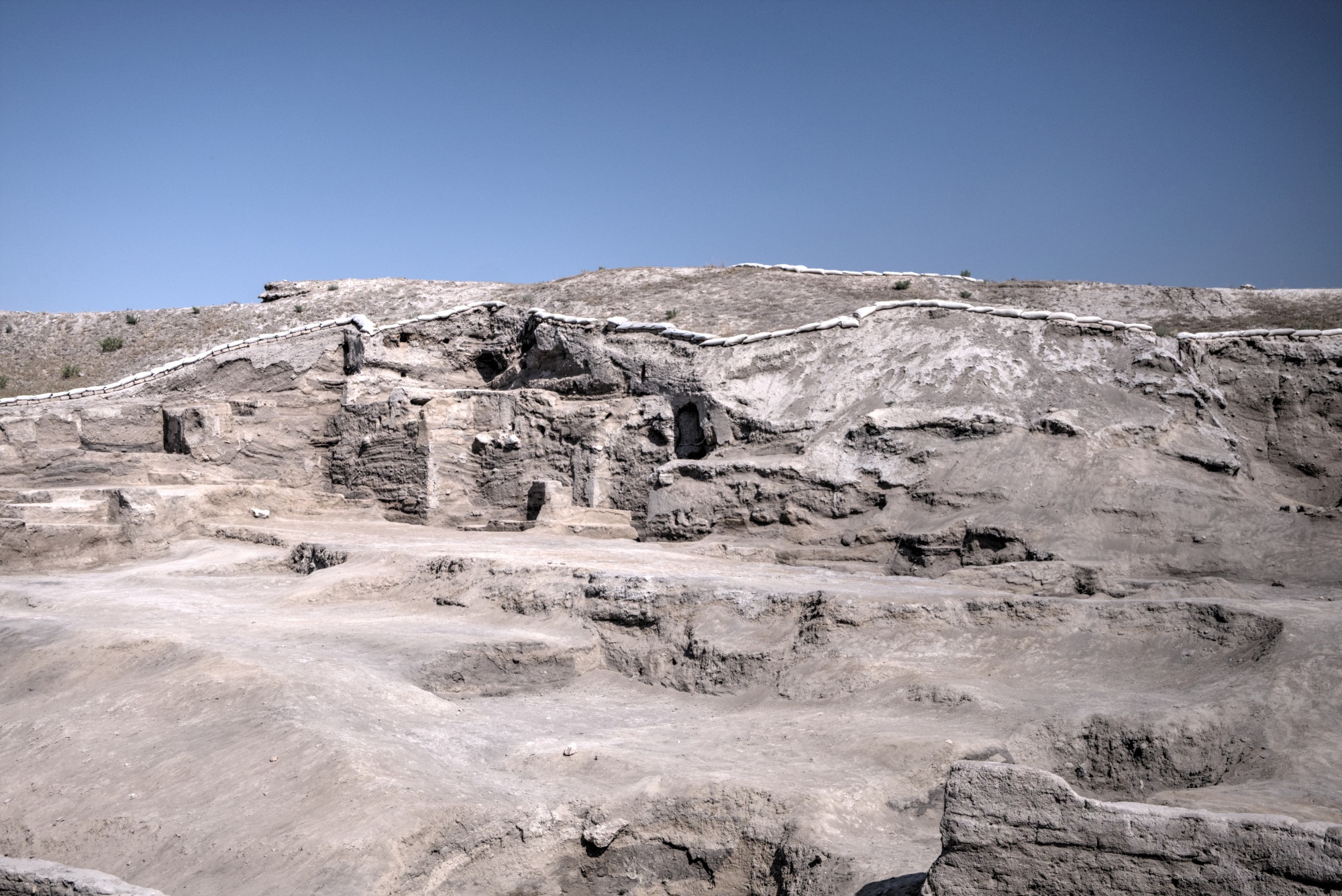
Acemhöyük is one of the largest and most important Bronze Age archaeological sites in central Anatolia. Situated within the modern town of Yeşilova, approximately 16 km northwest of Aksaray, in Aksaray Province, central Turkey, the settlement occupies a strategic position on the southern side of the Salt Lake (Tuz Gölü), in the fertile plain associated with the Melendiz River. Its geographical setting placed it along important routes crossing the Anatolian plateau in both east–west and north–south directions, facilitating contact between central Anatolia, western Anatolia, and the regions of northern Syria and Cilicia. These connections contributed to the settlement's development as an important political and commercial centre during the Bronze Age.
The archaeological site consists of two principal parts: a large artificial mound (höyük) and an extensive Lower Town surrounding it. The approximately oval-shaped mound measures around 650–700 m east–west and 550–600 m north–south, rising to a height of about 20 m above the surrounding plain. The Lower Town, whose full extent has not yet been established, spread over an area considerably larger than the mound itself during the settlement's most prosperous period. Much of this ancient urban area lies beneath the modern buildings of Yeşilova, while the mound preserves the remains of successive settlements accumulated over several millennia.
Acemhöyük was first occupied during the Early Bronze Age, in the third millennium BCE, and developed into one of the major centres of central Anatolia. Its greatest prosperity came during the Middle Bronze Age, particularly in the period associated with the Old Assyrian trading network, when it became an important centre of regional political authority and long-distance commerce. The remains of monumental palaces, administrative buildings, and rich collections of luxury objects demonstrate that its significance extended far beyond that of a trading settlement. The site is especially renowned for the Sarıkaya and Hatipler palaces, as well as for exceptional finds including ivory furniture decorations, precious-metal objects, stone vessels, and clay sealings bearing impressions connected with prominent rulers of the ancient Near East.
The ancient name of the settlement has not been established with certainty. Acemhöyük is frequently identified with Purušḫattum (also written Purušhanda or Purušḫanda), an important city mentioned in ancient Anatolian and Mesopotamian sources, although this identification remains a scholarly hypothesis rather than a proven fact.
The modern name Acemhöyük, meaning roughly "Persian mound", is reportedly derived from groups originating from Iranian Azerbaijan who were settled in the area following Sultan Selim I's campaign against the Safavid Empire in 1514. According to local historical accounts, three obas (tribal or communal groups) settled at the foot of the mound, giving the settlement its present name. Despite the uncertainty surrounding its ancient identity, the archaeological evidence firmly establishes Acemhöyük as one of the most significant urban centres of Bronze Age Anatolia and an important source of information about the political organisation, commercial networks, and cultural connections of the ancient Near East.
Historical overview:
Early Bronze Age (third millennium BCE)
Acemhöyük was first settled during the first half of the third millennium BCE, and its development into a major urban centre was closely connected with the growth of regional trade networks in central Anatolia. Excavations, particularly those conducted on the southern slope of the mound, have revealed a sequence of Early Bronze Age occupation levels that provides evidence of the settlement's gradual expansion and changing economic and cultural relationships.
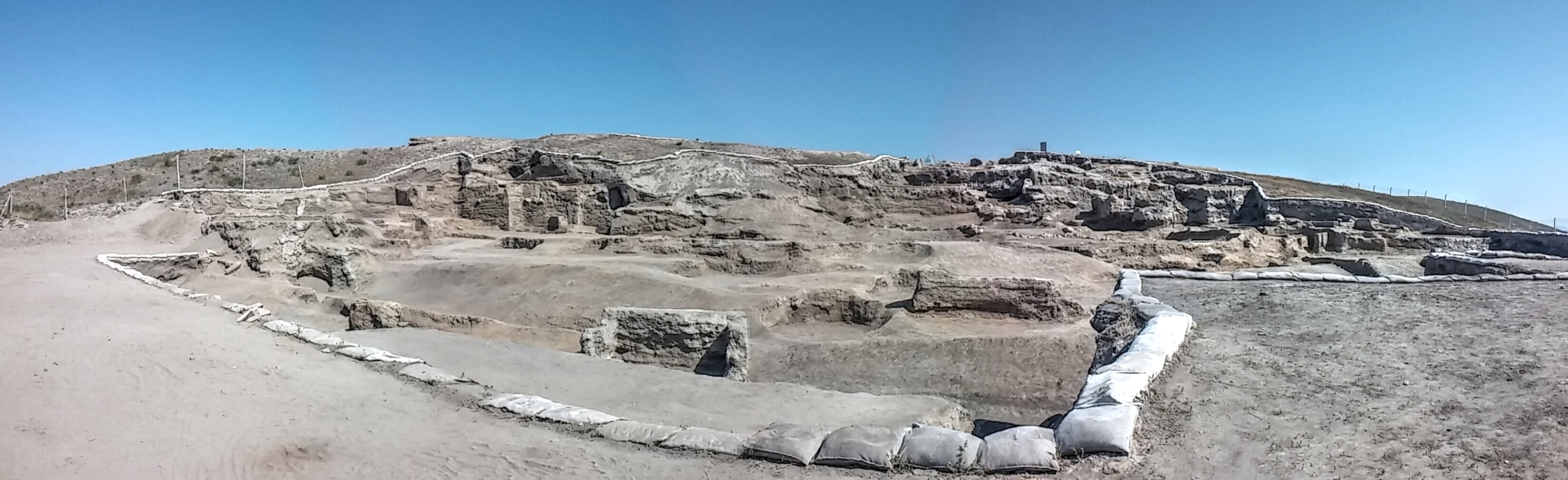
The remains uncovered in the lower occupation levels demonstrate that Acemhöyük was already an important fortified settlement during this period. Its defences included substantial mud-brick city walls approximately 4.5 m thick, which enclosed an urban area containing domestic buildings. According to the interpretation presented on the archaeological information board, these fortifications were destroyed during a military campaign attributed to Sargon of Akkad against the Anatolian city of Burušhattum (also known as Purušḫattum or Purušḫanda), traditionally identified with Acemhöyük.
The expedition is associated with the later literary tradition known as the King of Battle, which recounts Sargon's campaign against Purušḫanda. Although these names are generally understood as different forms of the same ancient toponym, the historicity of the expedition and the identification of the city with Acemhöyük remain subjects of scholarly debate. If the campaign did take place, it would have occurred during Sargon's reign, approximately 2334–2284 BCE. Following the destruction, the settlement was protected by a new circuit of walls enclosing a larger area, suggesting that its reconstruction was accompanied by further urban expansion. Houses within the fortified settlement were arranged closely together and generally had rectangular or trapezoidal ground plans, reflecting the architectural practices of the period.
Burial customs also provide insight into the lives of Acemhöyük's Early Bronze Age inhabitants. The dead were sometimes buried within domestic buildings, beneath the floors of their houses, while other individuals were interred in simple earth graves or large earthenware containers in cemeteries outside the settlement. The material culture of this period was dominated by pottery vessels, both handmade and wheel-made. Other objects were manufactured from stone, bone, and metal, and appear to have served mainly practical purposes, although some had ritual functions.
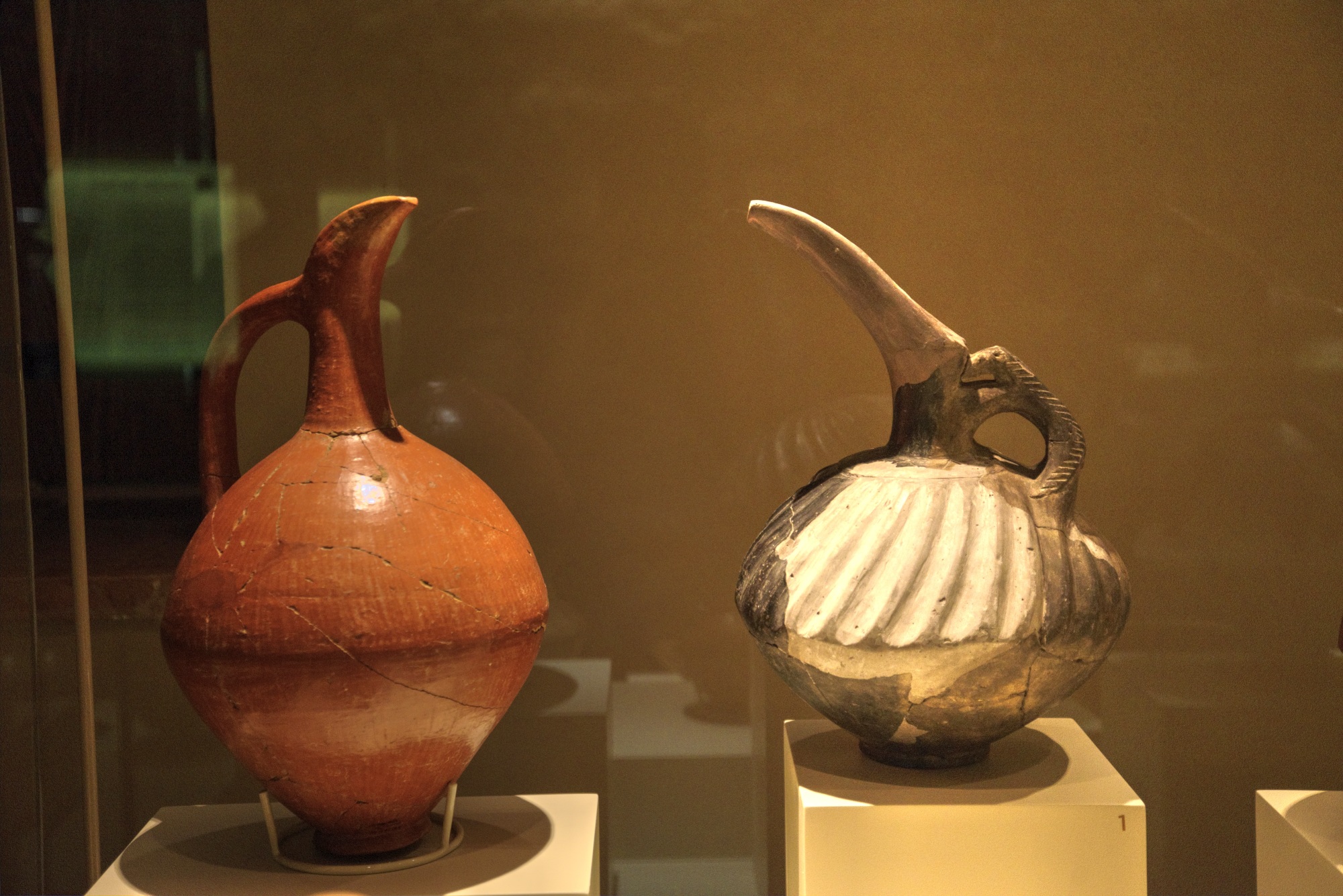
During the second half of the third millennium BCE, Acemhöyük became increasingly integrated into commercial networks connecting central Anatolia with western Anatolia, northern Syria, and Mesopotamia. Archaeological finds from this period include pottery, stone and bronze objects, and bone artefacts whose forms and manufacturing traditions can be compared with material from other regions. Particularly significant is the presence of pottery characteristic of western Anatolia, suggesting sustained contacts with communities to the west. These finds indicate that Acemhöyük was already an important participant in the exchange of raw materials, manufactured goods, and technological knowledge well before the establishment of the Old Assyrian trading colonies in Anatolia.
Among the finds illustrating these early connections are small vessels classified as "Syrian bottles", examples of which have been recovered from Levels XI, X, and IX on the southern slope of the mound. These vessels are characteristic of the wider cultural and commercial exchanges of the second half of the third millennium BCE and are known from archaeological sites across Syria, Anatolia, and Mesopotamia. They are generally thought to have served as containers for aromatic substances, oils, or perfumes, although their precise function remains uncertain.
A particularly significant example from Level XI was studied in detail by Yalçın Kamış, who dated it to the beginning of Early Bronze Age III, approximately 2450–2300 BCE. Its fabric and surface characteristics differ from those of locally produced pottery, suggesting that it was imported. More specifically, its shape appears to be related to flat- and ring-based flasks distributed in northwestern Syria and neighbouring areas. This discovery provides particularly clear evidence that Acemhöyük maintained contacts extending beyond central Anatolia from at least the middle of the third millennium BCE.
The settlement's favourable position on routes crossing the central Anatolian plateau helped it develop into one of the region's important centres. Its subsequent prosperity was therefore not an entirely new phenomenon brought about by Assyrian merchants, but rather the continuation of a longer process of urban and economic development.
The Middle Bronze Age: the rise of a major political and commercial centre
At the beginning of the second millennium BCE, Acemhöyük emerged as one of the major political and economic centres of central Anatolia. This development built upon a much longer history of urban and economic growth, as archaeological finds demonstrate that the settlement had maintained commercial and cultural contacts with regions beyond central Anatolia since at least the Early Bronze Age III. The expansion of the Old Assyrian trading network brought a new dimension to these connections, as merchants from the city of Aššur established commercial settlements in Anatolian towns and maintained extensive relations with local rulers and trading communities.
The Assyrian merchants were particularly interested in obtaining metals, including copper, silver, and gold, as well as other valuable commodities available in Anatolia. In return, they brought tin and high-quality textiles from Mesopotamia, using donkey caravans to transport these goods across the long overland routes connecting Aššur with the Anatolian plateau. Tin was especially important because it was relatively scarce in Anatolia and was required for the production of bronze. The merchants also participated in trade within Anatolia itself, buying and selling copper, wool, and textiles between different settlements and thereby extending their activities beyond the exchange of imported goods for precious metals.
Their commercial activities were organised through a network of trading establishments known as kārum (plural kārū) and smaller stations called wabartum (plural wabartū). The Akkadian word kārum, originally meaning a quay or harbour, came to designate a commercial quarter or trading community established alongside an Anatolian city. These settlements were not independent Assyrian colonies in the political sense, but organised communities of foreign merchants operating within the territories of local rulers. The larger kārū were generally situated in important urban centres and served as permanent bases for commercial activity, while the smaller wabartū functioned as subordinate trading posts or waystations along the caravan routes. Together, they formed an extensive network linking Aššur with the principal economic and political centres of central Anatolia.
The most important establishment was Kārum Kaneš, situated in the Lower Town of the ancient city of Kaneš (modern Kültepe, near Kayseri). It functioned as the principal hub of Assyrian commerce in Anatolia, coordinating trade, communications, and the activities of the smaller trading communities. Other important kārū were established at Hattuš (later the Hittite capital Hattusa, near modern Boğazköy), Wahšušana, Hahhum, Zalpa, Turhumit, and Purušhattum, although the precise locations of some of these ancient cities remain disputed. The network extended across a considerable part of Anatolia, from the regions south of the Taurus Mountains towards the central plateau and the northern territories. Archaeological and textual evidence indicates that there were several dozen Assyrian trading communities and stations, although their size, importance, and period of operation varied considerably.
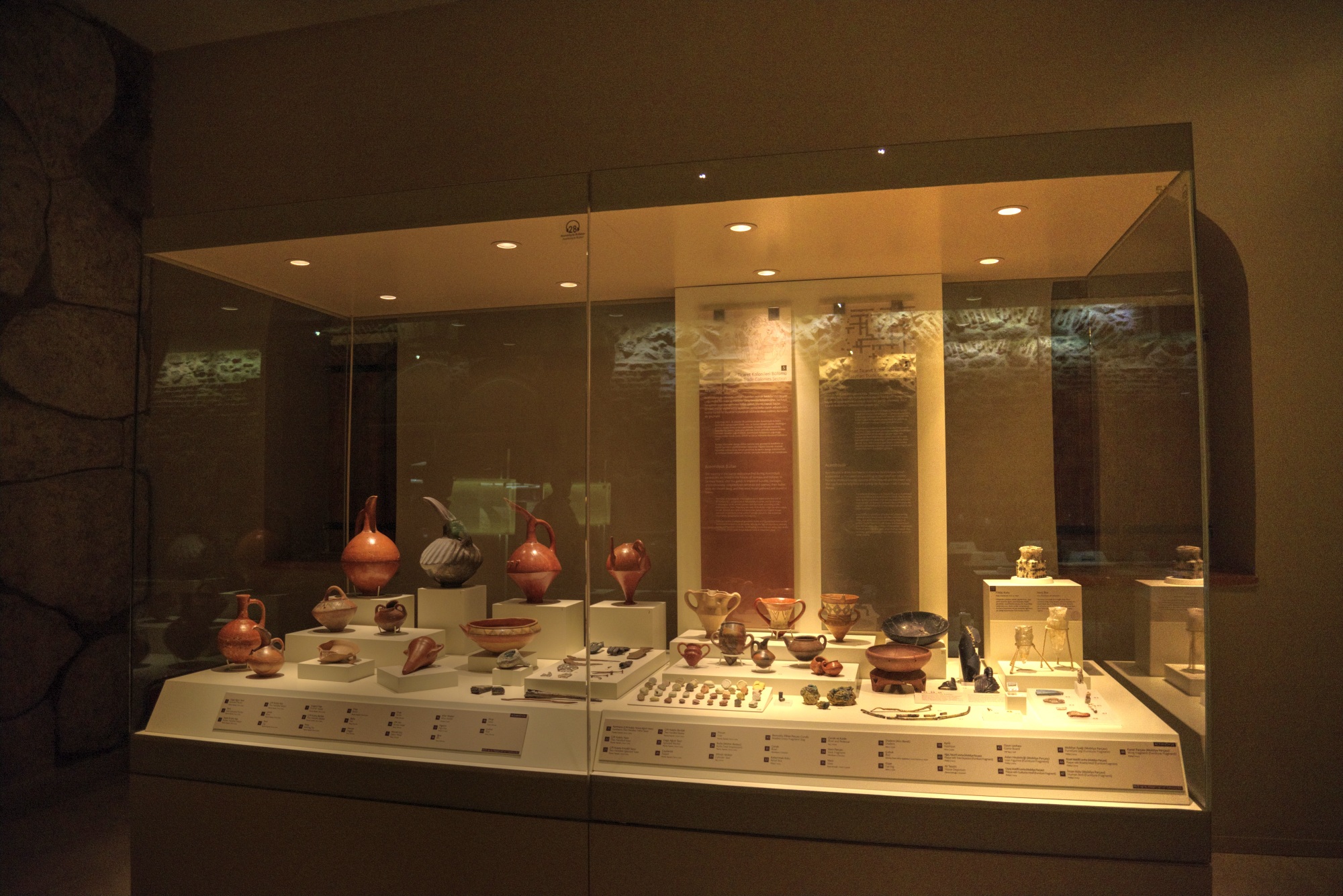
The kārū were not merely warehouses where imported goods were stored before being exchanged. They were inhabited commercial quarters in which Assyrian merchants maintained their households, conducted business, employed agents, and established relationships with local inhabitants. Their organisation was based largely on family-run trading enterprises, with merchants in Anatolia acting as representatives of relatives and business partners in Aššur. Commercial ventures could involve several investors, who contributed capital and shared the profits and risks. Merchants also entered into partnerships, extended loans, bought goods on credit, and conducted transactions on commission. Written contracts and letters, recorded on clay tablets in cuneiform, regulated these arrangements and provided evidence of an increasingly sophisticated system of accounting, credit, and commercial law.
The Assyrian merchant communities also possessed their own internal institutions. Assemblies representing the local Assyrian population dealt with communal affairs, commercial disputes, and relations with other authorities. Kārum Kaneš occupied a particularly important position within this administrative structure, acting as the principal centre of the network and maintaining communication with the authorities in Aššur. Nevertheless, the merchants operated within the political territories of Anatolian rulers, whose permission was necessary for their activities. Agreements between the Assyrian authorities and local kings regulated commercial rights and obligations, including the payment of customs duties and taxes, and established the conditions under which foreign merchants could conduct business. The system therefore depended on cooperation between the Assyrian trading communities and the indigenous political authorities rather than on the establishment of Assyrian territorial control.
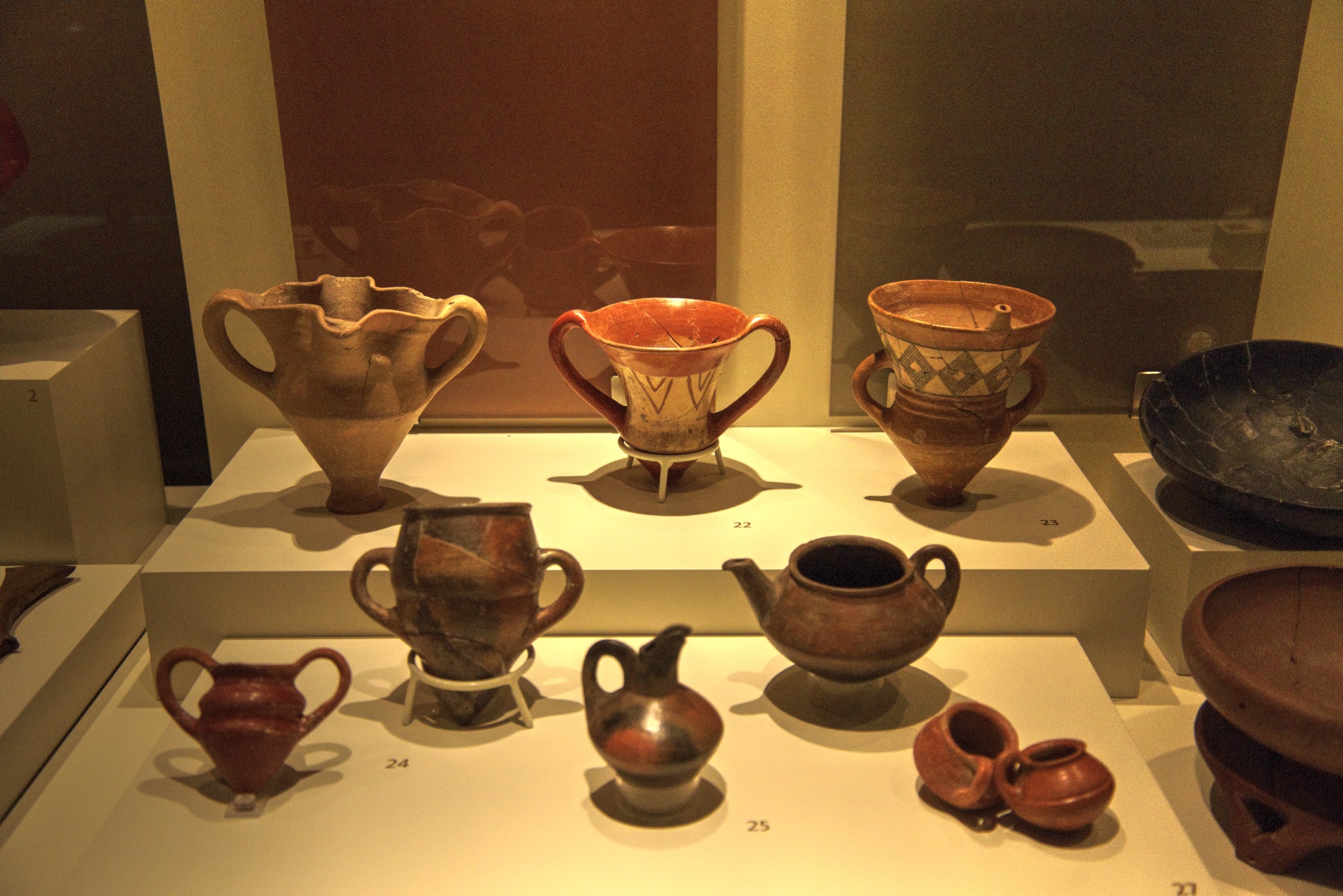
Acemhöyük participated in this wider system of commercial and diplomatic relations. Its monumental architecture, administrative facilities, and collections of luxury objects demonstrate, however, that it was much more than a trading outpost. It was the centre of a powerful local polity whose rulers maintained relations with neighbouring Anatolian authorities and prominent kingdoms of northern Mesopotamia and Syria in the east as well as Troy and the Cyclades in the west.
The ancient name of this city remains uncertain, although it is commonly identified with Purušhattum (also known as Purušhaddum or Purušhanda), an important political and commercial centre mentioned in Old Assyrian and Hittite sources. This identification has been supported by several scholars, but alternative proposals exist. In particular, Gojko Barjamovic has suggested that Acemhöyük may instead have been the ancient settlement of Ulama, placing Purušhattum farther west, near modern Bolvadin.
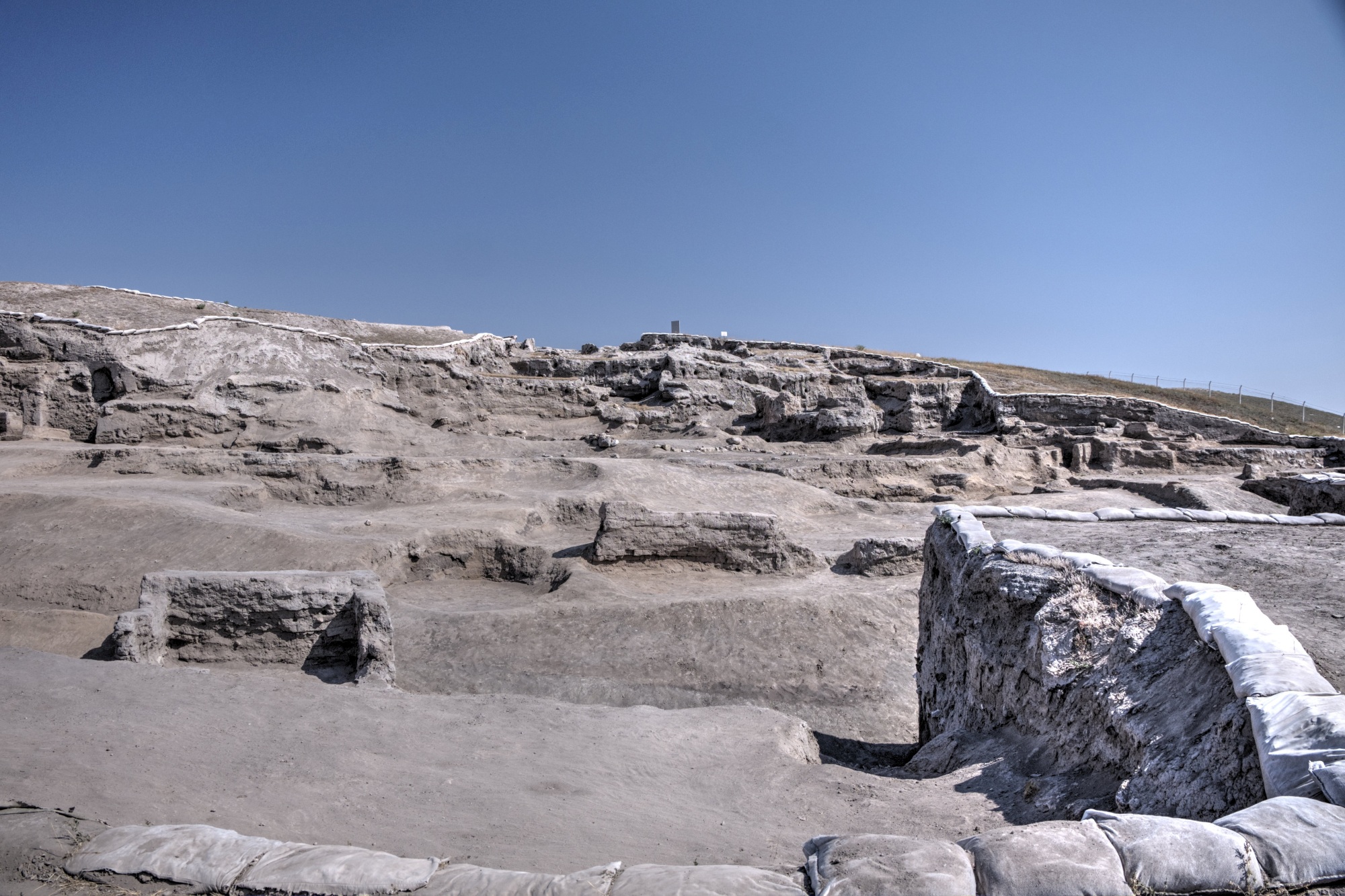
The settlement's most prosperous phase is represented by Architectural Level III, broadly dated to the late 19th and first half of the 18th century BCE. It is contemporary with part of the Assyrian trading settlement at Kaneš (modern Kültepe), although the precise correlation between the two sites' stratigraphic sequences remains debated. This period saw the construction and use of an impressive group of monumental buildings, including the Sarıkaya and Hatipler palaces and the so-called Service Building, which together formed the principal palatial and administrative centre of Acemhöyük.
The chronology of Sarıkaya Palace has been investigated through dendrochronology and radiocarbon dating, with research published in 2016 by Sturt W. Manning and colleagues revising earlier chronological estimates and establishing a more secure framework for its construction and use. The results place the earliest use of the palace around 1793–1784 BCE (68.2% probability) and indicate that it was already in use during the reign of Šamši-Adad I, whose death provides a chronological reference for the building's period of activity. The numerous sealings associated with Aplahanda of Carchemish found at the palace offer an additional historical reference for this period.
International relations and the royal courts
The political importance of Acemhöyük during the early second millennium BCE is particularly evident from the administrative objects recovered in the Sarıkaya Palace. Among the most informative finds are clay bullae bearing impressions of seals belonging to rulers and officials from several important kingdoms of the ancient Near East.
These include seal impressions associated with Šamši-Adad I, the powerful ruler of Upper Mesopotamia who conquered Aššur and incorporated it into his expanding kingdom. Other impressions are connected with Aplahanda, king of Carchemish, and Līter-šarrussu, an official who served both Šamši-Adad I and the earlier king of Mari, Yahdun-Lim. Particularly noteworthy is a seal impression associated with Nagihanum, identified by its inscription as a daughter of Yahdun-Lim, king of Mari and the Sim'alites.
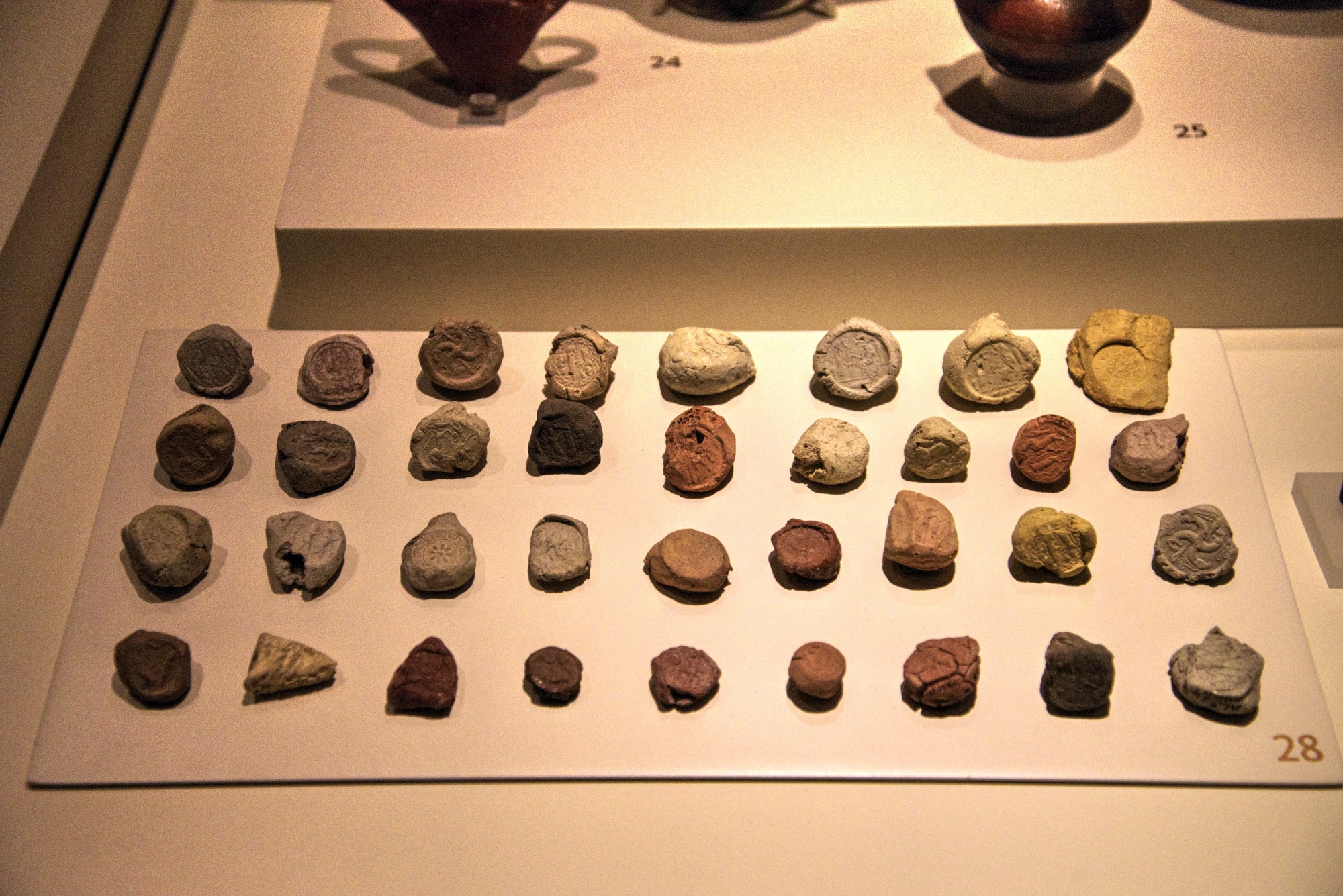
The presence of these objects demonstrates that Acemhöyük maintained connections with influential political authorities in northern Mesopotamia and Syria. They provide valuable evidence for the diplomatic and administrative relationships that accompanied long-distance commerce during the Old Assyrian period. Their discovery in the palace also indicates that the local rulers participated in a network of political contacts extending well beyond central Anatolia.
The precise nature of these relationships is not entirely clear. The seal impressions do not necessarily indicate that the individuals concerned visited Acemhöyük personally; rather, they document the movement of sealed goods, official correspondence, or administrative materials between different political centres. Nevertheless, their concentration in the Sarıkaya Palace provides unusually detailed evidence of the international connections maintained by the local court.
The destruction of the palatial complex and the end of its prosperity
Architectural Level III eventually ended in a major conflagration, probably around the middle of the 18th century BCE, which destroyed the principal monumental buildings of Acemhöyük. The extensive use of timber in their construction appears to have contributed to the intensity of the fire, which left charred structural remains and damaged numerous objects recovered during excavations. Although the destruction was widespread, its cause has not been established. The Sarıkaya Palace, the Hatipler Palace, and the Service Building were subsequently abandoned, marking the end of Acemhöyük's most prosperous architectural phase.
The destruction is particularly significant because the buildings contained substantial quantities of administrative material, stored goods, and valuable objects. The burning and subsequent collapse of the structures preserved numerous artefacts in their archaeological contexts, although the extent of preservation varied between rooms and parts of the complex. Particularly important are the clay bullae bearing impressions of cylinder and stamp seals, which were recovered in large numbers, especially from Sarıkaya Palace. These sealings include impressions in Old Assyrian, Old Syrian, Old Babylonian, and Anatolian styles, as well as examples associated with historically identifiable figures, including Šamši-Adad I, Nagiha[num], daughter of the ruler Yahdun-Lim of Mari, and Aplahanda of Carchemish. They provide valuable evidence for the administrative practices of the palace and its political, diplomatic, and commercial connections.
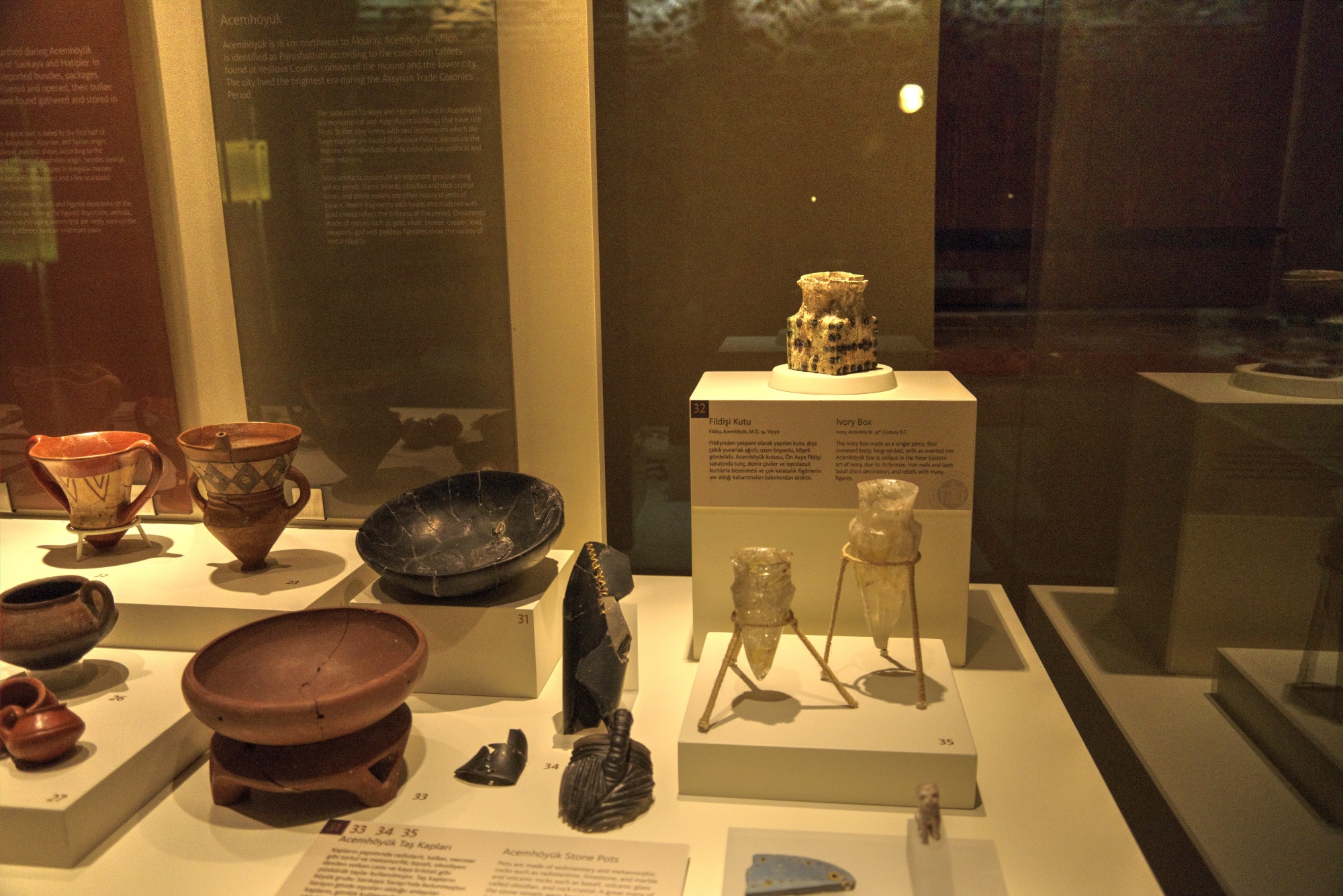
Other finds include ivory furniture decorations and figurines, gold objects, vessels made of rock crystal and obsidian, metal ingots, tools, weapons, jewellery, ceramic vessels, and materials associated with craft production and storage. The discoveries also reveal the variety of activities conducted within the monumental buildings, which served not only as residences and administrative centres but also as storage facilities and workshops. Although some of the most remarkable luxury objects associated with Acemhöyük were acquired by museums before or outside the systematic excavations, archaeological discoveries from the palace complex demonstrate the wealth, sophisticated administration, and extensive connections of its occupants.
Although the destruction marked the end of Acemhöyük's most prosperous palatial phase, it should not automatically be interpreted as the complete abandonment of the settlement. The archaeological sequence indicates a more complicated history, and the relationship between the destruction of the monumental buildings and subsequent occupation requires further examination.
Later Bronze Age and subsequent occupation
Following the destruction of the principal monumental buildings, Acemhöyük was rebuilt, although its subsequent history remains considerably less well documented than that of its prosperous Middle Bronze Age phase. According to the archaeological account published by the Aksaray Provincial Directorate of Culture and Tourism, the settlement was reconstructed twice after the destruction, before being abandoned during the 17th century BCE. The available evidence does not yet permit a detailed reconstruction of the settlement's organisation or its political and economic role during this period.
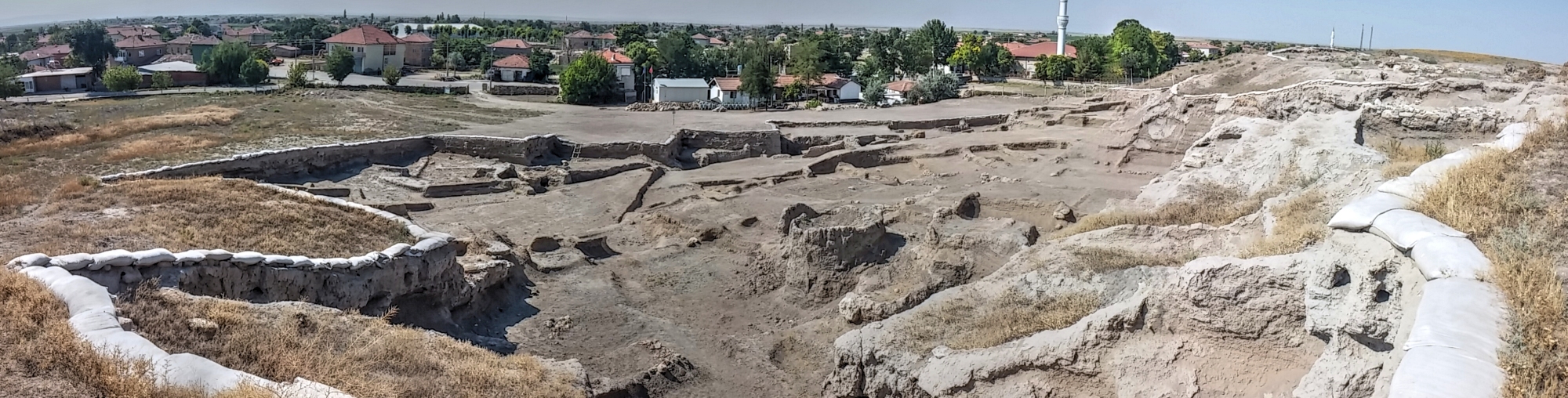
After a lengthy hiatus, settlement resumed on parts of the mound, particularly its western and southern elevations. This later occupation is generally dated from the sixth century BCE and continued through the Hellenistic and Roman periods. Archaeological evidence suggests that the settlement was occupied during the Early Hellenistic period and remained in use into the Roman period, reportedly until the beginning of the third century CE. Among the finds documenting this later phase are imported black-glazed pottery, including vessels dating to the late fourth and third centuries BCE, which demonstrate that Acemhöyük remained connected to regional exchange networks during the Hellenistic period. Nevertheless, the extent and character of the later settlement remain insufficiently understood to allow a detailed historical reconstruction.
The history of the modern settlement of Yeşilova is closely connected with the archaeological mound. According to local historical accounts, following Sultan Selim I's campaign against the Safavid Empire in 1514, families originating from Iranian Azerbaijan, particularly the area around Hoy, were brought to the region and settled at the foot of the mound. The settlement was reportedly established by three groups (obas), and its earlier name, Acem Köyü (the village of the Persians), reflects the origins of these settlers. The village subsequently developed into the modern settlement of Yeşilova, which received town status in 1928. The name Yeşilova, meaning approximately "green plain", was adopted in reference to the fertile landscape surrounding the settlement.
The Bronze Age remains remain by far the most significant contribution of Acemhöyük to our understanding of ancient Anatolian history. They document the emergence of an important urban centre, its integration into long-distance commercial networks, and its connections with the powerful kingdoms of northern Mesopotamia and Syria during the early second millennium BCE.
Archaeological research:
The first systematic archaeological excavations at Acemhöyük began in 1962 under the direction of Professor Nimet Özgüç of Ankara University, in cooperation with the General Directorate of Antiquities and Museums and the Turkish Historical Society. The work initially concentrated on the large mound and its monumental buildings, particularly the Sarıkaya Palace on the southeastern part of the site. Excavations in the following years revealed the remains of an important Middle Bronze Age settlement, including extensive architectural complexes, administrative material, and exceptional objects made of ivory, precious metals, obsidian, and rock crystal. The results established Acemhöyük as one of the most important archaeological sites associated with the period of the Assyrian trading colonies in Anatolia.
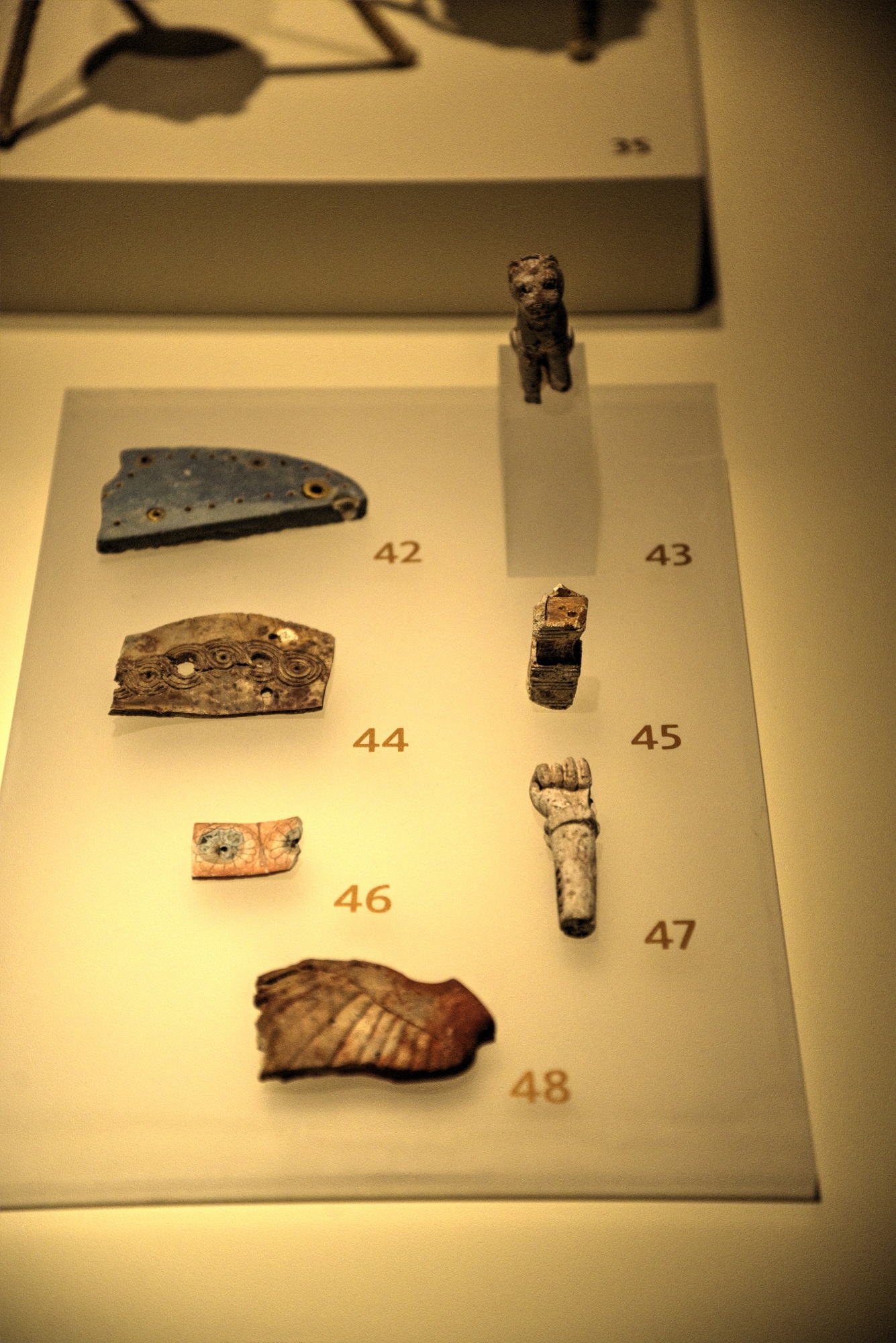
During the first phase of the excavations, directed by Özgüç between 1962 and 1989, the Sarıkaya Palace was investigated extensively, with campaigns conducted there between 1962 and 1972. Work subsequently expanded to other parts of the mound. The Hatipler Palace, situated in its northwestern sector, was excavated in 1974, while further investigations concentrated on the buildings and occupation levels surrounding the two palaces. The first major publication of the excavations appeared in 1966, when Nimet Özgüç published Acemhöyük Kazıları in the journal Anadolu. This was followed by a series of studies devoted to particular groups of finds and aspects of the site's architecture, including the seal impressions discovered in the palaces, ivory objects, stone vessels, and other evidence for the artistic and administrative life of the settlement.
An interesting chapter in the history of Acemhöyük's archaeological discoveries concerns a group of ivory furniture fittings now known as the Pratt Ivories, preserved in the collection of the Metropolitan Museum of Art in New York. Between 1932 and 1937, the museum received four donations from the American collector George D. Pratt and, following his death, his wife Vera. The objects included numerous carved ivory fittings, fragments of pottery, and clay sealings. Although their original archaeological context was initially unknown, excavations at Sarıkaya Palace eventually established their connection with Acemhöyük. In 1965, archaeologists discovered a fragmentary ivory wing of a falcon that closely matched one of the wings in the New York collection. Further similarities between the excavated ivories and the museum pieces, together with matching clay seal impressions and evidence obtained from an antiquities dealer, demonstrated that the Pratt Ivories had originated at Acemhöyük. They had apparently been removed from the palace during illicit excavations before being sold on the antiquities market.
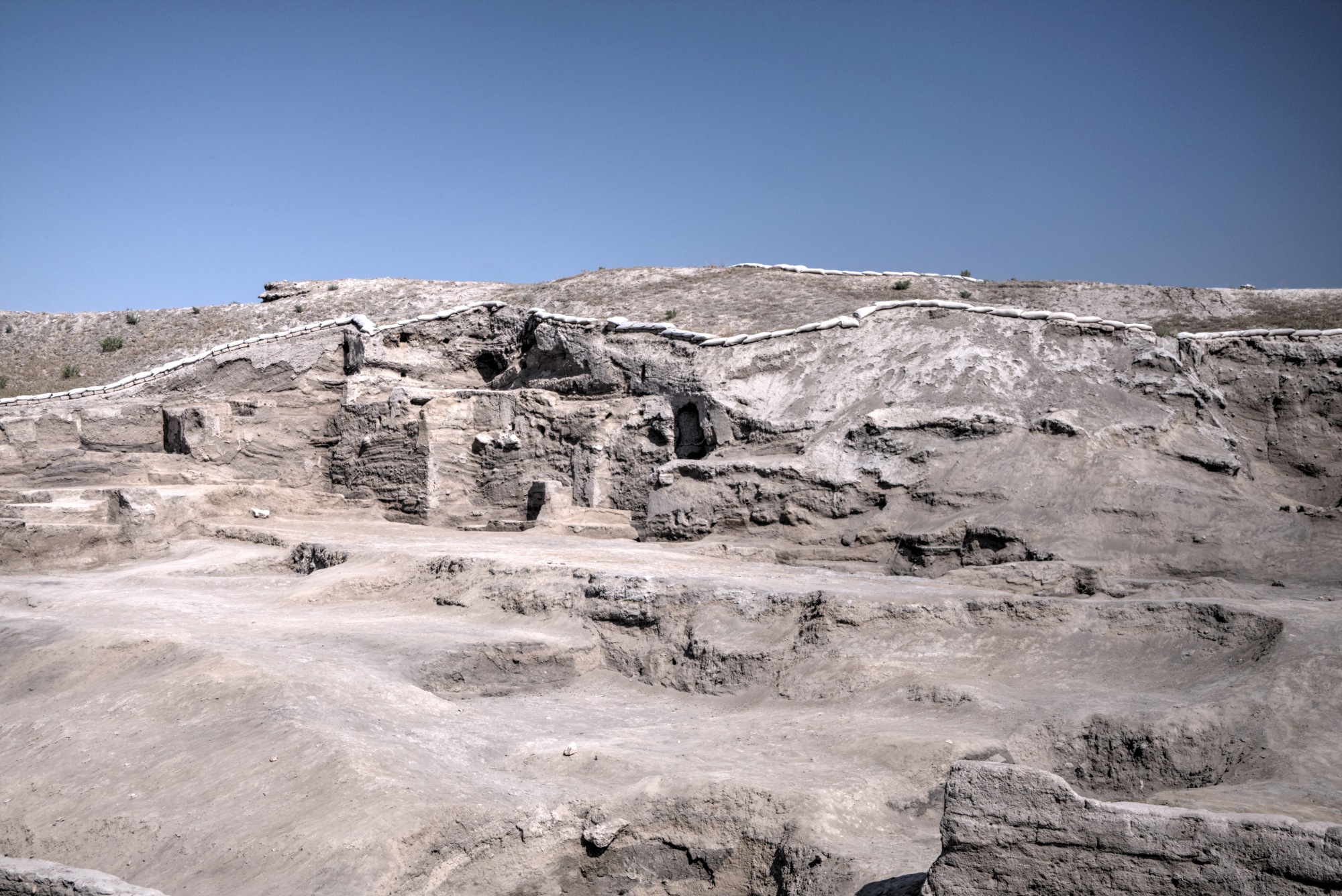
In a detailed study published in 2013, Elizabeth Simpson reconstructed many of the pieces as components of an elaborate chair or throne decorated with gilded ivory fittings. Its supports included seated sphinxes and lion legs, while carved plaques depicting a falcon and other figures probably decorated the back and other parts of the furniture. The reconstruction provides a remarkable impression of the luxurious furnishings that once adorned Sarıkaya Palace.
In 1989, the direction of the excavations passed to Professor Aliye Öztan, also of Ankara University. Her campaigns continued the investigation of the monumental buildings while broadening the archaeological understanding of the settlement and its surroundings. One important development was the discovery of the Arıbaş cemetery, approximately 500 m southeast of the mound, in 1992. It was accidentally found by a local farmer, Enver Arıbaş, while he was planting trees in his field. After he informed the Acemhöyük excavation team about the archaeological material he had encountered, investigations confirmed the presence of a cemetery dating to the Assyrian Trading Colony period and subsequent centuries. The cemetery was named after its landowner.
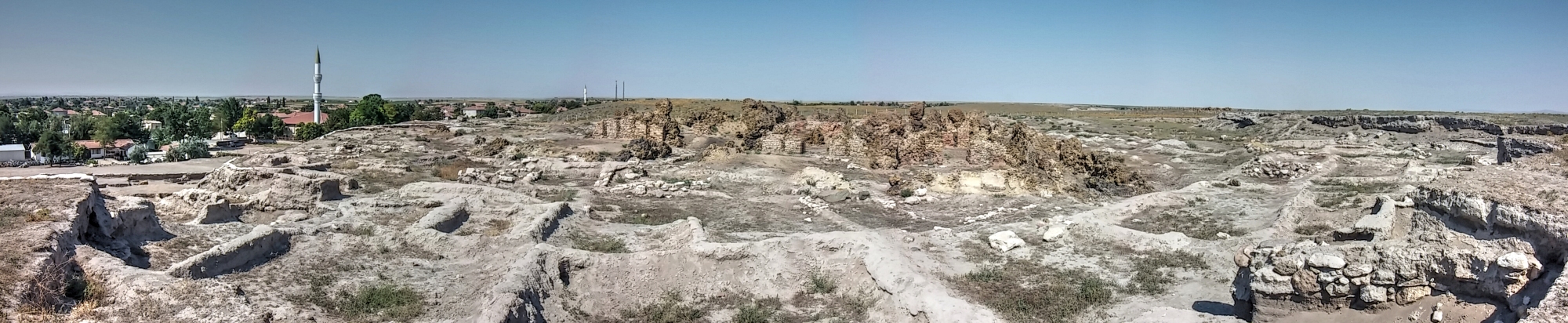
Excavations were carried out in 1993, 1995, and 1996, revealing 167 graves within an investigated area of approximately 225 m². The burials represent three successive phases and provide important evidence of funerary practices, including both cremation and inhumation. Of the graves identified, 139 contained cremated remains, generally deposited in pottery vessels or simple pits, while 28 were inhumations in simple earth graves or pithoi. Finds of fireplaces and other features also suggest that funerary meals and ceremonies took place at the cemetery. Its use extended from the Assyrian Trading Colony period into the Old Hittite period, providing valuable information about the burial customs and everyday life of the inhabitants of Acemhöyük.
Another major development followed geophysical investigations carried out in 1994. Magnetic and electromagnetic measurements indicated the presence of a large, previously unknown building between the Sarıkaya and Hatipler palaces. Excavations in this area began in 1995, and the monumental structure was brought to light in 1996. Subsequently known as the Service Building (Hizmet Binası), it was an important complex interpreted as having administrative and storage functions. Its remains, like those of the two palaces, showed evidence of destruction by fire, suggesting that all three monumental buildings were affected by the same catastrophic event that brought Architectural Level III to an end.
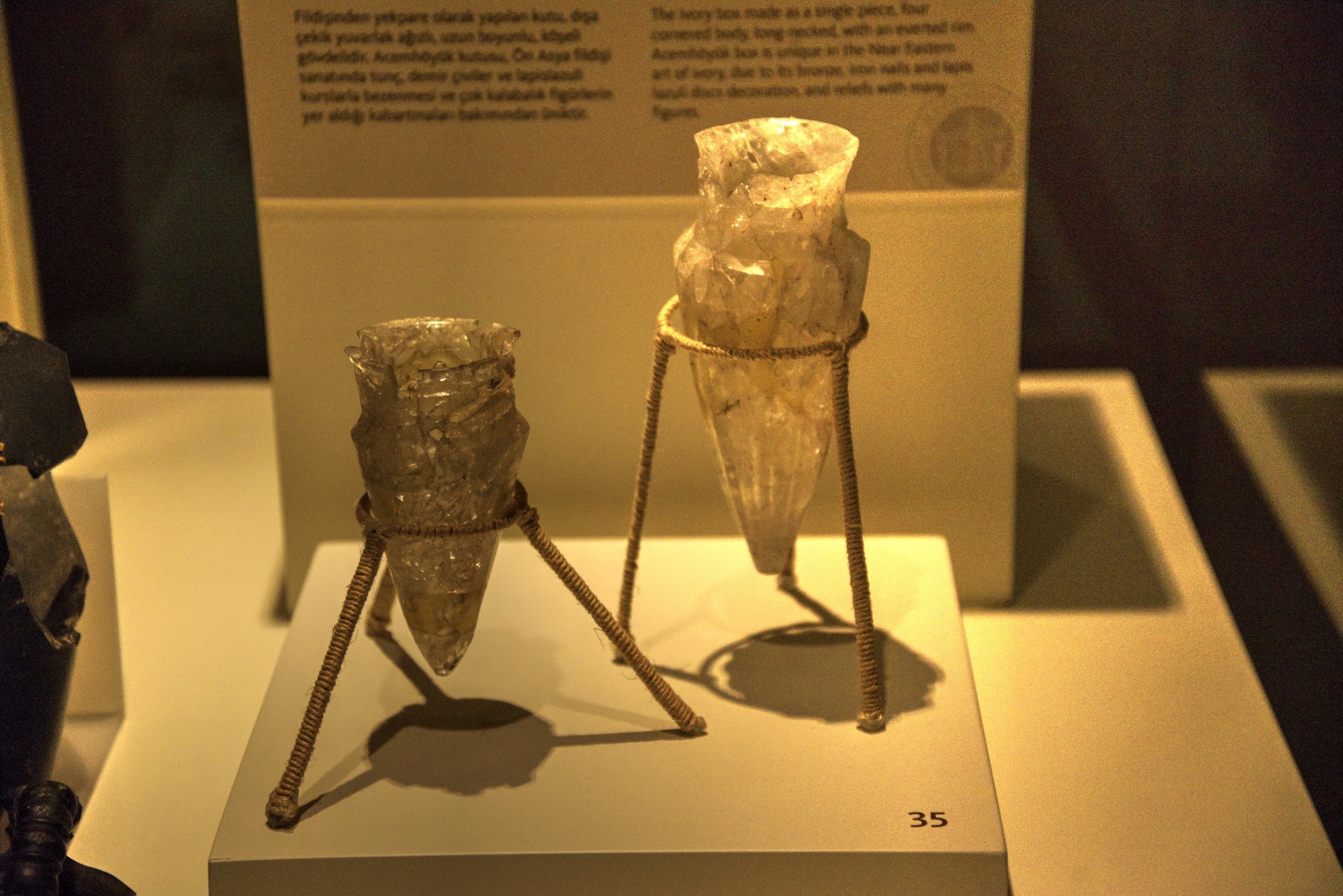
The excavations under Öztan also produced important contributions to the study of Acemhöyük's material culture. Research on the stone vessels, sealings, ivories, and other luxury objects helped establish the site's significance as a centre of artistic production, administration, and international exchange. In 2015, Nimet Özgüç published a major corpus of the cylinder seals and clay bullae from the site in Acemhöyük – Burušhaddum I: Cylinder Seals and Bullae with Cylinder Seal Impressions. This volume brought together a particularly important body of evidence for the administrative practices and external relations of the settlement.
In 2012 and 2013, excavations at Acemhöyük brought to light two further documents written in Old Assyrian: a small clay label discovered in the Service Building in 2012 and a fragmentary cuneiform tablet found south of the Sarıkaya Palace in 2013. Published by Remzi Kuzuoğlu in 2016, both documents added to the relatively small corpus of written records recovered at Acemhöyük. The label, inscribed with a reference to goods described as hidrus belonging to a city and associated with an individual named Arbanaš, may concern a particular type of woollen textile, although its precise meaning remains uncertain. The tablet, whose ten-line inscription is partly damaged, records the receipt of footwear by several individuals, including a person identified as a king named Ukiša. Together, these finds provide valuable evidence for the circulation and administration of goods, as well as the use of writing at Acemhöyük towards the end of the Old Assyrian period. They complement the much larger collection of clay bullae bearing seal impressions recovered at the site.
Scientific research has also refined the chronology of the settlement. In 2016, Sturt W. Manning and colleagues published a study combining dendrochronological evidence with radiocarbon dating to establish a more precise chronological framework for the Sarıkaya Palace and its period of use. Other specialist investigations have examined materials such as faience and frit, stone vessels, and imported pottery, providing further information about the site's craftsmanship, trade connections, and cultural contacts. In particular, research published in 2025 by Burcu Tüysüz presented the first dedicated study of Acemhöyük's Hellenistic-period black-glazed pottery, demonstrating that archaeological investigation is gradually extending beyond the Bronze Age occupation that has traditionally dominated research.
Since 2020, excavations at Acemhöyük have been directed by Associate Professor Yalçın Kamış. Current research continues to investigate the settlement's archaeological sequence, architecture, and material culture, while also addressing periods that received less attention during the earlier campaigns. More than six decades of archaeological work have transformed Acemhöyük from a largely unexplored mound into one of the key sites for understanding the political, economic, and cultural history of central Anatolia during the Early and Middle Bronze Ages.
Sightseeing:
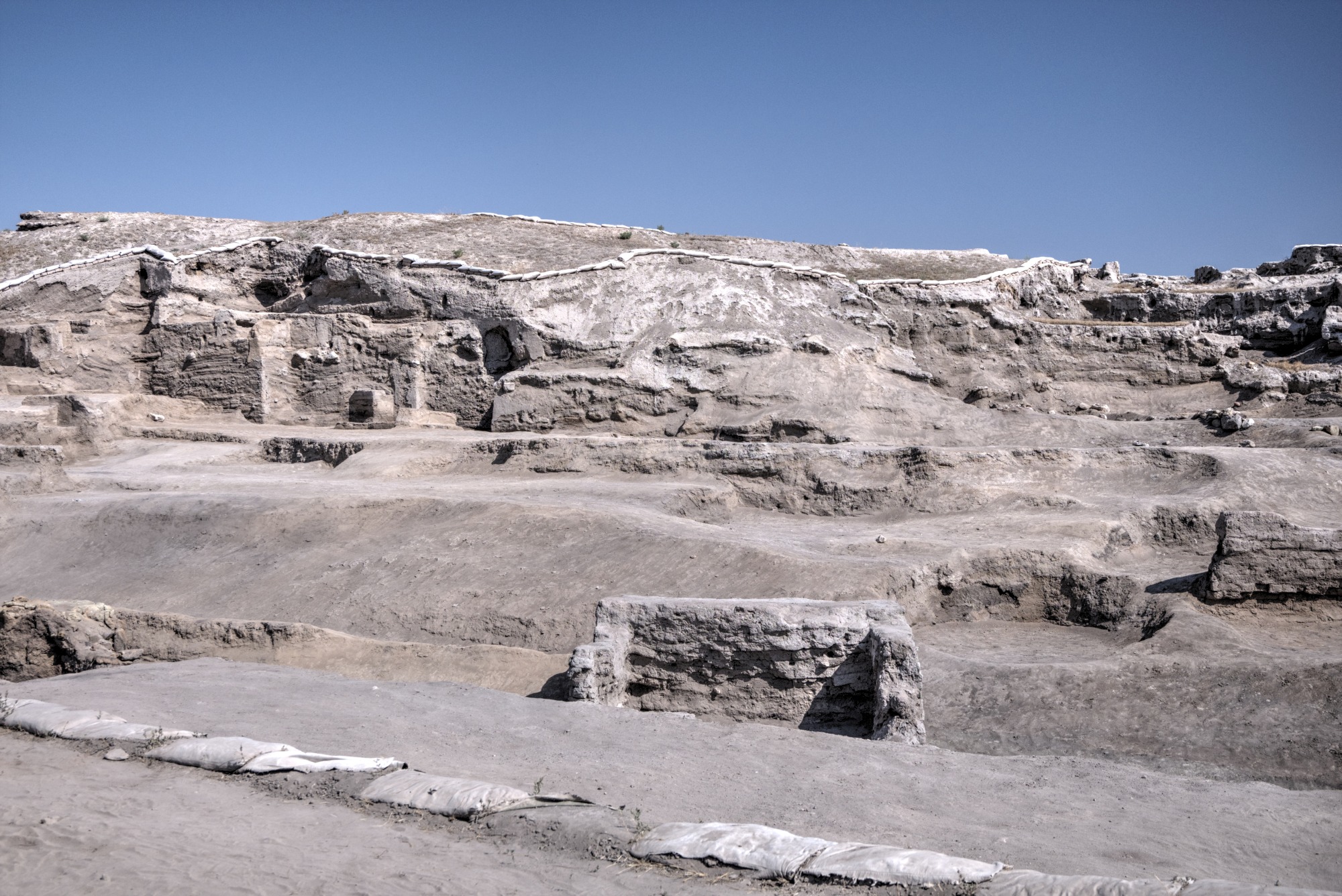
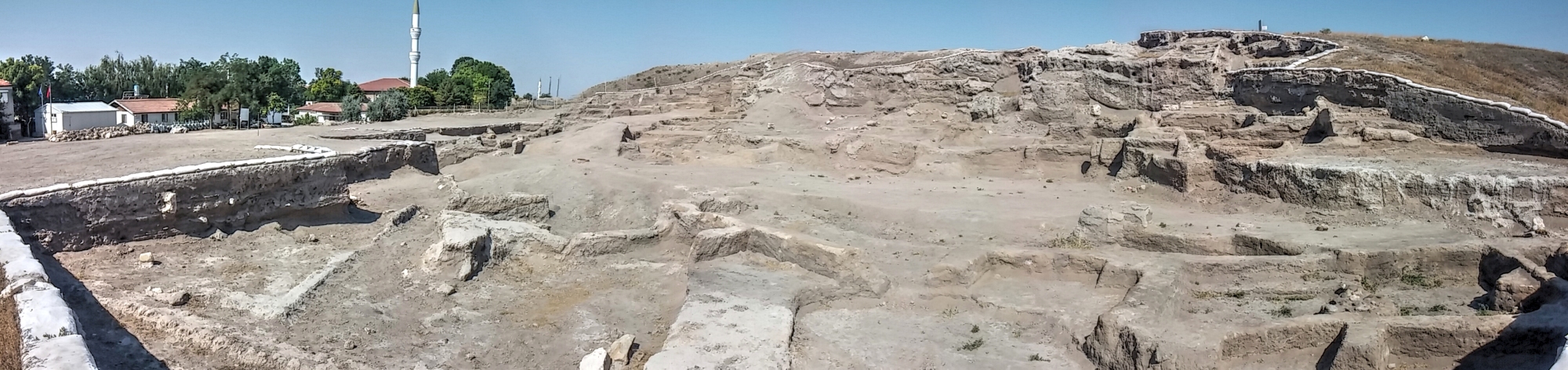
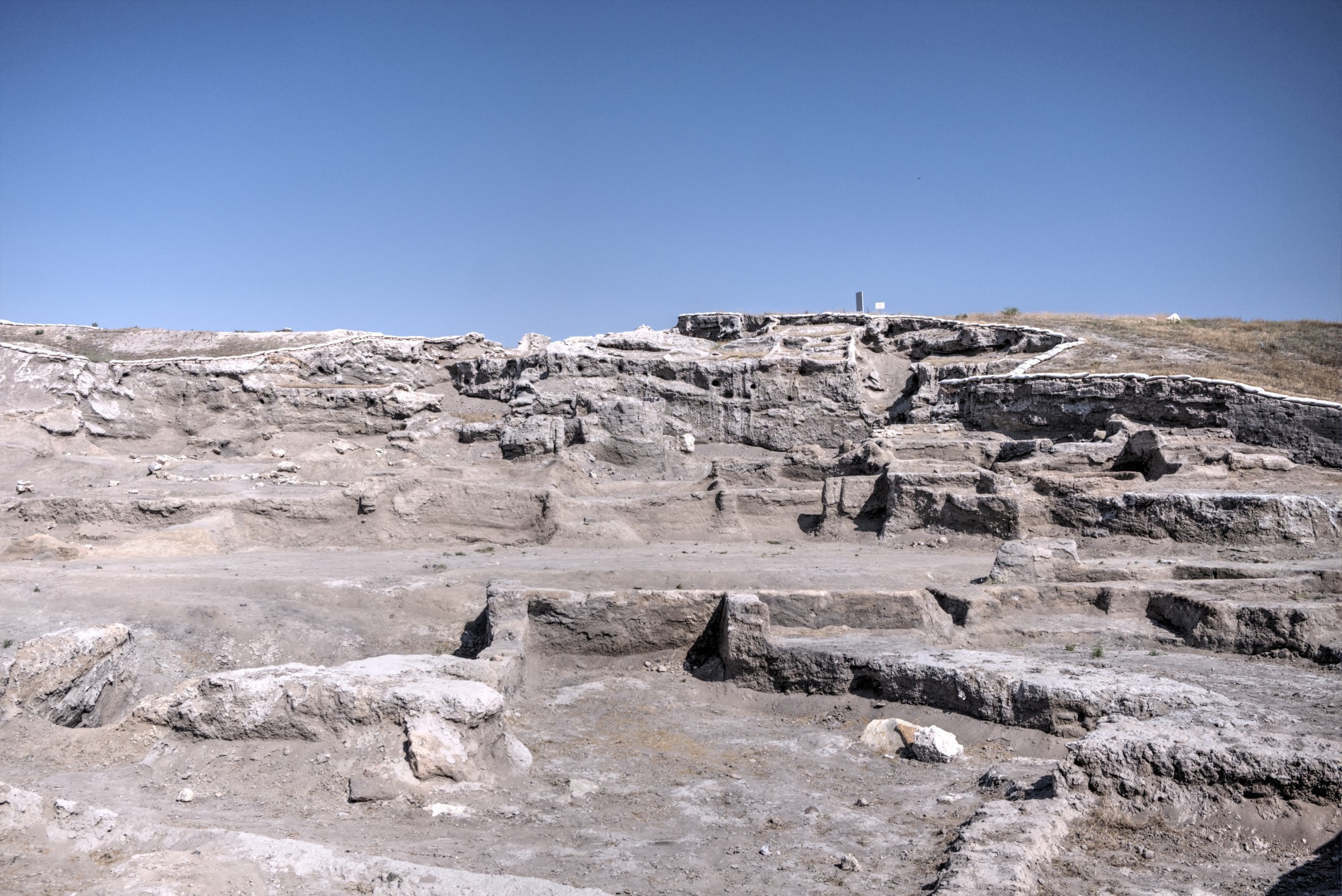
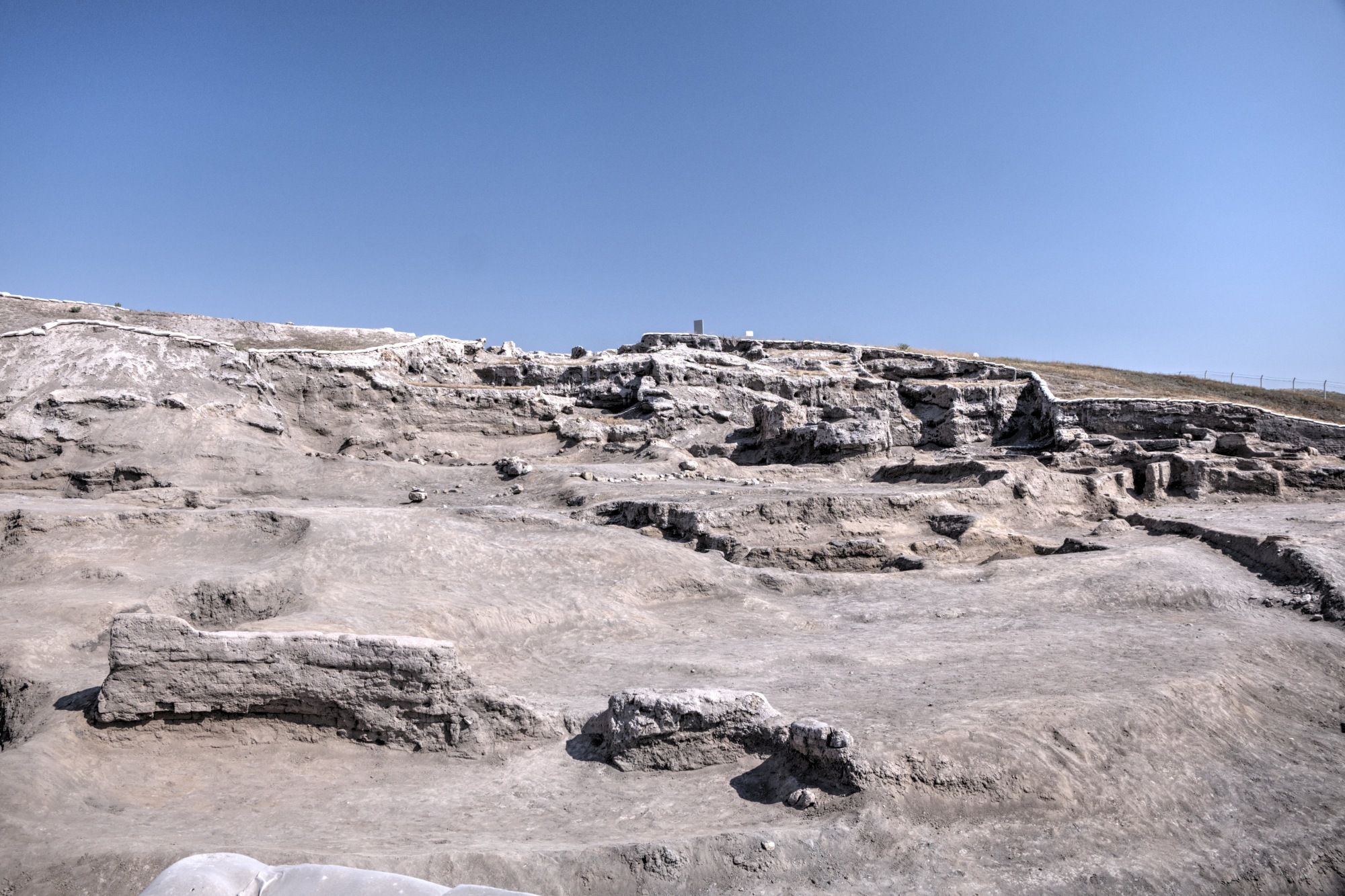
Acemhöyük is one of the most important archaeological sites of the Assyrian Trading Colony period in central Anatolia. Its main attractions are the remains of three monumental buildings excavated on the mound: the Sarıkaya Palace, the Hatipler Palace, and the structure known as the Service Building. Together, they provide an insight into the architecture, wealth, and administrative organisation of an important Anatolian centre during the early second millennium BCE.
The Sarıkaya Palace (Sarıkaya Sarayı), situated on the southeastern part of the mound, is the largest and most extensively investigated of the three buildings. Covering approximately 3,600 m², it was a two-storey structure, of which around 50 rooms on the ground floor have been excavated. Its carefully planned layout included courtyards and porticoed areas, while the ground-floor rooms served largely for storage. The palace yielded exceptionally rich finds, including gold ornaments, ivory furniture fittings, vessels made of rock crystal and obsidian, metal objects, and numerous clay bullae bearing seal impressions. Particularly important are the sealings recovered from several rooms, which document the political and commercial connections of the local rulers with Assyria, northern Mesopotamia, and Syria. The building also produced cuneiform documents and other objects associated with administrative activities. Its destruction by fire preserved traces of the valuable furnishings and objects that had been kept inside.
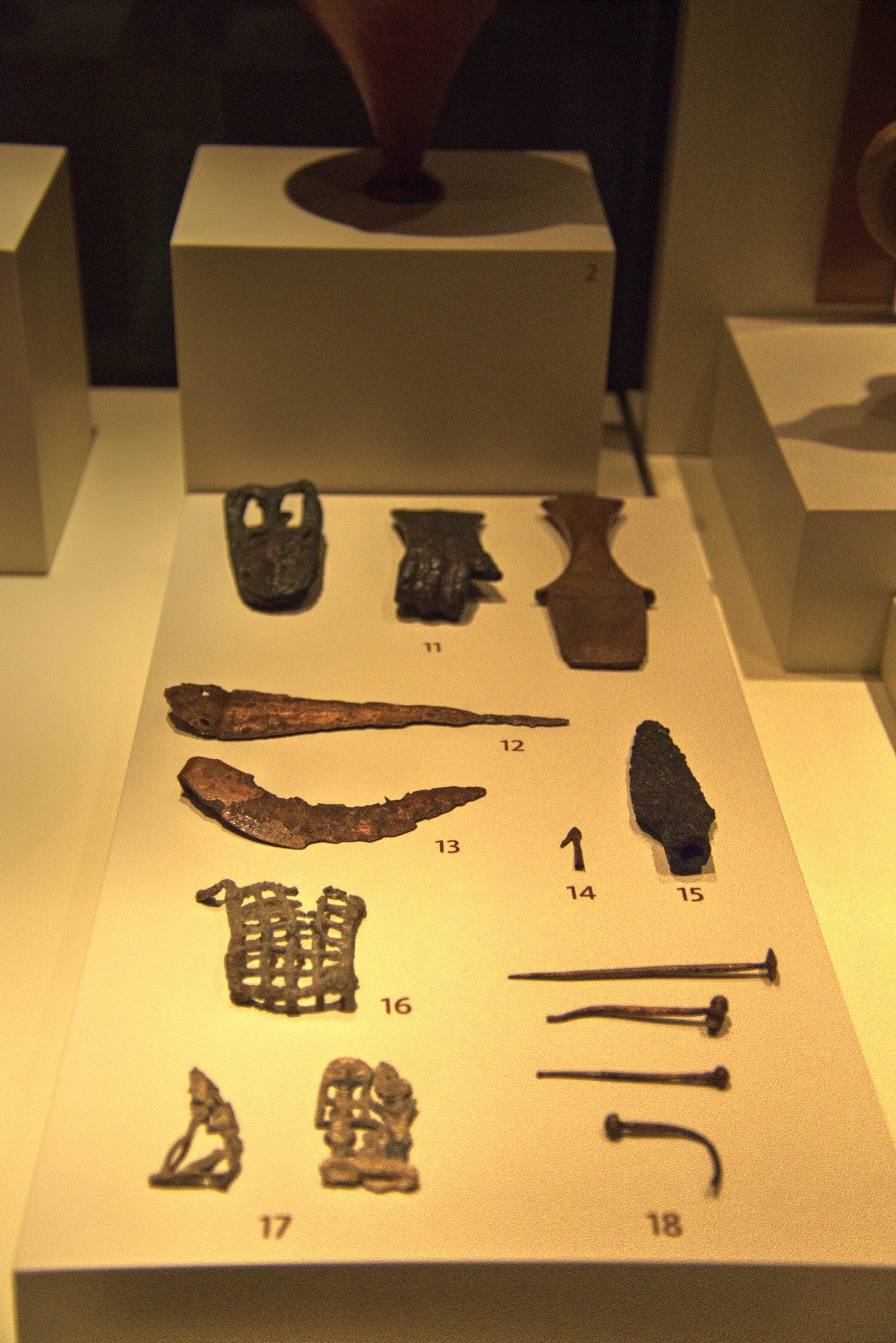
The Hatipler Palace (Hatipler Sarayı) occupies a separate elevated area towards the northe-western part of the mound. Although less extensively investigated than the Sarıkaya Palace, it is another monumental building of comparable architectural character and belongs to the same period of prosperity. Its construction and finds demonstrate that Acemhöyük possessed more than one substantial palatial complex. Like the Sarıkaya Palace, the Hatipler building was destroyed by fire, an event that contributed to the preservation of some of its archaeological remains.
The modern names of the two palaces derive from the local topography. Sarıkaya ("Yellow Rock") was the name given by villagers to the southern elevation because of the yellow-coloured, fire-baked mudbricks visible among the ruins of a large building. Hatipler, in turn, takes its name from Hatipler Hill, the northernmost elevation of the mound; the origin of the hill's own name is not documented.
Between these two palaces stood the building conventionally called the Service Building (Hizmet Binası). Identified through geophysical investigations and subsequently excavated, this complex is interpreted as having served administrative and storage functions connected with the palatial establishment. Its importance is demonstrated by the archaeological material recovered there, including the small Old Assyrian clay label discovered in 2012.
Although the monumental buildings are the principal attractions, Acemhöyük should also be understood as a much larger settlement. The mound forms part of an extensive archaeological landscape that includes the remains of the surrounding Lower Town. The nearby Arıbaş cemetery, situated approximately 500 m southeast of the mound, is another important component of the settlement's archaeological context. Its excavated graves provide evidence of cremation and inhumation practices during the Assyrian Trading Colony and subsequent periods.
Museums with Acemhöyük collections
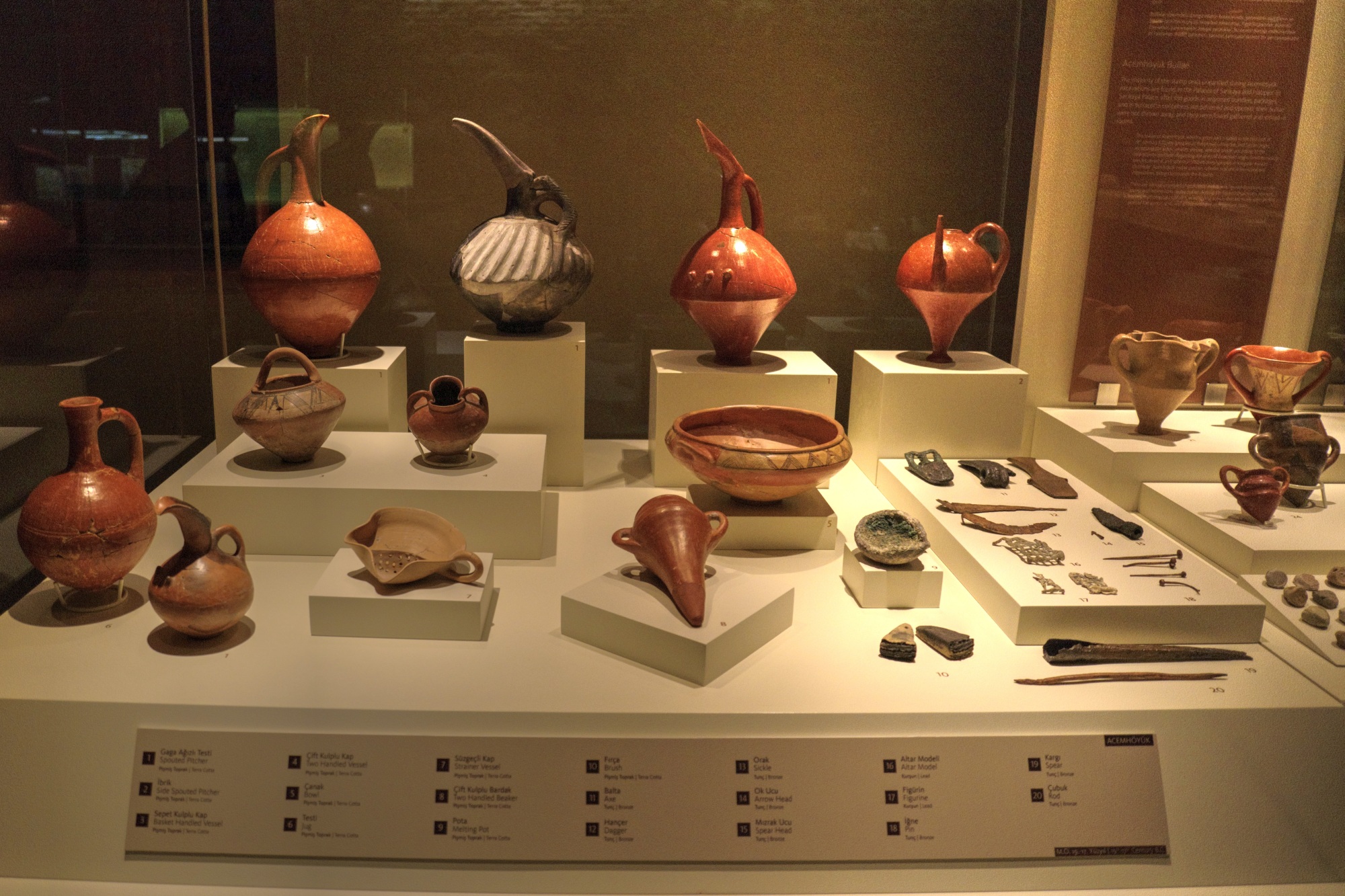
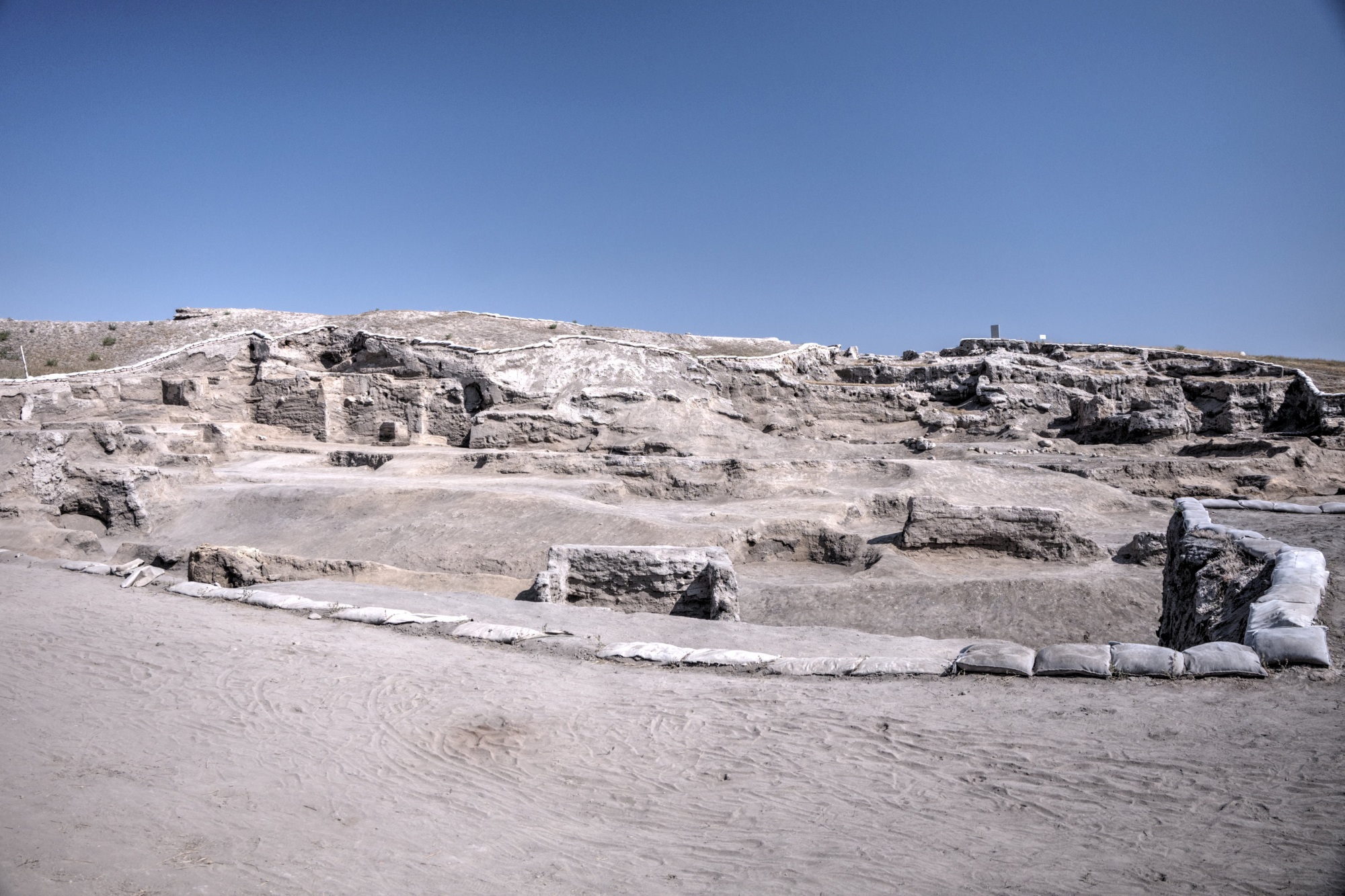
The best place to begin exploring the finds from Acemhöyük is the Aksaray Museum (Aksaray Müzesi), which has a dedicated exhibition hall devoted to the site. Its collection includes large storage vessels (pithoi), fragments of burnt wooden doors, water pipes, pottery, cups, drinking vessels, silver ingots, bone implements, gaming pieces, and numerous terracotta bullae bearing seal impressions. The display also includes pottery from the Arıbaş cemetery, allowing visitors to compare objects from the settlement with those recovered from its burial ground. These finds provide a particularly useful introduction to the material culture of Acemhöyük and the daily activities of its inhabitants.
Another worthwhile destination is the Niğde Archaeological Museum (Niğde Müzesi), which also exhibits finds from Acemhöyük. Its collection includes objects recovered from the palatial buildings, among them vessels and other archaeological material associated with the settlement's wealthy Middle Bronze Age occupation. The museum's displays cover a broader chronological range, from prehistoric communities and early metalworking to the Hittite, Phrygian, Hellenistic, Roman, and Byzantine periods. A visit is therefore particularly interesting when combined with an exploration of other archaeological sites in the Niğde region.
Some of the most remarkable objects associated with Acemhöyük are preserved much farther away, in the Metropolitan Museum of Art in New York. These are the so-called Pratt ivories, a group of carved ivory furniture fittings donated to the museum by George D. Pratt and his family between 1932 and 1937. Although the pieces were not recovered through controlled archaeological excavations, subsequent research, particularly by Elizabeth Simpson, has convincingly associated them with Acemhöyük and the Sarıkaya Palace. The group includes carved sphinxes, lions, human figures, and decorative plaques, many of which originally belonged to an elaborate piece of furniture, probably a chair or throne, with ivory fittings, gilding, and red colouring. The style of the carvings combines Anatolian craftsmanship with Egyptian-inspired imagery, illustrating the far-reaching artistic connections of the period. It is worth checking the museum's online collection before visiting, as several of these objects are not normally on display.
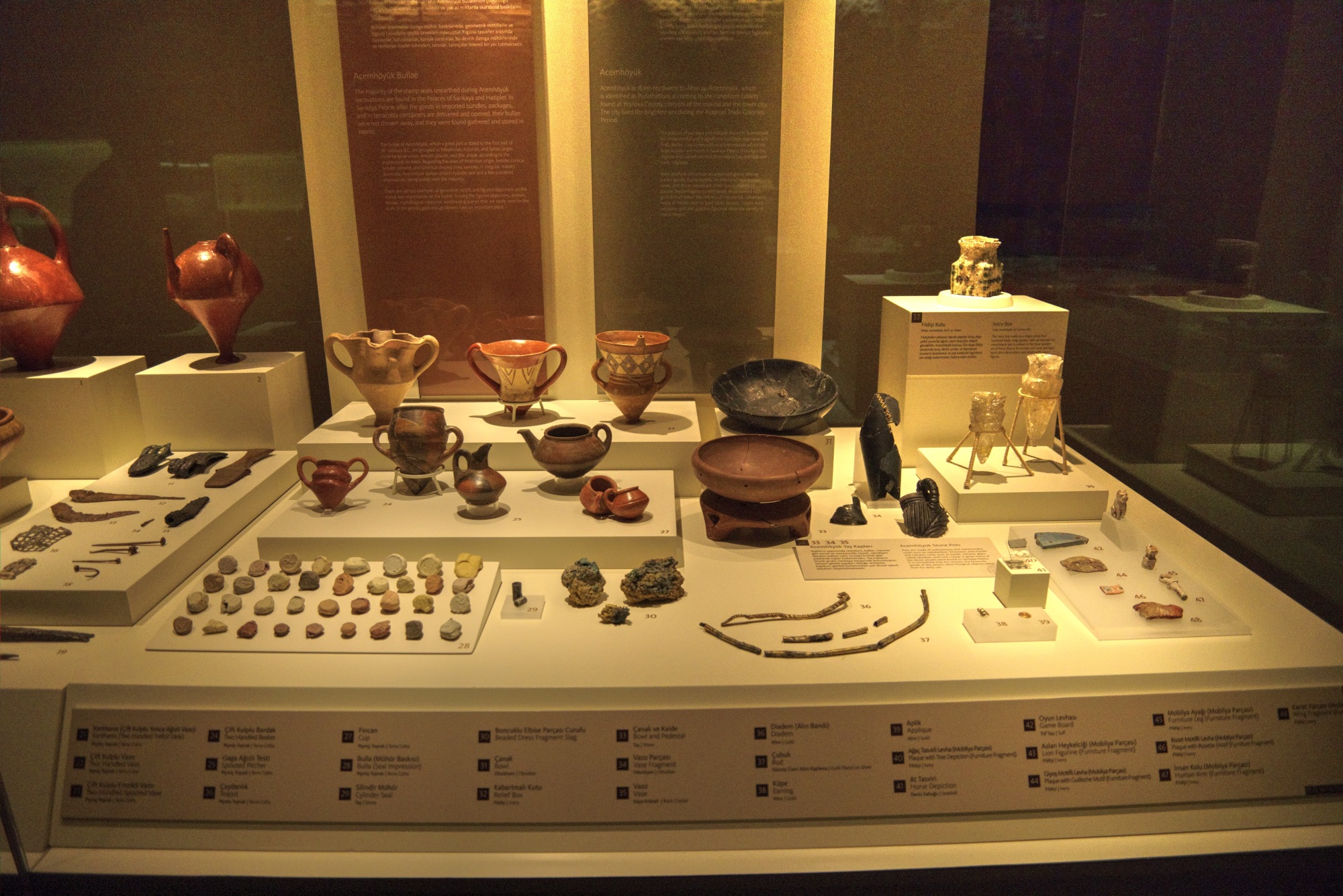
An additional important collection is held by the Museum of Anatolian Civilizations (Anadolu Medeniyetleri Müzesi) in Ankara. Among its Acemhöyük finds is an ivory wing belonging to a chair decoration, excavated from the Sarıkaya Palace in 1965. This fragment played an important role in identifying the original provenance of the Pratt ivories, since its close stylistic and technical similarities to pieces in the Metropolitan Museum helped establish their association with the same palace furniture.
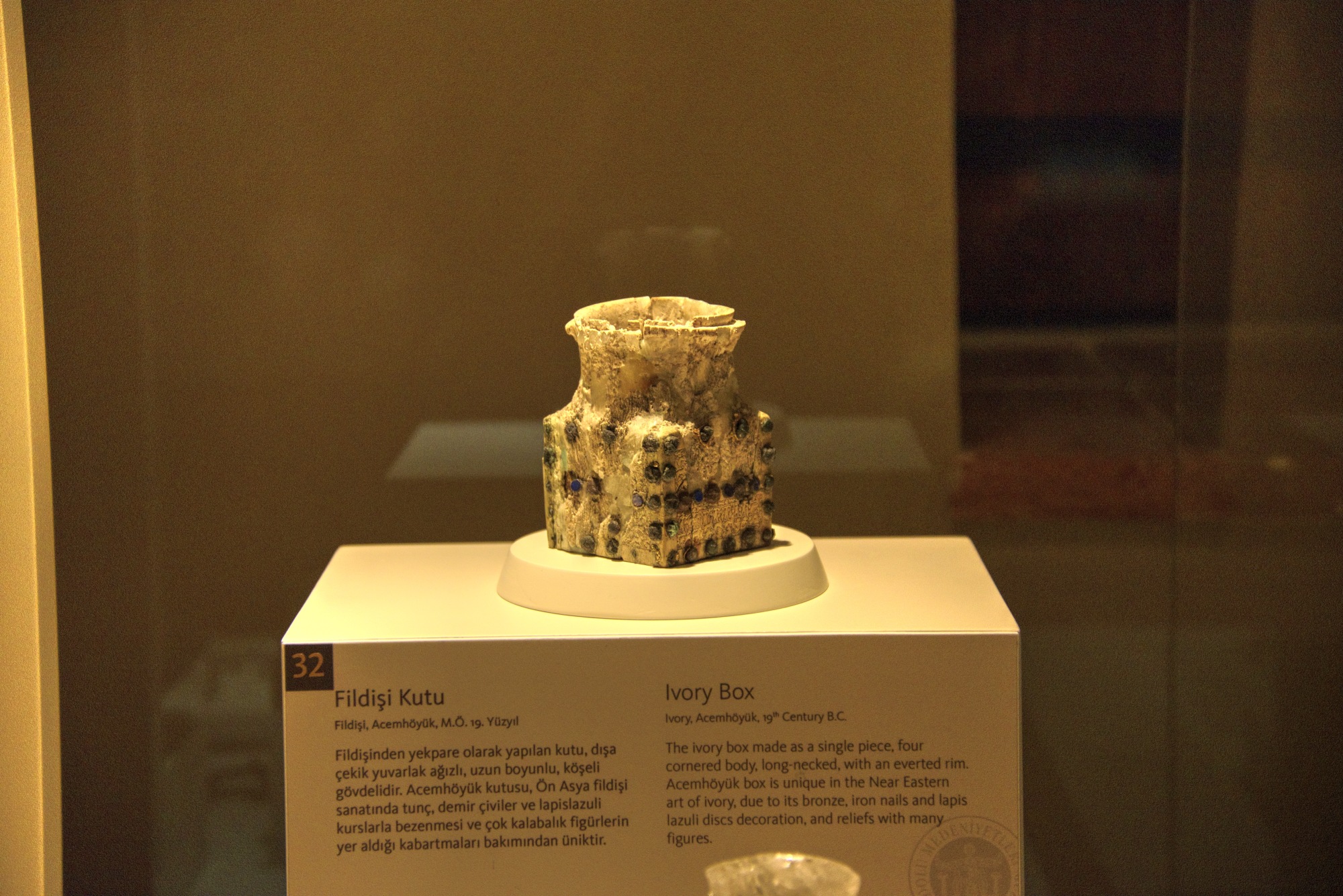
Another remarkable find from Acemhöyük, now displayed in the Museum of Anatolian Civilizations, is an ivory box dating to the 19th century BCE. Carved from a single piece of ivory, it features a nearly square, box-shaped body topped by a long neck with an everted rim. The box is particularly exceptional in the context of Near Eastern ivory art for its elaborate decoration, which combines bronze and iron studs, lapis lazuli inlays, and richly carved figurative reliefs. This museum is therefore an especially rewarding destination for anyone interested in the artistic achievements and luxury objects of Acemhöyük.
Taken together, the archaeological site and these museum collections offer complementary perspectives on Acemhöyük. While the excavated remains reveal the scale and organisation of its monumental architecture, the objects preserved in Turkish and international museums illustrate the wealth, craftsmanship, commercial connections, and administrative activities of this important Anatolian centre.
Visitor tips:
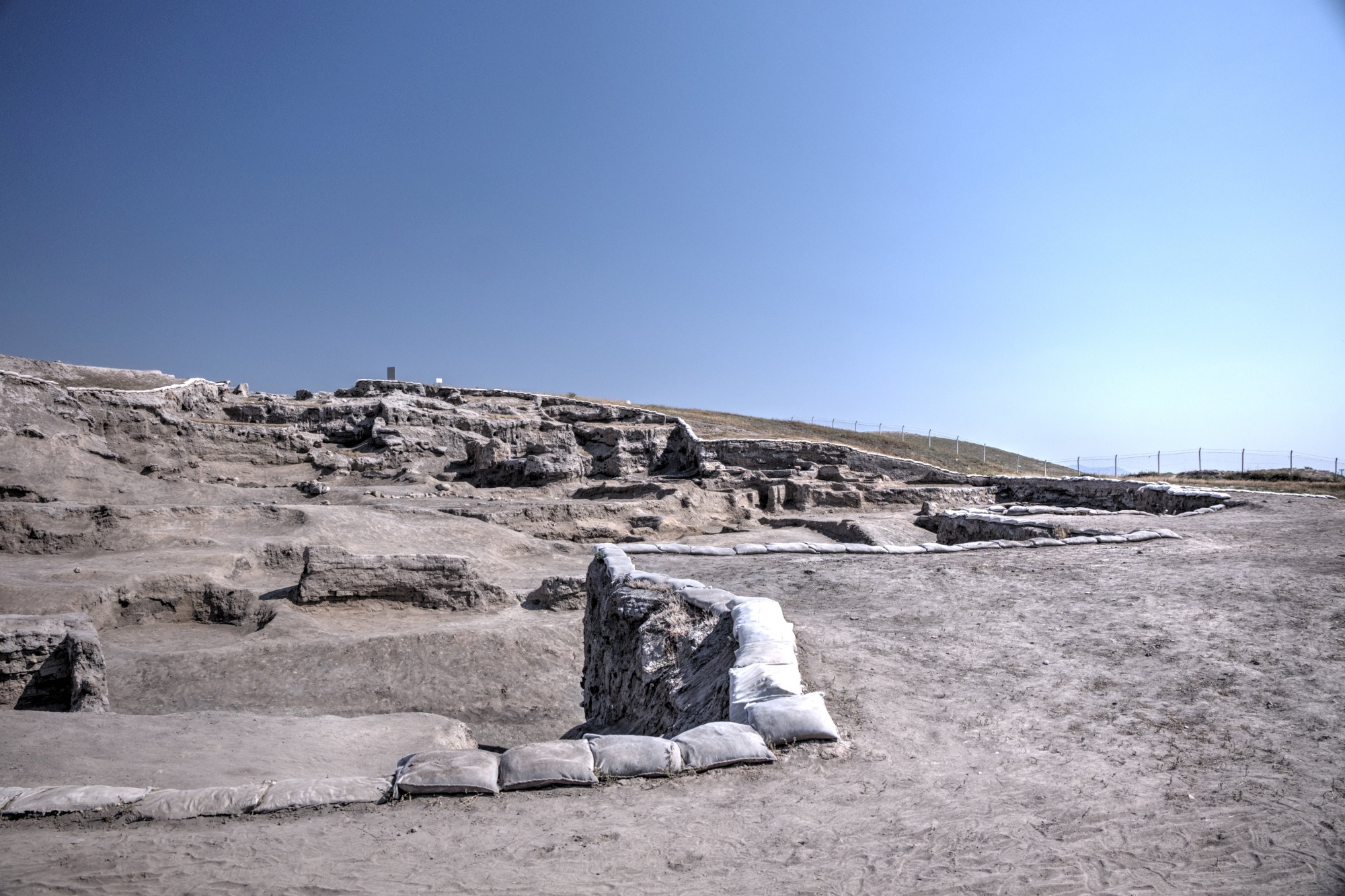
Acemhöyük is an archaeological site best appreciated by visitors interested in Bronze Age settlements, palace architecture, and the archaeology of ancient Anatolia. As much of the site consists of low-lying archaeological remains and excavated areas rather than standing monumental structures, it is worth familiarising yourself with its history and the layout of the settlement before arriving. The finds recovered during excavations, including some of the most remarkable objects from the site, are displayed in museums rather than on the mound itself.
The site is outdoors, so comfortable walking shoes, sun protection, and drinking water are advisable, particularly during the hot summer months. It is also worth checking in advance whether the archaeological site is accessible on the day of your visit
Getting there:
Acemhöyük is located near Yeşilova, approximately 16 km northwest of the centre of Aksaray, in central Anatolia. The archaeological site can be reached by road from Aksaray, and the journey by car takes roughly 20 minutes, depending on traffic and the starting point. The route follows paved roads, making the site accessible by an ordinary passenger vehicle.
Visitors without a car can look for minibuses travelling from Aksaray to Yeşilova, although local transport schedules and the availability of onward access to the mound should be confirmed in advance. As public transport may not take passengers directly to the archaeological site, a short walk or additional local transport may be necessary.
Bibliography
- Ankara University, Faculty of Languages, History and Geography. "Acemhöyük." Excavation project and site information. Ankara University.
- Barjamovic, Gojko. 2011. A Historical Geography of Anatolia in the Old Assyrian Colony Period. Copenhagen: Museum Tusculanum Press.
- Blasweiler, Joost. 2018. "Evidence to Place the City of Purušhanda at Acemhöyük." In The Intellectual Heritage of the Ancient Near East: Proceedings of the 64th Rencontre Assyriologique Internationale and the 12th Melammu Symposium, University of Innsbruck, July 16–20, 2018, 715–750. https://doi.org/10.2307/jj.3508406.41.
- Dardeniz, Gonca, and Aliye Öztan. 2020. "Acemhöyük Fayans ve Frit Eserleri Üzerine Arkeolojik ve Arkeometrik Değerlendirmeler." Belleten 84 (301): 837–886. https://doi.org/10.37879/belleten.2020.837.
- Ekmen, Hamza. 2021. "Yaşam ve Ölüm: Acemhöyük-Arıbaş Mezarlığı'ndan Gündelik Yaşama İlişkin Veriler." Arkeoloji ve Sanat 166: 81–96.
- Forlanini, Massimo. 2008. "The Historical Geography of Anatolia and the Transition from the Kārum-Period to the Early Hittite Empire." In Anatolia and the Jazira during the Old Assyrian Period, edited by J. G. Dercksen, 57–86. PIHANS 111. Leiden: Nederlands Instituut voor het Nabije Oosten.
- Kamış, Yalçın. 2022. "Acemhöyük ve Erken Tunç Çağı Anadolu Ticaret Ağları." Belleten 86 (307): 779–825. https://doi.org/10.37879/belleten.2022.779.
- Kamış, Yalçın. 2024. "Acemhöyük'ten Kırmızı Haç Motifli Bir Erken Tunç Çağı Çanağı." Höyük 14.
- Kulakoğlu, Fikri, Elif Genç, Güzel Öztürk, and Ryoichi Kontani. 2026. "Erken Tunç Çağı'nda Kültepe-Kaniş Yerleşiminin Batı Sınırı Üzerine Bir Değerlendirme." Höyük 17: 19–42. https://doi.org/10.37879/hoyuk.2026.1.019.
- Kuzuoğlu, Remzi. 2016. "Two Cuneiform Texts Found in Acemhöyük from the Old Assyrian Period." Belleten 80 (289): 685–700. https://doi.org/10.37879/belleten.2016.685.
- Kuzuoğlu, Remzi. "Acemhöyük'ten Eski Asur Dönemi'ne Ait İki Çivi Yazılı Belge." Höyük.
- Manning, Sturt W., Carol B. Griggs, Brita Lorentzen, Gojko Barjamovic, Christopher Bronk Ramsey, Bernd Kromer, and Eva Maria Wild. 2016. "Integrated Tree-Ring-Radiocarbon High-Resolution Timeframe to Resolve Earlier Second Millennium BCE Mesopotamian Chronology." PLOS ONE 11 (7): e0157144. https://doi.org/10.1371/journal.pone.0157144.
- Osborne, James F. 2018. "History and Temporality in Bronze Age Anatolia: The King of Battle Narrative in Archaeological and Historical Tradition." World Archaeology 50 (5): 706–722. https://doi.org/10.1080/00438243.2018.1488134.
- Özgüç, Nimet. 1966. "Acemhöyük Kazıları." Anadolu 10: 1–52.
- Özgüç, Nimet. 1976. "Acemhöyük'te Bulunmuş Olan Bir Fildişi Kutu ve Bir Kurşun Figürin Kalıbı." Belleten 40 (160): 547–554. https://doi.org/10.37879/belleten.1976.547.
- Özgüç, Nimet. 1977. "Acemhöyük Saraylarında Bulunmuş Olan Mühür Baskıları." Belleten 41 (162): 357–382.
- Özgüç, Nimet. 1979. "Some Contributions to Early Anatolian Art from Acemhöyük." Belleten 43 (170): 289–304.
- Özgüç, Nimet. 2015. Acemhöyük – Burušhaddum I: Silindir mühürler ve mühür baskılı bullalar / Cylinder Seals and Bullae with Cylinder Seal Impressions. Ankara: Türk Tarih Kurumu.
- Öztan, Aliye. 1988. "Acemhöyük Taş Kapları." Belleten 52 (203): 393–406.
- Öztan, Aliye. 1998. "Preliminary Report on the Arıbaş Cemetery at Acemhöyük." In Essays on Ancient Anatolia in the Second Millennium B.C., edited by H. I. H. Prince Takahito Mikasa, 167–181. Bulletin of the Middle Eastern Culture Center in Japan 10. Wiesbaden: Harrassowitz.
- Özten, Aliye. 1979. "Two Stone Plates from the Sarıkaya Palace at Acemhöyük." Belleten 43 (170): 385–388. https://doi.org/10.37879/belleten.1979.385.
- Palmisano, Alessio. 2018. A Geography of Trade: Landscapes of Competition and Long-Distance Contacts in Mesopotamia and Anatolia in the Old Assyrian Colony Period.
- Radner, Karen. 2012. Review of Gojko Barjamovic, A Historical Geography of Anatolia in the Old Assyrian Colony Period. American Journal of Archaeology 116 (4).
- Selover, Stephanie Lesan. 2015. Excavating War: The Archaeology of Conflict in Early Chalcolithic to Early Bronze III Central and Southeastern Anatolia. PhD dissertation, University of Chicago.
- Simpson, Elizabeth. 2013. "An Early Anatolian Ivory Chair: The Pratt Ivories in The Metropolitan Museum of Art." In Amilla: The Quest for Excellence. Studies Presented to Guenter Kopcke in Celebration of His 75th Birthday, edited by Robert B. Koehl, 221–261. Philadelphia: INSTAP Academic Press. https://doi.org/10.2307/J.CTT5VJ90S.23.
- Tüysüz, Burcu. 2025. "A Group Imported from Acemhöyük: Black-Glazed Pottery from the Hellenistic Period." Anadolu Araştırmaları 32: 177–195. https://doi.org/10.26650/anar.32.1643847.
- Log in to post comments