February 2026 brought an extraordinary sweep of archaeological discoveries and heritage developments across Türkiye, spanning from the Bronze Age to the Ottoman era. In central Anatolia, a Hittite ritual vessel from Eskiyapar and fresh perspectives on the Topada Inscription illuminated the religious and political world of the second and first millennia BCE, while at Beycesultan a 3,900-year-old indigo-dyed textile reshaped understanding of Bronze Age technology. In the east, newly uncovered Urartian inscriptions at Körzüt Fortress offered rare historical testimony from the reign of King Minua, and in Trabzon an exceptionally rare ancient river port was identified deep beneath the modern city. Roman and Late Antique heritage also featured prominently, from Nilotic mosaics at Edessa and thousands of hydriskoi at Aigai to ongoing work at Pisidian Antioch and the management overhaul at Ephesus. Alongside these discoveries, major conservation and restoration projects — from Selimiye Mosque and Yenikapı's shipwrecks to earthquake-affected museums and monuments — underscored Türkiye's continuing efforts to preserve and reinterpret its layered past.
Turkish Archaeological News collects the most important, interesting and inspiring news from Turkish excavation sites. Here's the review for February 2026. Have we missed anything? Please let us know by using Contact tab!
February 1, 2026
A Hittite Goddess Vessel from Eskiyapar and the Ritual of “Drinking the God”
A small ceramic vessel unearthed at Eskiyapar now offers a rare and tangible glimpse into Hittite ritual practices. The object dates to the Old Hittite period and comes from Eskiyapar, near modern-day Alaca in central Türkiye. At first sight, it appears to be a simple cup. But its true significance emerges only when one looks inside. Source: Anatolian Archaeology
February 2, 2026
A Rare Mosaic from the Villa of the Amazons Shows Nile Imagery in Late Roman Anatolia
Archaeologists studying the ancient city of Edessa have uncovered striking new insights into Late Antique art through a richly decorated mosaic discovered in the so-called Villa of the Amazons at Haleplibahçe. Dating to the 5th–6th centuries AD, the mosaic—known as the Bird Hall Mosaic—offers a rare and symbolic depiction of Nilotic imagery, blending local traditions with influences from Egypt and the Eastern Roman world. Source: Arkeonews
Tekirdağ museum highlights Thrace's layered history
A window into Türkiye's storied past, the Tekirdağ Archaeology and Ethnography Museum welcomed approximately 24,000 visitors in 2025, according to official figures. Source: Hürriyet Daily News
February 3, 2026
A new exhibition titled “Carchemish of the Hittites on the Banks of the Euphrates: New Discoveries and New Perspectives” has opened at the Museum of Anatolian Civilizations in Ankara, bringing together recent archaeological research and rare museum collections under one roof. Source: Anatolian Archaeology
February 4, 2026
Artifacts from ancient Karkamış on display in Ankara
An exhibition titled “Hittite Karkamış on the Banks of the Euphrates: New Discoveries and New Contributions” has opened at the capital Ankara's Museum of Anatolian Civilizations, featuring groundbreaking artifacts from the ancient city of Karkamış. Source: Hürriyet Daily News
2,800-Year-Old Urartian Inscriptions Found in Türkiye Describe the Capture of an Unconquered City
A remarkable archaeological discovery in eastern Türkiye is reshaping what scholars know about the ancient Kingdom of Urartu. During rescue excavations at the Körzüt Fortress in the Lake Van Basin, archaeologists uncovered three exceptionally well-preserved cuneiform inscriptions dating back nearly 2,800 years. These newly discovered texts, carved in stone during the reign of Urartian King Minua (810–786 BCE), provide fresh and compelling insights into Urartu's military power, religious life, and regional control. Source: Arkeonews
February 5, 2026
Restoration work continues at Sadabad Palace
Restoration work is continuing at Sadabad Palace, a key element of historical heritage in Istanbul's Kağıthane district, the district municipality said. Source: Hürriyet Daily News
Damaged foundation buildings in Hatay restored and rebuilt
Thirty-three historical buildings have been restored and rebuilt in the southern province of Hatay following the restoration and reconstruction work initiated on foundation-owned buildings damaged in the earthquakes of Feb. 6, 2023. Source: Hürriyet Daily News
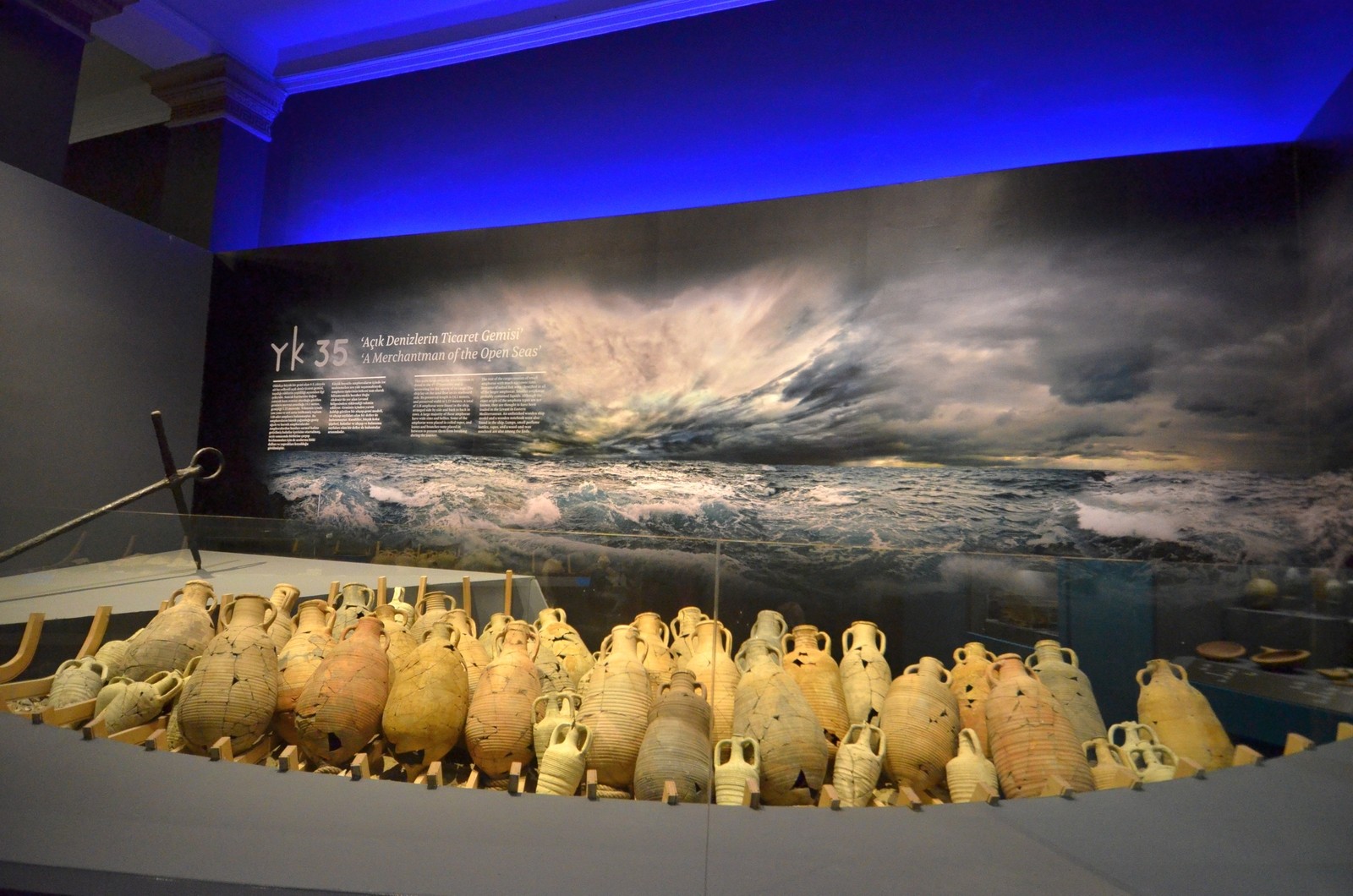
Yenikapi shipwrecks accounted for as Istanbul prepares major underwater museum
One of Istanbul's most significant archaeological discoveries, uncovered during the Yenikapi Metro and Marmaray rail projects, has long been the subject of public debate and speculation. The significant find was the unearthing of the Late Roman (Byzantine) period harbor, known as Theodosius Harbor. After years of uncertainty surrounding the fate of dozens of ancient shipwrecks and tens of thousands of artifacts, officials from the Ministry of Culture and Tourism have now clarified where the finds are being kept and how they will eventually be displayed. Source: Türkiye Today
Ancient Ritual Pit at Oluz Höyük May Represent Anatolia's Earliest Evidence of Zoroastrian Worship
At Oluz Höyük, an archaeological mound near modern Amasya in northern Türkiye, researchers have identified a ritual installation that may represent the earliest archaeological evidence of Zoroastrian ceremonial practice in Anatolia. The interpretation is based on a detailed academic study examining a carefully constructed bothros—a ritual pit—whose contents and context suggest ceremonial activity linked to early Iranian religious traditions. Source: Anatolian Archaeology
February 6, 2026
Rare photos of Atatürk compiled in new album
A new album published by the Atatürk Research Center brings together 350 rarely seen photographs of Mustafa Kemal Atatürk, offering historical and visual context about his life, leadership and personal background. Source: Hürriyet Daily News
Historic bath to be reopened as museum
The historic Arasta Bath in Istanbul's Fatih district will be restored and reorganized as an exhibition and museum space under a project led by the Fatih Municipality. Source: Hürriyet Daily News
Berlin museum exhibit: Gobeklitepe tells story of humanity's first communities
An exhibition introducing Gobeklitepe, widely known as the world's oldest known settlement and a UNESCO World Heritage site, along with the surrounding Tas Tepeler (Stone Mounds) region, is set to open in Berlin, bringing together 93 selected artifacts that trace early settled communities from birth and daily life to death. Source: Türkiye Today
February 7, 2026
Historic remains emerge in Kuşadası after heavy rains
Torrential rainfall and subsequent flooding in the western province of Aydın's Kuşadası district have led to the reemergence of long-buried historical remains, as coastal sands were swept into the sea, uncovering ancient structures along the shoreline. Source: Hürriyet Daily News
February 9, 2026
Mystery bronze amulet from Seljuk era emerges at Türkiye's Lystra
Archaeological excavations at the ancient city of Lystra in Konya, central Türkiye have brought to light a bronze amulet believed to date back to the Seljuk era, adding a new layer to the site's long and complex history that spans the Roman, Byzantine, Seljuk, and Ottoman periods. Source: Türkiye Today
February 10, 2026
Breads depicting Jesus conserved after two years
The conservation and restoration of five 1,300-year-old carbonized loaves of bread, one bearing a depiction of Jesus and others decorated with various motifs, has been completed following a two-year study in the capital Ankara. Source: Hürriyet Daily News
Ancient city of Pisidia Antiokheia holds unanswered secrets
Archaeological excavations continue at the ancient city of Pisidia Antiokheia in the western province of Isparta, the site visited by St. Paul and Barnabas in 46 A.D., where one of history's first Christian sermons was preached. Source: Hürriyet Daily News
February 11, 2026
One of the World's Three Known Ancient River Ports Identified in Trabzon
Archaeologists working in the historic city of Trabzon on Türkiye's Black Sea coast have identified an extraordinary archaeological find: an ancient river port linked to the Kuzgundere Stream, now recognized as the three known river harbor in the world. Buried nearly eight meters beneath the modern city, the structure represents a type of inland harbor system considered exceptionally rare in the ancient world, elevating the discovery to global archaeological significance. Source: Arkeonews
February 12, 2026
House of Ottoman founder identified in Türkiye after 20-year investigation
Osman I, the founder of the Ottoman state, may no longer have a standing house in Bilecik, but Turkish researchers have now formally pinned down where it once stood. Based on archival records, eyewitness testimony, a 19th-century oil painting, and fieldwork, the site where his home was believed to have been located inside the Sheikh Edebali Complex in Bilecik was officially registered as a cultural heritage asset in 2025. Source: Türkiye Today
February 15, 2026
Mosque over water? Northern Türkiye's unique landmark draws attention
A mosque where the sound of flowing water accompanies prayer is capturing attention in the UNESCO World Heritage town of Safranbolu. Built directly over a stream more than a century ago, the Lutfiye Mosque stands out not only for its striking setting but also for the story behind its popular nickname, the “Kacak Mosque.” Source: Türkiye Today
Hidden world beneath Cappadocia begins to surface after new discovery
Work carried out at the Goreme Open-Air Museum continues to reveal rock-cut underground spaces that offer new insights into how ancient communities lived, sheltered, and adapted to changing historical conditions over thousands of years. Source: Türkiye Today
2,200-Year-Old Assembly Building at Aigai Enters Conservation Phase in Western Türkiye
High on the slopes of Yunt Mountain in western Türkiye, a silent stone structure once echoed with debate. Today, the 2,200-year-old bouleuterion—Aigai's ancient assembly building—is preparing for a new chapter: conservation and restoration. Source: Anatolian Archaeology
February 16, 2026
Ottoman architectural jewel Selimiye Mosque returns to full glory for Ramadan
The 450-year-old Selimiye Mosque, listed as a UNESCO World Heritage Site and described by master architect Mimar Sinan as his “masterpiece,” is set to reopen at full worship capacity on the first day of Ramadan following the most extensive restoration ever carried out on the monument. Source: Türkiye Today
February 18, 2026
Roman temple stones used in village houses
In a village on the Paphlagonia Route in the northern province of Kastamonu, stones from a 1,750-year-old Roman temple adorn the walls and foundations of many homes. Source: Hürriyet Daily News
February 19, 2026
İzmir's Ephesus braces for major visitor overhaul amid public debate
The ancient city of Ephesus in the western city of İzmir is set for a major reorganization to enhance visitor management, with officials emphasizing that the project focuses on preservation amid public concerns over potential commercial development near the site. Source: Hürriyet Daily News
Museum traces 2,000-year journey of water [[https://www.hurriyetdailynews.com/museum-traces-2-000-year-journey-of-wa...
The Istanbul Water Museum, where thousands of objects from Roman, Byzantine and Ottoman-era taps to 700-year-old healing bowls are displayed, sheds light on the 2,000-year civilizational journey of water. Source: Hürriyet Daily News
Sale of historic Turkish poet Orhan Veli's birthplace sparks heritage debate
The house where renowned Turkish poet Orhan Veli Kanik was born has been put up for sale in Istanbul's Beykoz district. Source: Türkiye Today
February 20, 2026
What lies under Istanbul? Hidden Byzantine structure beneath Molla Zeyrek Mosque
Beneath the stone floors of Istanbul's historic Molla Zeyrek Mosque lies a hidden network of chambers, corridors and water structures that sheds new light on the city's layered past. In a rare access granted exclusively to Türkiye Today, we descended into a concealed basement vault beneath the mosque, uncovering traces of an underground system shaped by centuries of Byzantine and Ottoman history. Source: Türkiye Today
Fishing Net Snags Possible Ancient Jar as Water Levels Drop in Lake İznik
A routine morning on Lake İznik turned unexpectedly archaeological this week, when a fisherman's net surfaced not with carp or perch—but with what appears to be a historic clay jar. Source: Anatolian Archaeologys
February 21, 2026
In central Anatolia, near modern Nevşehir, the Topada Inscription preserves one of the most important royal inscriptions of the 8th century BCE. Commissioned by Wasusarma, king of Tabal, and carved in Hieroglyphic Luwian, the monument documents a regional war involving eight rival kings and reflects the shifting balance of power under the expanding shadow of Assyria. Its historical connection to the reign of Tiglath-Pileser III anchors it firmly within the geopolitical transformations of the Late Iron Age. Source: Anatolian Archaeology
February 22, 2026
A charred scrap of fabric from western Anatolia is forcing archaeologists to rethink the technological sophistication of the Bronze Age. At Beycesultan Höyük, a major mound settlement in inland western Türkiye, researchers have identified the earliest known indigo-dyed textile in Bronze Age Anatolia—alongside the region's first evidence of a complex single-needle knitting technique known as nålbinding. Source: Anatolian Archaeology
February 23, 2026
Earthquake-damaged Hatay Archaeology Museum to reopen with bigger collection in 2026
Work is still being carried out at the Hatay Archaeology Museum in southern Türkiye after the facility was damaged in the 2023 Kahramanmaras-centered earthquakes. According to AK Party Deputy Chair Huseyin Yayman, who toured the site and received briefings from the contractor team, the museum is expected to reopen in phases, with access planned by the end of 2026. Source: Türkiye Today
February 25, 2026
Ashes of archaeology pioneer scattered over ancient tumulus in Antalya
The ashes of Professor Machteld Johanna Mellink, widely known as the “mother of Anatolian archaeology,” have been scattered over the 2,500-year-old Kızılbel Tumulus in Antalya's Elmalı district, in accordance with her final wish. Source: Hürriyet Daily News
Ancient sundial to shed light on Paphlagonia's history
A new research project on a sundial, discovered in the ancient city of Pompeiopolis in the northern province of Kastamonu, is expected to uncover data on the history of the Paphlagonia region. Source: Hürriyet Daily News
After Türkiye quakes, Aya Nikola Church becomes public library
After the original building of the Adana Provincial Public Library was damaged in the Feb. 6, 2023 earthquakes centered in Kahramanmaraş in southern Türkiye, the library relocated to the historic 181-year-old Aya Nikola Church, welcoming over 65,000 visitors in just 16 months. Source: Daily Sabah
February 27, 2026
Hydriskoi collection unearthed at Demeter Temple
Archaeologists unearthed approximately 3,000 small water vessels known as “hydriskoi” during the first comprehensive excavation of the Demeter-Kore Temple at the ancient city of Aigai in western Türkiye. Source: Hürriyet Daily News
February 28, 2026
Historic Çinili Mosque in Kütahya to be rebuilt
The historic Çinili Mosque in the western province of Kütahya will be demolished and rebuilt in line with scientific reports and approvals from the Cultural Heritage Preservation Board, officials have announced. Source: Hürriyet Daily News
One of world's rarest epics: Nearly 400-year-old Dede Korkut manuscript emerges
The original “Bursa Manuscript” of the Book of Dede Korkut is now on display at the Muradiye Manuscripts Museum in Bursa, adding a major new reference point for research into one of the most widely shared epic traditions across Turkic-speaking communities. Source: Türkiye Today
- Log in to post comments