March 2026 once again highlights Türkiye as one of the world's most dynamic archaeological landscapes, with discoveries ranging from prehistory to the Ottoman era. New genetic evidence from Anatolia has pushed the domestication of dogs back to around 16,000 years, while a 5,000-year-old piece of bread from Küllüoba Höyük offers a rare glimpse into Bronze Age ritual life. Along the coasts, retreating waters revealed a 3,500-year-old "King's Road" near Bodrum, and underwater remains near Fethiye gained protected status. Excavations and surveys also brought to light lost Seljuk inscriptions in Antalya and a remarkably preserved 1,500-year-old mosaic with a playful inscription at Syedra. At the same time, restored monuments — from Roman infrastructure in Laodikeia to Ottoman-era structures — are reconnecting visitors with the past. Efforts to recover stolen artifacts and safeguard endangered sites further underline the urgency of preservation. Together, these discoveries reveal a landscape where history continues to emerge in both extraordinary and deeply human ways.
Turkish Archaeological News collects the most important, interesting and inspiring news from Turkish excavation sites. Here's the review for March 2026. Have we missed anything? Please let us know by using Contact tab!
March 1, 2026
Forgotten Crafts Revived in Restored Ottoman Shops at Stratonikeia
For decades, visitors have come to Stratonikeia for its marble streets, its vast gymnasium, and the memory of gladiators who once fought in its arena. Soon, they may also come for the sound of a hammer striking copper, or the smell of fresh bread from a village oven. Source: Anatolian Archaeology
March 2, 2026
Laodikeia’s Roman Asopos Bridge Carries Water Again After 1,300 Years
After more than a millennium of silence, water is once again flowing beneath the monumental arches of the Laodikeia Asopos Bridge. The announcement, made by excavation director Prof. Dr. Celal Şimşek, marks a symbolic and technical milestone in the ongoing restoration of one of Anatolia’s most significant Roman bridges. Source: Arkeonews
Türkiye moves to protect mysterious underwater ruins off Fethiye coast
The underwater remains known locally as the “Kalimce Ruins” off the coast of Gocek in southwestern Türkiye have officially been placed under state protection after authorities designated the area a First-Degree Archaeological Site, a move welcomed by local residents who say it will help safeguard both cultural heritage and the region’s future development. Source: Türkiye Today
March 4, 2026
Ancient Roman ‘Mars’ statue unveiled, up close at Türkiye’s Zeugma Museum
A newly constructed viewing platform at the Zeugma Mosaic Museum in southeastern Türkiye now allows visitors to examine one of the museum’s most remarkable artifacts, a nearly 2,000-year-old bronze statue of Mars, from a much closer vantage point. Source: Türkiye Today
March 6, 2026
Rare Roman water canal unearthed in Trabzon
A vaulted Roman-era water canal measuring approximately 300 to 400 meters in length has been discovered during urban renewal works in the Black Sea province of Trabzon, experts said, describing the structure as a rare archaeological asset with no equivalent in Türkiye. Source: Hürriyet Daily News
Rare sacred relics of Ottoman sultans revealed in Istanbul
A new exhibition at Rami Library in Istanbul is shedding light on the Ottoman sultans’ centuries-long devotion to the Kaaba through sacred objects, manuscripts and ceremonial items that once linked the imperial court with Islam’s holiest sites. Source: Türkiye Today
March 7, 2026
Sea recedes in Bodrum, revealing 3,500-year-old King’s Road to ancient city
The sudden retreat of the sea along the coast of Gumusluk, Bodrum, has brought thousands of years of history back into view. As the waters receded, a 3,500-year-old stone pathway known as the “King’s Road” emerged from beneath the seabed, allowing residents and visitors to walk toward Tavsan Island, where the remains of Myndos Ancient City are located. Source: Türkiye Today
March 9, 2026
Rare Osman Hamdi Bey painting to go under hammer in London
One of Türkiye’s most celebrated painters, Osman Hamdi Bey, will see his iconic work “Cami Kapısında” (At the Mosque Door) go under the hammer on March 25 in London. Source: Hürriyet Daily News
Historic coins, figurines seized at Çeşme Port
A total of 7,550 coins and figurines believed to be part of Türkiye’s cultural heritage were seized during an anti-smuggling operation at İzmir’s Çeşme Port, preventing the artifacts from being illegally transported abroad. Source: Hürriyet Daily News
300-year-old Ottoman fountain in Istanbul damaged after fire lit on marble surface
A historic Ottoman fountain in central Istanbul has been damaged after a fire was lit on its marble structure during the night, leaving parts of the monument blackened with soot. Authorities later detained the individual responsible for the incident. Source: Türkiye Today
March 10, 2026
Roman ruins in Türkiye ravaged by illegal treasure hunters despite protection
A protected archaeological area in Kastamonu province in northern Türkiye is being damaged by illegal treasure hunting, even though the site was officially designated in 2014 for its suspected Roman-era remains. Source: Türkiye Today
March 11, 2026
Lost Seljuk inscriptions discovered in Antalya
Researchers have discovered 45 Seljuk-era inscriptions — many previously unknown or considered lost — hidden behind walls, rooftops and vegetation in the historic Kaleiçi district of Antalya. Source: Hürriyet Daily News
Restoration and preservation work begins at rare pyramid-style tomb in Marmaris
A conservation and landscaping project has begun around a rare pyramid-style ancient tomb in the Marmaris district of Mugla, as local authorities move to safeguard one of the region’s most unusual archaeological monuments and make it more accessible to visitors. Source: Türkiye Today
Rare Renaissance medallion of Ottoman Sultan Mehmed II to go up for auction in Dubai
A rare Renaissance-era medallion depicting Ottoman Sultan Mehmed II, widely known as Mehmed the Conqueror, is set to go up for auction in Dubai next month. The piece, produced by the Italian Renaissance artist Constanzo da Ferrara in 1481, is regarded as the only known example of its kind and is expected to draw strong attention from international collectors. Source: Türkiye Today
March 12, 2026
World’s oldest temple complex Gobeklitepe draws over 4.1M visitors
Gobeklitepe, one of the most important archaeological discoveries of the last century, has attracted more than 4.1 million visitors since opening to the public in March 2019. Source: Türkiye Today
March 13, 2026
Students help revive historic stones of Stratonikeia
Students receiving part of their education through fieldwork at the ancient city of Stratonikeia in the Yatağan district of Muğla are helping preserve cultural heritage by restoring historical artifacts uncovered during excavations in a stone workshop known as the “stone hospital.” Source: Hürriyet Daily News
March 14, 2026
Archaeologists working in the ancient city of Syedra, located near Alanya on Türkiye’s Mediterranean coast, have uncovered a remarkably well-preserved mosaic floor dating back approximately 1,500 years. The mosaic, featuring geometric and floral motifs along with two intriguing Greek inscriptions, has drawn attention for its surprisingly playful messages: “Use it with joy” and a phrase roughly translating to “May the envious burst with jealousy.” Source: Arkeonews
Rare giant Quran gifted to Ottoman Sultan Bayezid I unveiled in Türkiye
A rare Quran gifted by Mamluk Sultan Barquq to Ottoman ruler Bayezid I in the late 14th century has gone back on display in Bursa, Türkiye, where visitors can view it throughout 2026 as part of events marking the 700th anniversary of the city’s conquest. Source: Türkiye Today
Historic Roman tower in Türkiye’s former Ottoman capital restored
The exterior restoration of the historic Macedonian Tower in Edirne, a structure that carries architectural traces from the Roman, Byzantine and Ottoman periods, has been completed as part of a wider conservation project launched by Türkiye’s Ministry of Culture and Tourism. Source: Türkiye Today
Anatolia’s first medical school celebrates 820 years
Standing for over eight centuries, the Gevher Nesibe Medical Complex is not just a historic building; it is a window into the Seljuk era’s groundbreaking approach to medicine and education. Source: Türkiye Today
March 15, 2026
Rare Dede Korkut manuscript found in Türkiye seeks UNESCO heritage status
The original “Bursa Manuscript” of the Book of Dede Korkut, one of the foundational works of Turkic cultural heritage, is now on display at the Muradiye Manuscripts Museum in Bursa and is expected to be included in UNESCO’s Intangible Cultural Heritage List later this month. Source: Türkiye Today
Looters Target 2,300-Year-Old Amyzon as Excavations in Ancient Carian City Remain Delayed
The ancient city of Amyzon, located in Aydın Province in western Türkiye, has become increasingly vulnerable to looting after long-planned archaeological excavations failed to begin. Source: Anatolian Archaeology
March 16, 2026
Gallipoli private who became Canakkale governor revealed in archive study
A three-year archival study by Canakkale Onsekiz Mart University (COMU) historian Mithat Atabay has brought to light the story of Burhanettin Tek'er, a man who served as a private at the Gallipoli front headquarters during the Canakkale battles and was appointed governor of Canakkale 30 years later. Source: Türkiye Today
March 17, 2026
2,400-Year-Old Submerged Structures Captured Beneath Turkey’s Dicle Dam Waters
In the quiet district of Eğil, history has resurfaced—quite literally—from beneath the waters. Recent underwater imaging has revealed remarkably preserved structures dating back approximately 2,400 years, offering a rare glimpse into civilizations long submerged beneath the Dicle Dam Lake. Source: Arkeonews
March 18, 2026
Türkiye recovers two stolen 16th-century İznik tiles
Culture and Tourism Minister Mehmet Nuri Ersoy announced on Tuesday that two 16th-century İznik tiles stolen from Sultanahmet and Rüstem Paşa mosques have been returned to the country and are now preserved at the Ankara Ethnography Museum. Source: Hürriyet Daily News
March 19, 2026
Ottoman-era wooden cabinet restored
A historic wooden cabinet donated by Abdulhamid II to a late 19th-century exhibition benefiting families of fallen soldiers and war veterans has been restored to its original condition following years of work. Source: Hürriyet Daily News
March 20, 2026
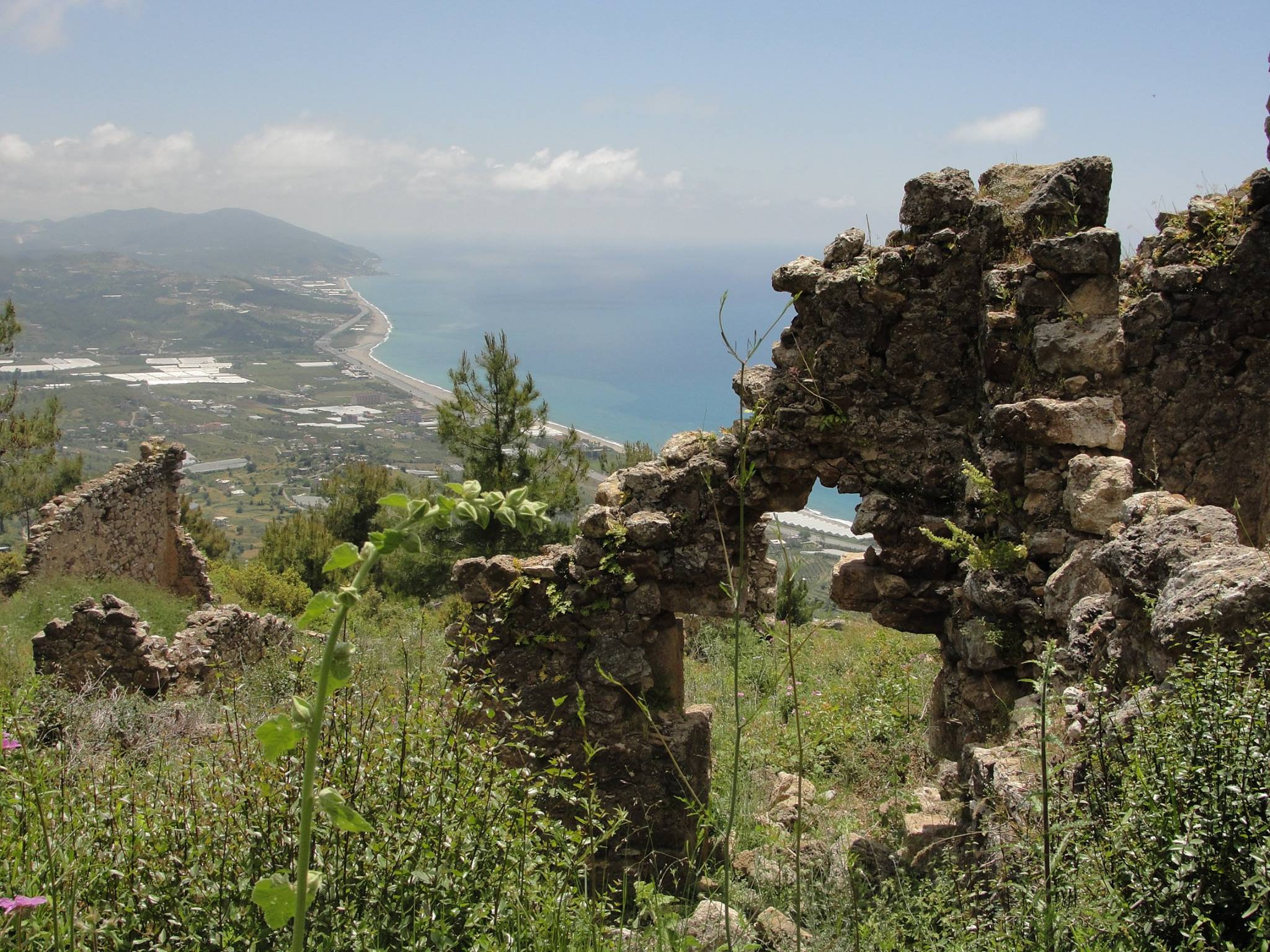
Ottoman-era village square found at Sillyon
An area used as a village center during the Ottoman period, including a small mosque and fountain, has been identified at Sillyon Ancient City in southern Türkiye. Source: Hürriyet Daily News
Sabancı Museum reopens painting collection with renewed selection
The painting collection of Sakıp Sabancı Museum has reopened to visitors with a renewed selection, now on permanent display. Source: Hürriyet Daily News
Lost emperor: Marcus Aurelius bronze returns to Türkiye after 6 decades
The headless bronze statue of Roman Emperor Marcus Aurelius has returned to Türkiye after over 60 years. Its repatriation was made possible by a scientific breakthrough and collaboration with two U.S. federal agencies. Source: Türkiye Today
March 21, 2026
Ancient cave set for tourism development after discovery of ritual pit
A cave in the northwestern province of Bilecik, which yielded evidence of ritual activity dating back around 16,500 years, is now the focus of a new sustainable tourism initiative aimed at preserving and opening the site to visitors. Source: Hürriyet Daily News
March 23, 2026
Hidden cache of 7,550 artifacts seized at Turkish port before shipment to Italy
Atruck driver trying to smuggle 7,550 historical coins and figurines out of Türkiye was caught at Cesme Ulusoy Port after customs officers flagged unusual density inside the vehicle during routine checks. Source: Türkiye Today
Ancient Roman Bath in Kütahya Faces Collapse as Neglect Deepens
A rock-cut Roman bath in western Türkiye, once believed to have healing properties, is now on the brink of disappearance after years of neglect in the village of Sefaköy, Kütahya. Source: Anatolian Archaeology
March 24, 2026
New Excavations Begin at Pessinus, One of Anatolia’s Most Important Ancient Religious Centers
A new excavation season is beginning at Pessinus, a site long recognized as one of Anatolia’s key religious and cultural centers. The project will be carried out under the direction of Assoc. Prof. Dr. Adem Yurtsever of Anadolu University, following a recent reassignment of excavation leadership. Source: Anatolian Archaeology
March 25, 2026
Ancient DNA Reveals 16,000-Year-Old Dogs in Anatolia, Rewriting the Origins of Domestication
New genetic evidence from the Pınarbaşı site in Türkiye shows that early dogs were already living alongside humans around 16,000 years ago—far earlier than previously confirmed. The discovery places Anatolia at the center of one of the most consequential turning points in human history: the domestication of the first animal companion. Source: Anatolian Archaeology
March 26, 2026
Century-old houses in Sillyon to be opened to tourism
Four century-old Yörük-Turkmen houses in the ancient city of Sillyon in Antalya’s Serik district are being restored to preserve their original architecture and brought into tourism. Source: Hürriyet Daily News
March 27, 2026
Türkiye hands over recovered ‘angel statue’ to Orthodox Patriarchate in Istanbul
Türkiye’s Culture and Tourism Minister Mehmet Nuri Ersoy has formally handed over a stolen “angel statue” to representatives of the Greek Orthodox Patriarchate, marking the conclusion of a legal and scientific process that began more than two decades ago. Source: Türkiye Today
Hidden Ottoman-era pool uncovered in mosque depicted in Osman Hamdi Bey painting
A previously unknown octagonal tiled pool has been uncovered during restoration work inside the 15th-century mosque featured in Osman Hamdi Bey’s painting “At the Mosque Door,” offering new insight into the architectural and social functions of the historic complex. Source: Türkiye Today
Central Anatolia’s Largest Mosaic Site Officially Declared an Archaeological Area in Kayseri
The mosaic structure uncovered in Örenşehir, İncesu (Kayseri)—described as the largest of its kind in Central Anatolia—has now been formally designated as an “archaeological site” (ören yeri), marking a significant step for both heritage preservation and cultural tourism. Source: Anatolian Archaeology
March 31, 2026
A charred piece of bread unearthed at Küllüoba Höyük, near Eskişehir in western Türkiye, is offering an unusually intimate glimpse into daily life—and symbolic practices—during the Early Bronze Age. Dating back roughly 5,000 years, the find stands out not only for its preservation, but for where it was discovered: placed near the threshold of a building. This detail alone suggests that the bread was more than a simple food item—it may have carried a deeper, ritual meaning. Source: Anatolian Archaeology
- Log in to post comments