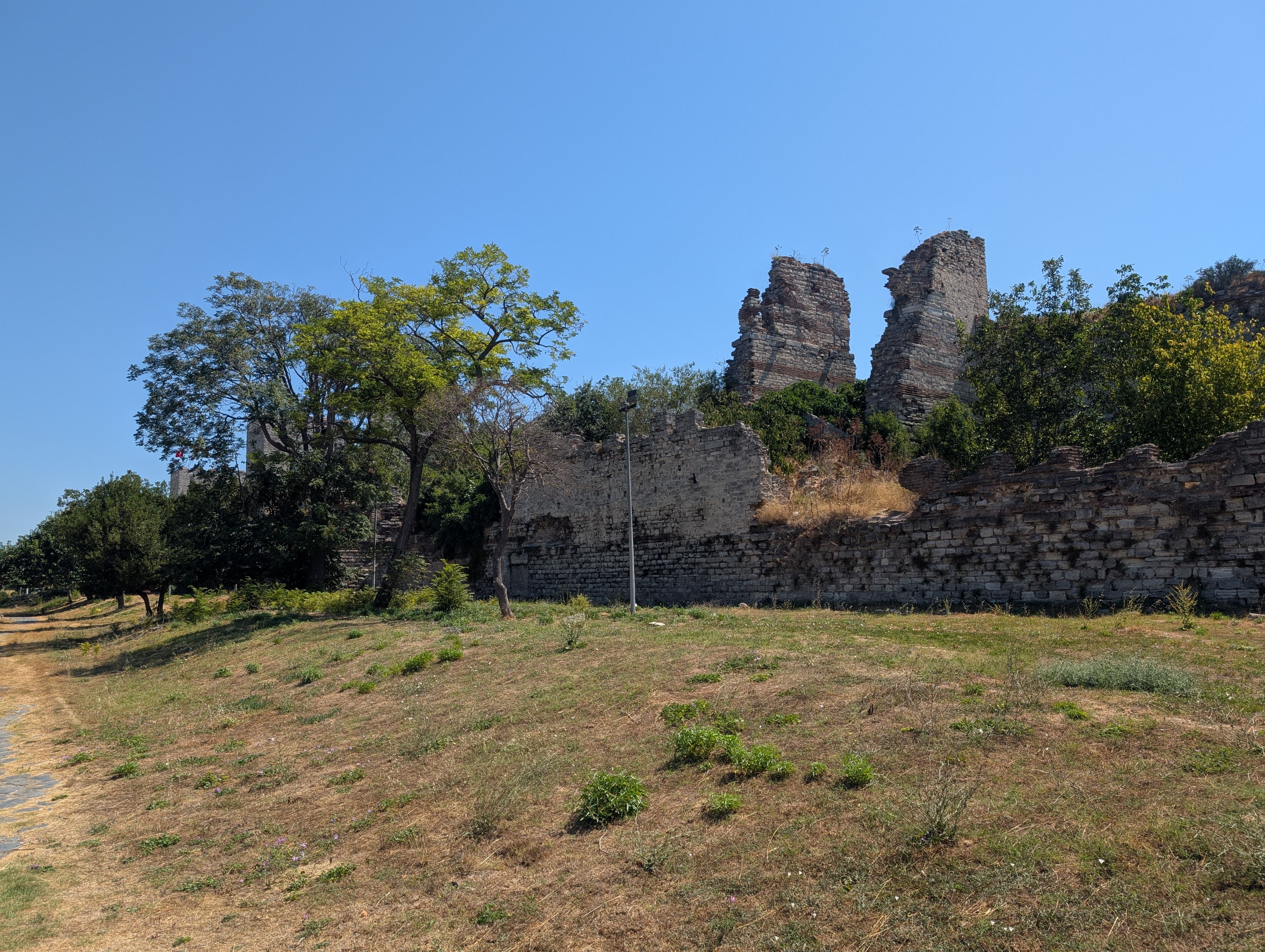
The Fourth Military Gate stands immediately to the south of the modern Millet Street (frequently referred to as Turgut Özal Boulevard). It is a lesser-known yet fascinating part of Constantinople's Theodosian Land Walls. It is located between the Gate of Rhegion (Yeni Mevlevihane Gate) in the south and the Gate of St. Romanus (Topkapı) in the north. Although the gate is currently blocked and inaccessible to the public, it remains an important testament to Byzantine military architecture and urban planning.
Theodosian Land Walls near the Fourth Military Gate
May 2026 brought a remarkable mix of discoveries and research across Türkiye, from a possible set of nearly 4,000-year-old wooden doors at Seyitömer Höyük to a 3,500-year-old Hittite stamp seal at Aşağıseyit Höyük that sheds new light on relations between the Hittite kingdom and western Anatolia. Archaeologists also uncovered a Roman-period rock-cut tomb in Hatay, eight Roman tombs and associated remains at Soli Pompeipolis, and a monumental tomb with the sarcophagus of a likely aristocratic woman at Olympos. New studies revealed sophisticated Lydian urban engineering at Sardis, the first direct epigraphic evidence of Roman businessmen operating in Teos, and a Hellenistic Mother Goddess stele near İzmir that may point to a previously unknown rural sanctuary.
At Perge, excavations uncovered a "guillotine gate" system and evidence that the city's stadium was later adapted for amphitheatrical spectacles, while at Apollonia ad Rhyndacum researchers identified a Roman-era strategy game board carved into the city walls. Renewed work at Canhasan suggested the 9,000-year-old settlement may hold clues to the symbolic traditions that later flourished at Çatalhöyük, and finds from Tatarlı Höyük offered rare evidence of household beliefs surrounding motherhood and childcare in Hellenistic Cilicia. Meanwhile, innovative methods entered the field as artificial intelligence helped reconnect fragmented Hittite cuneiform tablets and a new Turkish underwater robot was tested to support future maritime archaeology.
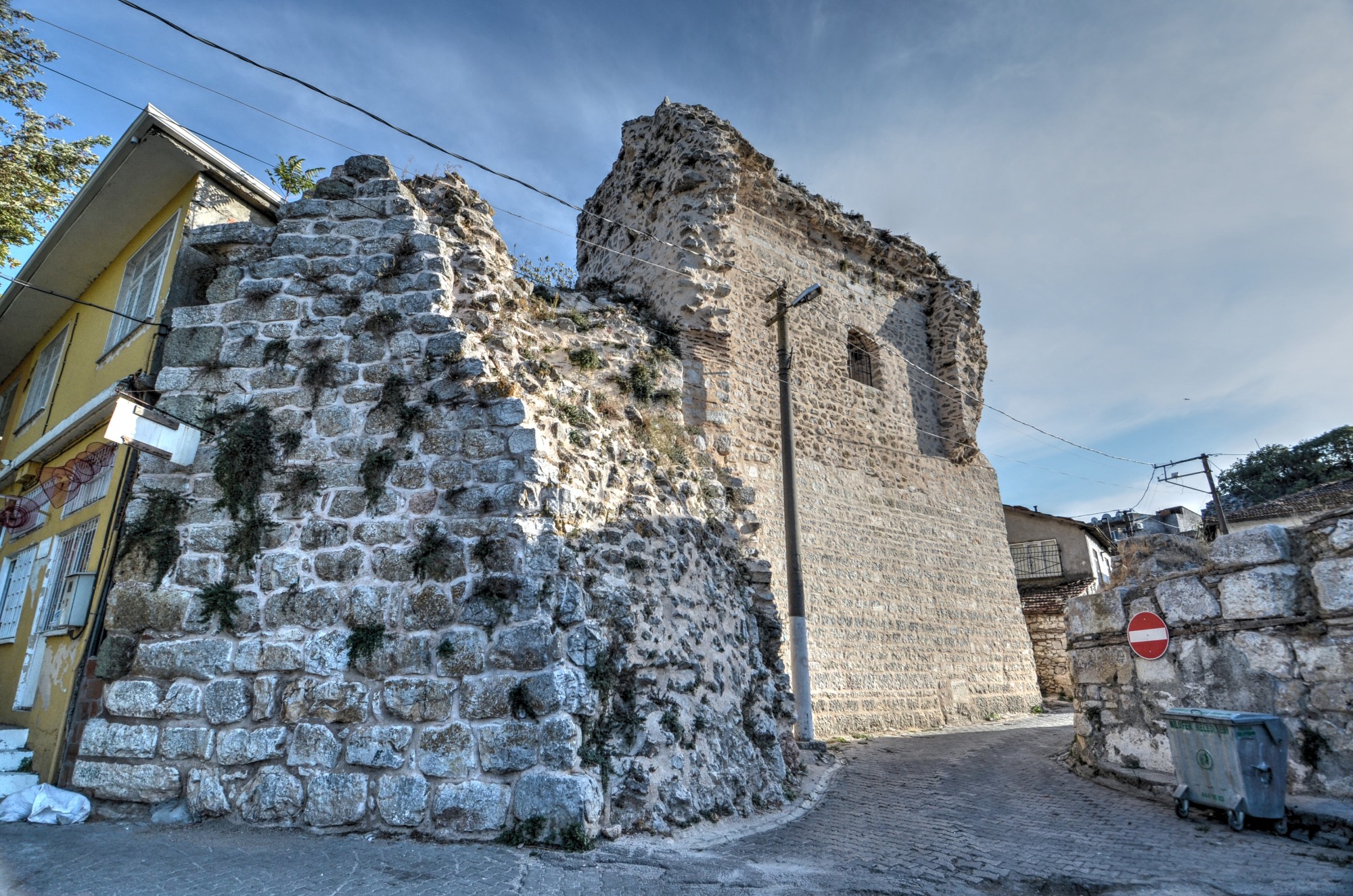
Ancient city walls in Apollonia ad Rhyndacum, modern Gölyazı in Bursa Province
The question of whether Cleopatra's sister, Arsinoë IV, was buried in Ephesus has long fascinated historians and archaeologists alike. The story begins in 1904, when archaeologists uncovered an enigmatic monument known as the Octagon. At first, it was thought to be a trophy monument commemorating some forgotten victory. But in 1929, further excavations revealed something unexpected: a burial chamber built atop its base. Inside lay a sarcophagus containing the skeleton of a young individual, in their teens at the time of death. Tragically, the skull — so crucial for identification — was later lost during the Second World War.
Reconstructed Octagon in the Ephesos Museum in Vienna, Austria
Text by our correspondent from Didim, Jay Jean Jackson.
The crowds leave the Delphinium and begin their journey through the city. The Pilgrims have travelled here from all over the Hellenistic world, to celebrate and honour their gods. In some places, the road is 15 meters wide to accommodate such a massive crowd. The procession to the oracle is finally underway, and the atmosphere is electric with excitement and anticipation.
It is late afternoon, and the day is slightly overcast with a gentle breeze. The setting sun breaks through the clouds, warming the air. The varied temperatures of springtime are a combination of the sweltering heat of the summer to come, and the last chill of winter.
The Delphinium in Miletus where the procession began
For many readers, the story of women in the Ottoman Empire begins and ends with a single name: Hürrem Sultan, known in Europe as Roxelana. She is remembered as clever, dangerous, romantic, or ruthless — depending on who tells the story. Her rise from concubine to legal wife of Sultan Suleyman the Magnificent has become legend. Yet Hürrem, extraordinary as she was, represents only one voice in a far larger and richer chorus.
"Women of the Ottoman Court" invites the reader beyond the familiar myths and into the lives of forty-one women who lived, married, and died at the heart of one of the world's longest-lasting empires. Over more than five centuries, these women — concubines, consorts, mothers, sisters, and daughters of sultans — helped shape Ottoman politics, culture, and daily life.